Key Takeaways Transportation Secretary Sean Duffy stated the 737 MAX software problem presents no immediate safety threat to passengers. Boeing (BA) shares declined approximately 1% amid news
Key Takeaways
- Transportation Secretary Sean Duffy stated the 737 MAX software problem presents no immediate safety threat to passengers.
- Boeing (BA) shares declined approximately 1% amid news coverage of the software discovery.
- The aerospace manufacturer revealed over the weekend that a software flaw might interfere with automated flight guidance systems during specific go-around procedures.
- Federal regulators postponed approval of the 737 MAX 10 variant pending resolution of the technical issue.
- In a separate incident, President Trump commended the 737 MAX following a Flydubai aircraft incident where crew members thwarted a co-pilot’s attempted crash.
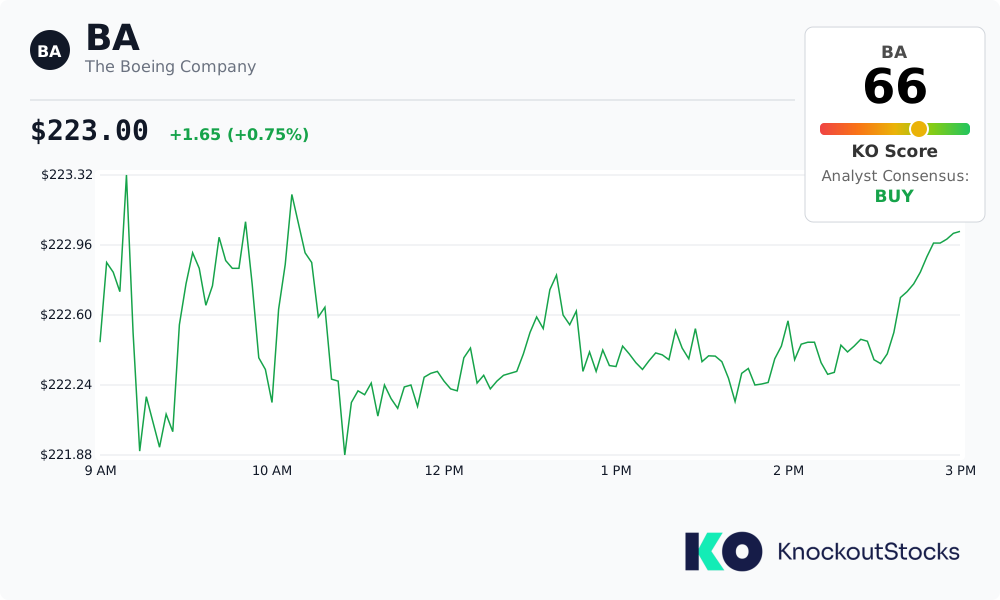
Shares of Boeing (BA) retreated nearly 1% as investors digested news of a software issue affecting its 737 MAX aircraft family. The decline followed statements from US government officials addressing potential safety implications.
 The Boeing Company, BA
Speaking with media in Washington on Wednesday, Transportation Secretary Sean Duffy indicated he sees no immediate safety threat from the technical problem. He likened the necessary correction to a standard software update on a mobile device.
“If we had a legitimate safety issue on our hands, our response would be entirely different,” Duffy explained. He emphasized that his department saw no justification for grounding any 737 MAX aircraft.
Duffy further referenced lessons learned from past incidents. “We understand that delayed responses to potential problems can lead to serious consequences,” he stated.
Details of the Software Flaw
The technical problem came to light over the weekend when Boeing announced that certain 737 MAX aircraft contained a software anomaly. The flaw could potentially block pilot access to automated flight guidance systems during a particular landing situation.
Boeing confirmed it notified airline customers immediately upon discovery. The manufacturer is currently working on a software patch designed to eliminate the issue permanently.
The Federal Aviation Administration subsequently provided additional context about the specific scenario affected. According to the agency, the software version may increase cockpit workload during go-around maneuvers, which occur when pilots discontinue a landing attempt, add thrust, and ascend for another approach.
By Monday, the FAA announced it would suspend certification activities for Boeing’s much-delayed 737 MAX 10 variant until engineers resolve the software anomaly. This aircraft model has already experienced significant postponements before entering commercial service.
Regulators also indicated they intend to establish a Corrective Action Review Board to examine the matter thoroughly. Agency representatives noted the review could begin as early as next week.
The aerospace giant also appeared in news reports for an entirely different matter this week. A Flydubai aircraft traveling to Tel Aviv became the scene of an attempted sabotage by its co-pilot on Tuesday.
According to Israeli authorities, passengers and flight crew successfully prevented the attempt. The aircraft had plummeted approximately 14,000 feet in less than half a minute before crew members regained control.
The aircraft made a safe emergency landing in Tabuk, Saudi Arabia. Authorities confirmed no passengers or crew members sustained injuries during the incident.
Following the event, President Trump offered praise for the 737 MAX design, though he did not specifically mention the Flydubai situation. He highlighted the aircraft’s capability to “endure G Forces and stress levels far exceeding its original design parameters.”
Trump’s comments also included recognition for Boeing and its Chief Executive Officer, Kelly Ortberg. However, he made no mention of the software problem currently under regulatory examination.
At present, the 737 MAX fleet remains operational with no grounding directive issued. Duffy’s public statements indicate aviation authorities view the necessary software correction as routine maintenance rather than an urgent safety measure.
The FAA’s review panel will establish the path forward once it begins deliberations. Meanwhile, Boeing continues working on the permanent software solution it committed to delivering to airline operators this past weekend.
The post Boeing (BA) Stock Slips as FAA Postpones 737 MAX 10 Approval Over Software Glitch appeared first on Blockonomi.