Every time you stream a video, make a cross-border payment, or register a business online, you are interacting with policies debated at the International Telecommunication Union (ITU). When y
Every time you stream a video, make a cross-border payment, or register a business online, you are interacting with policies debated at the International Telecommunication Union (ITU). When your internet connection drops or roaming charges spike as soon as you cross an African border, you might not think of a conference room in Doha.
In different cases, it’s easy to blame your network provider, but the real root of those daily digital hiccups often goes beyond telecom operators. Decisions about internet speed and how satellite bandwidth is divided across the continent are debated thousands of miles away.
From November 9 to 27, 2026, in Doha, Qatar, candidates from around the world will gather for the ITU Plenipotentiary Conference (PP-26) to elect the 48 Member States of the ITU Council for the 2027–2030 term.

ITU Headquarters, Geneva, Switzerland
Also Read:ITU warns Africa faces prolonged internet outages with only one submarine cable repair ship.
The ITU Council – What you should know
The ITU is the United Nations’ specialised agency for digital technology, satellite orbits, and global telecommunications. It acts as the governing body between major conferences that facilitate global policy, direct infrastructure budgets, and decide how global spectrum rules are drafted and implemented
On the election day in Doha, the electorate will comprise the official government delegations of all 194 ITU Member States. As a result, every country, big or small, gets a vote.
Africa is allocated 13 designated seats on the 48-member Council. Having innovative, effective leaders in those 13 seats ensures that Africa’s deepest issues, such as connectivity, the digital divide, and usage gap, remain priorities on the global stage.
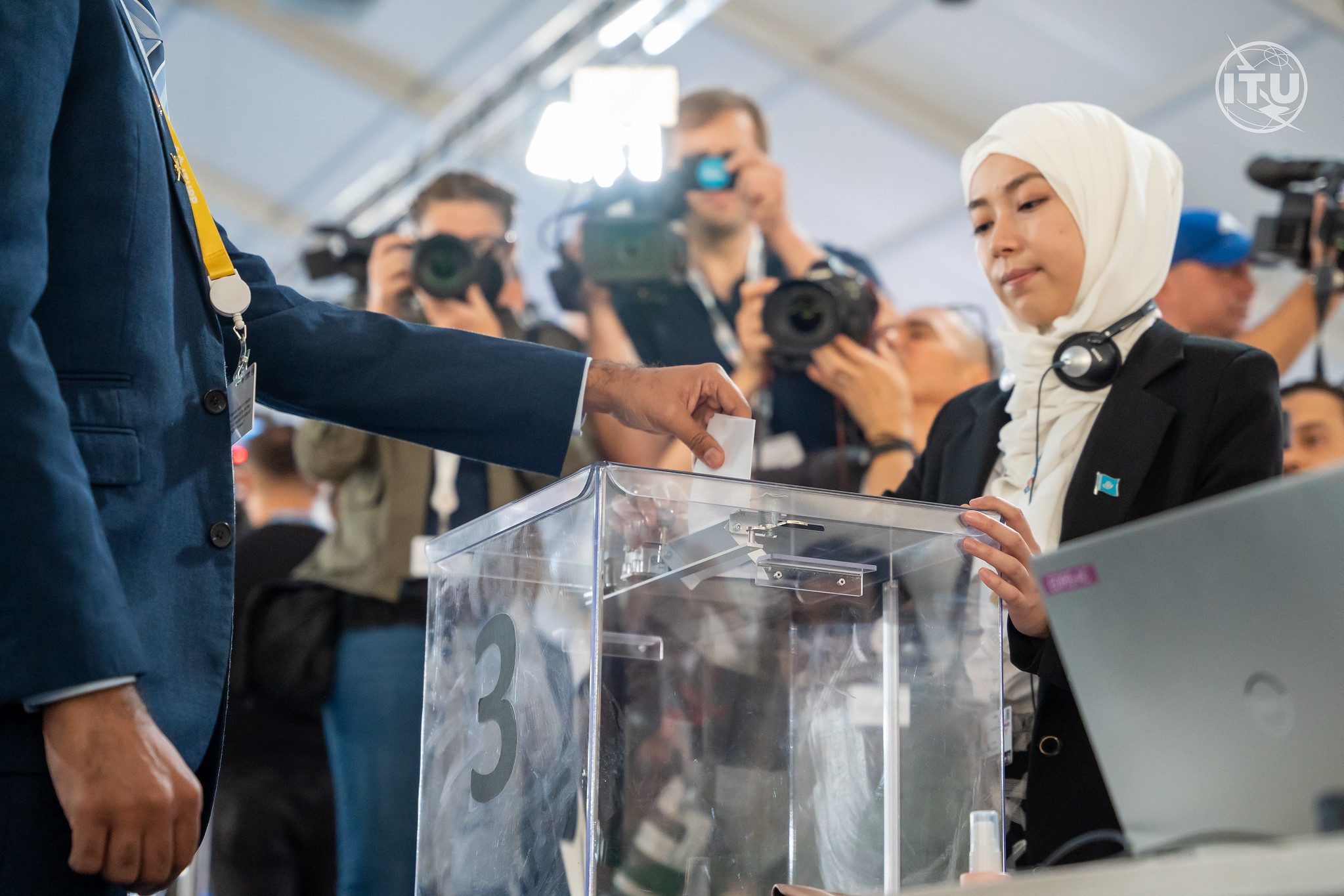
PP 2022 Elections (IM: ITU)
Countries across Africa are already mobilising campaigns to secure a seat on the ITU Council for 2027-2030.
South Africa is seeking a re-election to maintain its influence over regional policy and spectrum governance, while Rwanda is campaigning for a fifth consecutive term after serving continuously since 2010. Nigeria and Uganda are both pushing for re-election after some major structural investments in local tech workforce and infrastructure.
Côte d’Ivoire and Senegal are mobilising regional support through the African Telecommunications Union (ATU) to defend Francophone representation. Algeria, Egypt, Ghana, Kenya, Mauritius, Morocco, Tanzania, and Tunisia are all aiming for re-election, after serving on the 2023-2026 board.
New bids are coming from Gabon, Cabo Verde, Democratic Republic of the Congo (DRC), Libya, and Mali, which signals a desire across Africa to secure a direct voice in global governance.
African candidates to watch
In most cases, the individuals spearheading each country’s bids are their Minister of Communications, Innovation, or Technology (or equivalent telecoms regulator).
1. Dr. ’Bosun Tijani (Nigeria)
Role: Minister of Communications, Innovation and Digital Economy
A former tech entrepreneur and Co-Founder of Co-Creation Hub (CcHUB), Bosun Tijani brings startup speed to public administration. Rather than treating telecommunications as mere pipe-laying, he sees it as an engine for workforce export.
Key Initiative: The 3 Million Technical Talent (3MTT) program, aimed at training 3 million young Nigerians in software engineering, data science, and AI. Others are Project BRIDGE, a deployment of 90,000 km of fibre-optic cables, 3,700 rural towers deployment, and various skill acquisition initiatives via the National Information Technology Development Agency (NITDA).
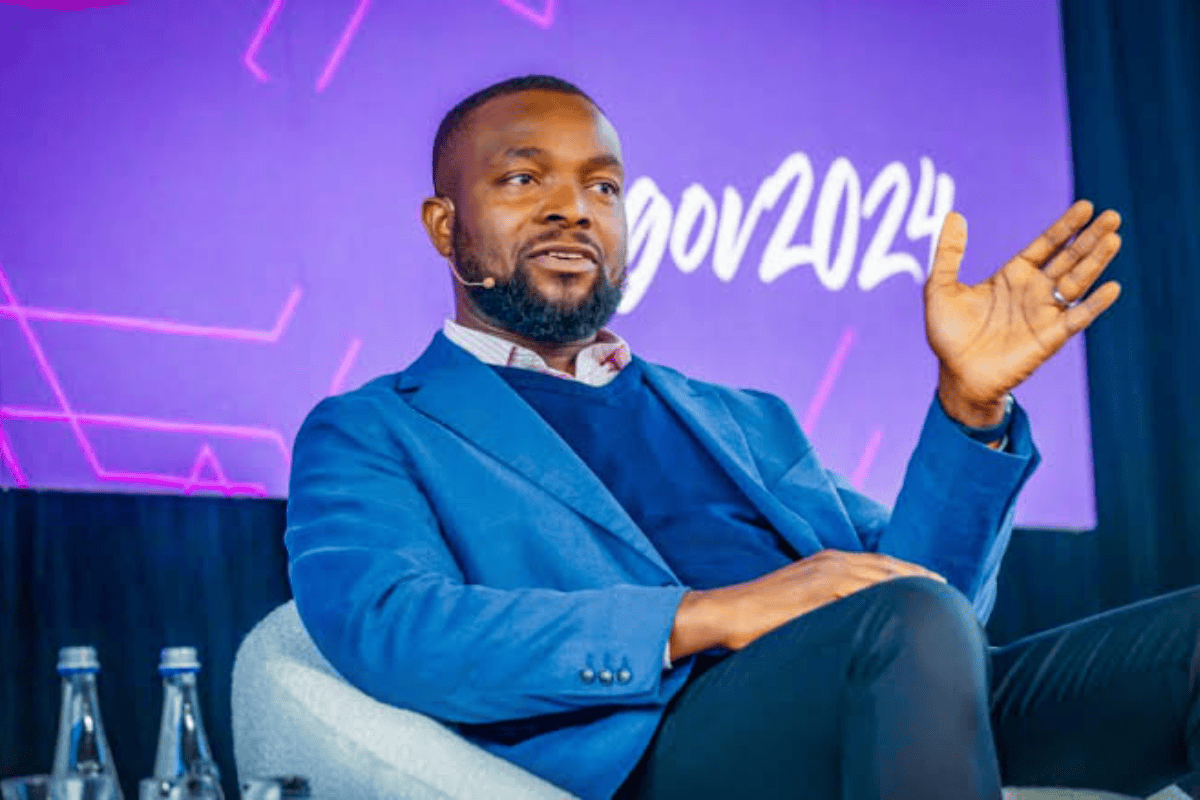
Minister of Communications, Innovation and Digital Economy, Bosun Tijani
2. Samuel Nartey George (Ghana)
Role: Minister for Communication, Digital Technology and Innovations
Samuel Nartey George has built a reputation as an advocate for African digital sovereignty. His focus is on ending Africa’s reliance on foreign tech facilities and keeping cloud data within African territory.
Key Initiative: Promoting homegrown tech ecosystems tailored to local African languages and context. He’s at the forefront of regional payment systems like the Pan-African Payment and Settlement System (PAPSS) to ensure intra-African trade and financial data stay secure within local networks.
Also Read: PAPSS adds 6 Central African countries, now connects 28 African Central Banks.
3. Solly Malatsi (South Africa)
Role: Minister of Communications and Digital Technologies
Malatsi is known for cutting middlemen and long administrative processes to make high-speed internet accessible beyond major urban hubs to transform Africa’s most industrialised yet inequality-shaped economy.
Key Initiative: Reshaping state-owned enterprises and fast-tracking spectrum auctions to ensure competitive telecoms providers. He’s also championing public-private partnerships to bridge the digital divide and fuel the growth of South Africa’s economy.
4. Paula Ingabire (Rwanda)
Role: Minister of ICT and Innovation
Under Ingabire’s leadership, Rwanda has ceased viewing ICT as just another economic sector and now sees it as an avenue for innovative technology.
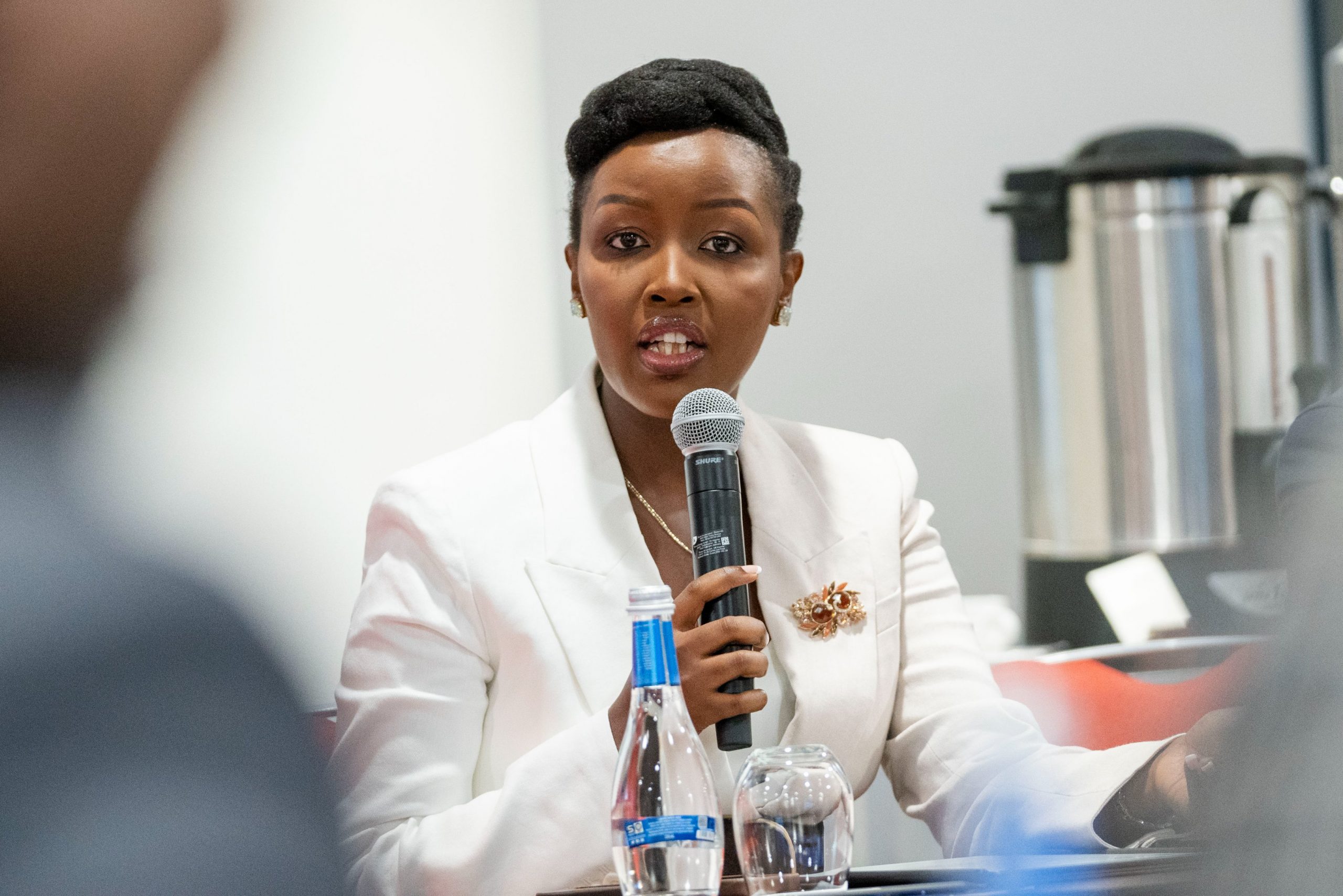
Paula Ingabire, Minister of ICT and Innovation, Rwanda
Key Initiative: The Kigali Innovation City, a flagship pan-African innovation hub housing universities, tech ventures, and startup incubators under one umbrella. She is leading the regional Smart Africa initiative and also urging African youths to leverage social platforms for digital employment and technical skills.
5. William Kabogo Gitau (Kenya)
Role: Cabinet Secretary, Ministry of Information, Communications and the Digital Economy
Inheriting the region’s famed “Silicon Savannah”, Kabogo is focused on turning the startup ecosystem into digital governance.
Key Initiative: He’s pressing on the completion of Kenya’s national AI and Emerging Technologies Policy. There’s the acceleration of full public-sector digitisation to drive government transparency and bring citizen services into a single digital pipeline.
6. Raafat Hindy (Egypt)
Role: Minister of Communications and Information Technology
Hindy has nearly four decades of telecom engineering experience and uses this to approach digital transformation with structural innovations for Egypt.
Key Initiative: Championing the Digital Egypt strategy to shift over 270 government services into unified digital platforms. Hindy is also driving public investment into electronics manufacturing and IT to position Egypt as a primary hub for global tech talent.
7. Sid Ali Zerrouki (Algeria)
Role: Minister of Post and Telecommunications
Sid Ali Zerrouki is known for emphasising national advancements in fibre optics, 5G, fixed high-speed internet, and exploring bilateral collaboration in cybersecurity and governance, and brings such a mindset to North Africa’s telecom landscape.
Key Initiative: He led Algeria’s integration into the global “50-in-5” campaign for Digital Public Infrastructure (DPI). Ali Zerrouki is advocating internationally for a global AI equity agency that emphasises sovereign technical capacity over basic training courses.
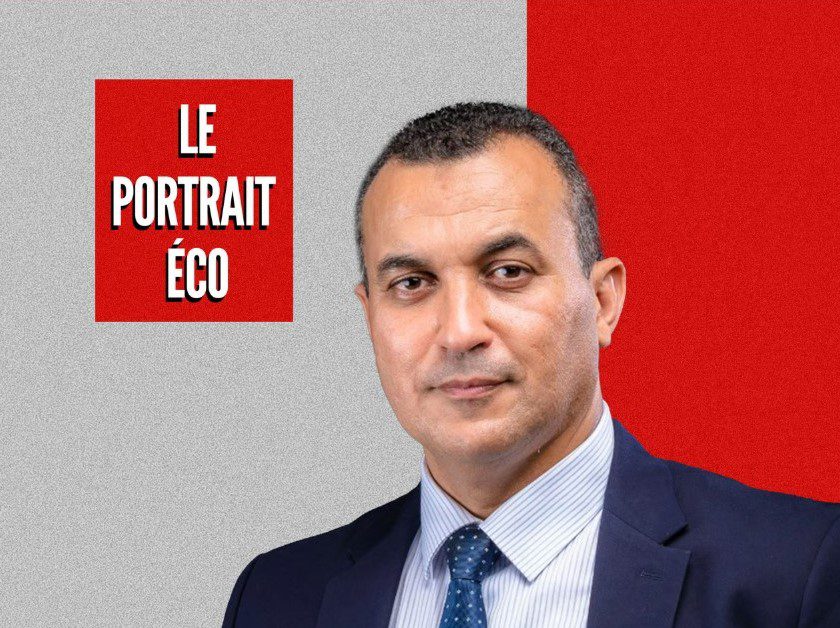
Sid Ali, Minister of Post and Telecommunications, Algeria
Aside from the 13 Council seats, African leaders are contesting crucial individual posts within the ITU.
Dr Cosmas Luckyson Zavazava of Zimbabwe is running for Director of the Telecommunication Development Bureau (BDT), a position pivotal for directing funding and infrastructure programs to developing nations.
Another competition is underway forAfrica’s designated 3 slots on the 12-member Radio Regulations Board (RRB). Four African candidates, namely Dr Mohamed El-Moghazi (Egypt), Edmund Yirenkyi Fianko (Ghana), Basebi Mosinyi (Botswana), and Sana Zairi (Morocco), are vying for these 3 seats.
The RRB is the international body that resolves complex satellite orbit disputes and manages radio spectrum allocations, which makes the 3-slot vital for protecting Africa’s wireless and space technology interests.
A strong African voice in Doha means ensuring that international tech standards adapt to ongoing realities of lower data costs, internet coverage for rural communities, smartphone affordability and ensuring Africa controls its digital future.
Also Read: Africa has an energy crisis, and its digital infrastructure might suffer the heaviest hit.