Brazil's New Crypto Rule Targets Fraud Before Funds Disappear
What the Rule Says Brazil's central bank has moved to slow down large outbound crypto transfers in the name of fraud prevention. Resolution BCB No. 584/2026 was published on August 7, 2026, c
A
AnonymousCryptoCompass newsroom
August 10, 2026
2 min read
NEWS
CryptoCompass editorial visual for policy coverage.
What the Rule Says
Brazil's central bank has moved to slow down large outbound crypto transfers in the name of fraud prevention. Resolution BCB No. 584/2026 was published on August 7, 2026, creating a regulatory hold for large transfers headed to self-custody wallets or foreign virtual asset service providers (VASPs).The requirement applies to funds above $10,000, whether moved in a single transaction or spread across multiple transfers by the same customer in a single day.
The central bank emphasized that the measure is a temporary hold for scrutiny, not a permanent asset freeze or a block on transfers.Providers may release transfers early after completing risk reviews under parameters established by Brazil's regulator.Providers will also be required to notify customers when a hold is imposed, explaining its precautionary nature and duration.
The rule covers both traditional cryptocurrencies and fiat-based stablecoins.Smaller transactions can also be subjected to the 24-hour hold if a VASP's internal systems flag them as risky.
Consequences for Non-Compliance
Should a firm fail to comply, the central bank may impose stricter requirements, including ordering the firm to apply holds longer than 24 hours, extending the procedure to transfers below $10,000, or restricting its ability to release transactions early.Crypto companies will also have to maintain daily records of fraud and attempted fraud, along with corrective measures taken in response.
The resolution builds on Brazil's 2022 Virtual Assets Law, which designated the Banco Central do Brasil as the primary regulator overseeing crypto service providers, followed by a series of BCB resolutions in 2025 that tightened operational compliance and anti-money laundering requirements across the sector.The measure takes effect on January 1, 2027, and applies to financial institutions, payment institutions, and other crypto service providers operating under the country's regulatory transition period.
The rule does not ban self-custody or overseas crypto transfers. Self-custody remains legal, but the new framework changes how quickly users may be able to move assets from regulated exchanges into wallets they personally control.
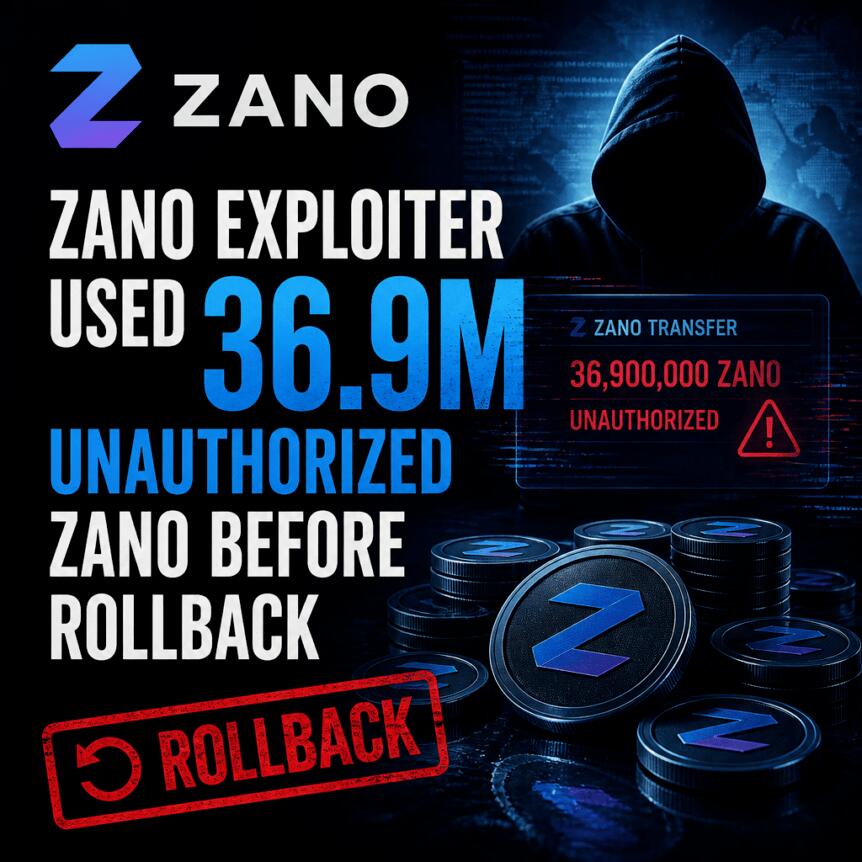
Zano has detailed the mechanics and scale of the exploit behind its Gateway Address vulnerability, explaining how an attacker minted millions of Zano tokens and additional stablecoin-like ass
EIP-8363, which proposed burning a portion of validator rewards as the amount of ETH staked increases, has been removed from Ethereum’s Hegota update. The EIP-8363 proposal, which aimed to bu
Between July and September 2026, attackers pulled roughly $1.26 billion out of the crypto market. The figure comes from the security firm CertiK, which counted 247 security incidents in the t