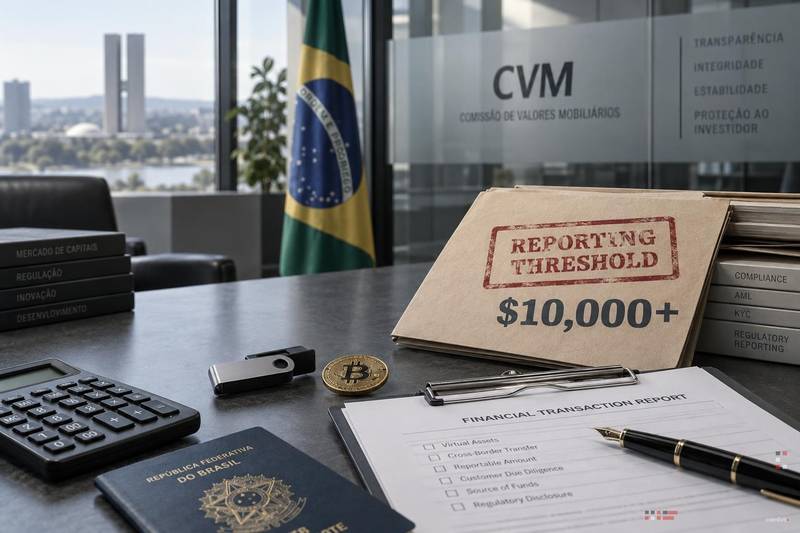
Brazil is set to require reporting of self-custody cryptocurrency transfers valued at $10,000 or more, with the rule taking effect on October 1. The requirement extends existing crypto report
Brazil is set to require reporting of self-custody cryptocurrency transfers valued at $10,000 or more, with the rule taking effect on October 1. The requirement extends existing crypto reporting obligations to cover peer-to-peer and wallet-to-wallet transfers that bypass regulated exchanges, placing new compliance responsibilities on users who move large sums outside custodial platforms.
Brazil's $10,000 Self-Custody Crypto Reporting Rule Starts Oct. 1
The rule, tied to Bacen Resolution 519, brings self-custody transfers into the scope of Brazil's anti-money-laundering reporting framework. Transfers at or above the $10,000 threshold will need to be disclosed; transfers below that level are not addressed by the announcement. For related coverage, see Bybit Pay Integrates With Mesh for Crypto Payments.
The policy applies specifically to self-custody arrangements, meaning hardware wallets, software wallets, and other non-custodial solutions used to move crypto without an intermediary. Exchange-based transactions in Brazil have carried reporting requirements under prior rules, making this an extension rather than an entirely new regime. For related coverage, see XRP ETFs Draw $75M as Solana Funds Hit 2026 High.
Brazil's broader regulatory posture toward crypto has been active. The country has seen tokenized asset pilots from major institutions alongside tightening compliance rules. Earlier this year, Bybit's Brazil business accounts faced a verification deadline under separate regulatory guidance, signaling consistent enforcement pressure on crypto firms operating in the country.
Per CryptoSlate's reporting, Brazil's crypto market is valued at roughly $252 billion, giving the new rule significant reach.
What the Reporting Requirement Could Mean for Crypto Users
KEY POINTS
- Reporting applies to self-custody crypto transfers of $10,000 or more, effective October 1.
- The rule covers non-custodial wallet transfers, not just exchange activity.
- Specific filing procedures, responsible parties, and penalties have not been confirmed in publicly available guidance reviewed for this article.
Users making high-value transfers via self-custody wallets should begin documenting transfer records now, including dates, amounts, and counterparty information where available. Maintaining records before the October 1 date provides a baseline if regulators request historical disclosures.
The rule imposes a reporting obligation, not a prohibition. There is no evidence in available guidance that self-custody transfers of any amount are being banned or restricted. Users should not conflate disclosure requirements with restrictions on wallet usage.
Anyone subject to the rule should confirm implementation specifics with a qualified Brazilian legal or tax professional before October 1. The regulatory text at Banco Central do Brasil's legislation and norms page is the authoritative reference for current requirements.
Implementation Details Still to Be Clarified Before Oct. 1
Several operational questions remain open ahead of the start date. The responsible reporting party, whether the sender, receiver, or both, has not been confirmed in the sources reviewed. The method for submitting reports, whether via an online portal, financial institution, or direct regulator filing, is also unconfirmed.
Edge cases involving fractional transfers that cumulatively exceed $10,000, transfers denominated in non-dollar-pegged assets, and the applicable valuation method (spot rate at time of transfer versus a daily close) are not addressed in available public guidance. Readers should monitor Bacen's official regulatory page for updates before October 1.
Brazil's move is part of a wider push by regulators globally to bring self-custody crypto activity under reporting frameworks. Separately, in the United States, the Federal Reserve has proposed stablecoin rules under the GENIUS Act, reflecting parallel efforts to extend oversight to crypto assets outside traditional custodial rails.
Disclaimer: This article is for informational purposes only and does not constitute financial or investment advice. Cryptocurrency and digital asset markets carry significant risk. Always do your own research before making decisions.
Read original article on coinlive.me