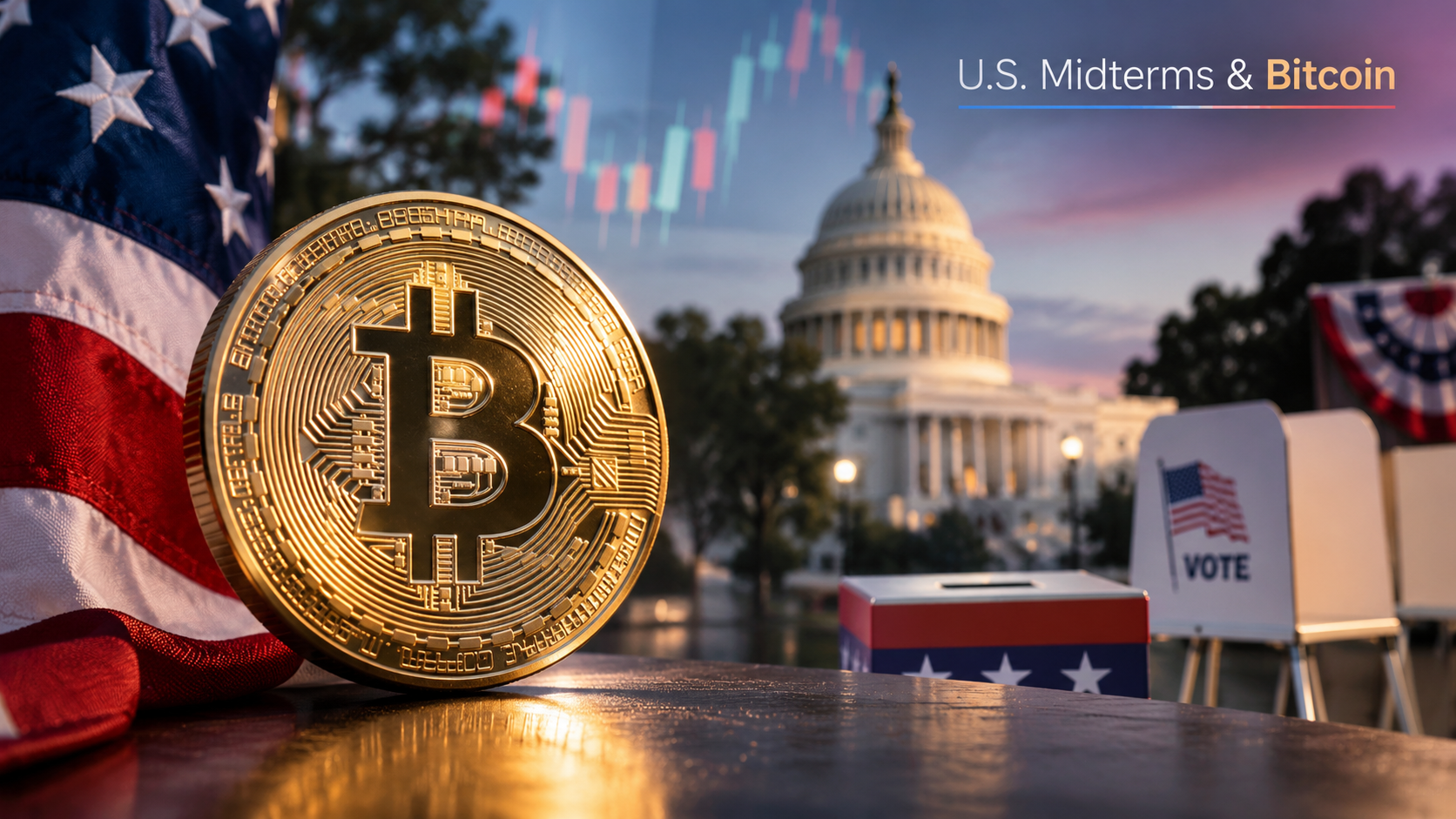
Tomorrow, November 3, Americans head to the polls for the midterm elections—and for crypto traders, I think this is an event worth watching closely. Republicans currently control both chamber
Tomorrow, November 3, Americans head to the polls for the midterm elections—and for crypto traders, I think this is an event worth watching closely.
Republicans currently control both chambers of Congress, but Democrats are leading national polling and are widely expected to challenge that control, particularly in the House. The Senate remains a much tighter battle.
But for me, the most important question is not simply whether Republicans or Democrats win.
It is whether the result surprises the market.
Why This Election Matters for Crypto
If Republicans maintain control of Congress, markets could interpret it as greater policy continuity for the crypto industry. The current Republican-led Congress has generally pushed harder for digital-asset legislation and clearer market-structure rules.
A Democratic victory would not automatically be bearish for Bitcoin, but it could change the direction and speed of crypto legislation. We could see greater regulatory scrutiny, especially around DeFi, market structure, and industry oversight.
A divided Congress could create a different problem: slower policymaking and another period of uncertainty.
Interestingly, Grayscale recently argued that crypto’s long-term development could continue regardless of who controls Congress, pointing to bipartisan crypto ownership, institutional adoption, and broader structural demand for digital assets.
And I agree with part of that view.
The election may change the regulatory path—but it probably does not change the entire long-term Bitcoin story.
What I’m Watching on Election Night
My bigger concern is short-term volatility.
If the results come close to expectations, Bitcoin’s reaction may remain relatively controlled.
But if we get a major surprise—especially an unexpected sweep by either party—the first reaction could be much more aggressive.
This is exactly the type of environment where we can see sudden price spikes, False Breakouts, liquidity hunts, and leveraged liquidations in both directions before the market establishes its real trend.
That is why I will be watching more than just the election map.
Bitcoin’s price action, ETF flows, the U.S. Dollar Index(DXY), liquidity levels, and the reaction of U.S. equities could tell us much more about what the market actually thinks of the result.
My View
I don’t think traders should reduce this election to “Republicans bullish, Democrats bearish.”
Markets are rarely that simple.
For Bitcoin, the biggest short-term risk is the difference between what investors already expect and what actually happens on November 3.
If the election delivers a surprise, volatility could rise very quickly.
But once that initial noise settles, price action will tell us the real story.
The election may create the volatility.
Bitcoin will tell us who is actually in control—buyers or sellers.
What do you expect from November 3: a bullish surprise for crypto, a selloff, or just another liquidity hunt before the next major move?
If you found this analysis useful, follow for more.