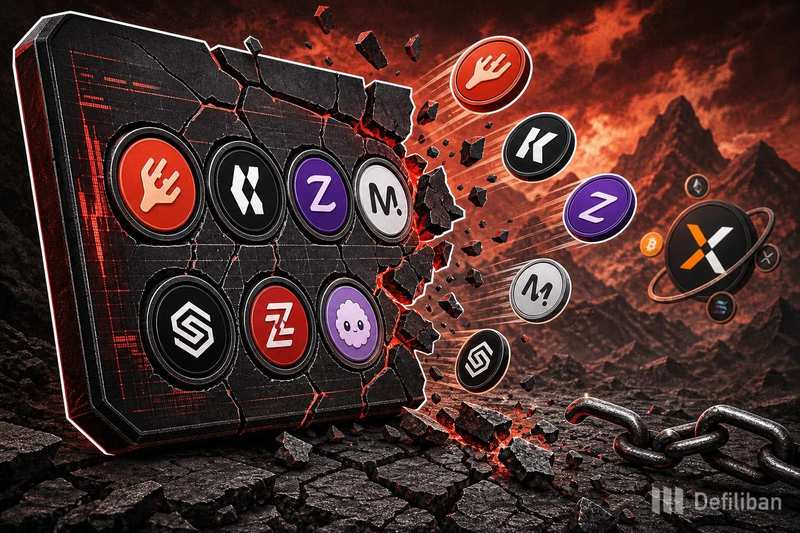
Bybit is removing seven tokens from its spot trading market. The affected assets, EAT, KILO, ZEX, MVL, SYND, ZRC and PUFF, will lose their spot trading pairs on the exchange, limiting direct
Bybit is removing seven tokens from its spot trading market. The affected assets, EAT, KILO, ZEX, MVL, SYND, ZRC and PUFF, will lose their spot trading pairs on the exchange, limiting direct trading access for users holding positions in any of the seven tokens.
Which Tokens Are Being Removed
The exchange published a delisting notice confirming the removal of all seven assets from its spot market. The full list includes EAT, KILO, ZEX, MVL, SYND, ZRC and PUFF.
The action is specific to Bybit's spot trading venue. A spot delisting does not mean the underlying tokens cease to exist or that their respective protocols are shutting down. The tokens may continue to trade on other centralized or decentralized exchanges.
Bybit maintains published token management rules that outline criteria for listing and delisting decisions, including factors like trading volume, liquidity and project development activity.
What This Means for Traders Holding These Tokens
Once a spot pair is delisted, users can no longer place new buy or sell orders for that pair on Bybit. Open orders on delisted pairs are typically cancelled by the exchange ahead of the removal date.
Traders holding any of the seven tokens on Bybit should review their positions. Options generally include withdrawing the tokens to an external wallet before the delisting takes effect or converting holdings into another asset while spot trading remains active.
Liquidity for smaller-cap tokens tends to concentrate on a limited number of venues. Losing a spot listing on a major exchange like Bybit can reduce available liquidity and widen bid-ask spreads on remaining platforms where the token trades. This dynamic is similar to the shifts seen when large wallet withdrawals from exchanges signal changing liquidity conditions.
Why Spot Delistings Matter Beyond a Single Exchange
Exchange listing status directly affects a token's visibility, accessibility and tradable volume. For lower-profile assets like the seven being removed, a delisting from a top-tier venue can meaningfully reduce the pool of active market participants.
Delistings also reshape where trading volume concentrates. Remaining venues absorb displaced traders, but not always smoothly. Price discovery can become less efficient when depth thins out across fewer order books.
This is a market-access event rather than a commentary on the fundamentals of any individual project. Traders affected by the change should verify which alternative venues still support the tokens they hold and assess withdrawal timelines accordingly.
Disclaimer: This article is for informational purposes only and does not constitute financial or investment advice. Cryptocurrency and digital asset markets carry significant risk. Always do your own research before making decisions.
Read original article on defiliban.io