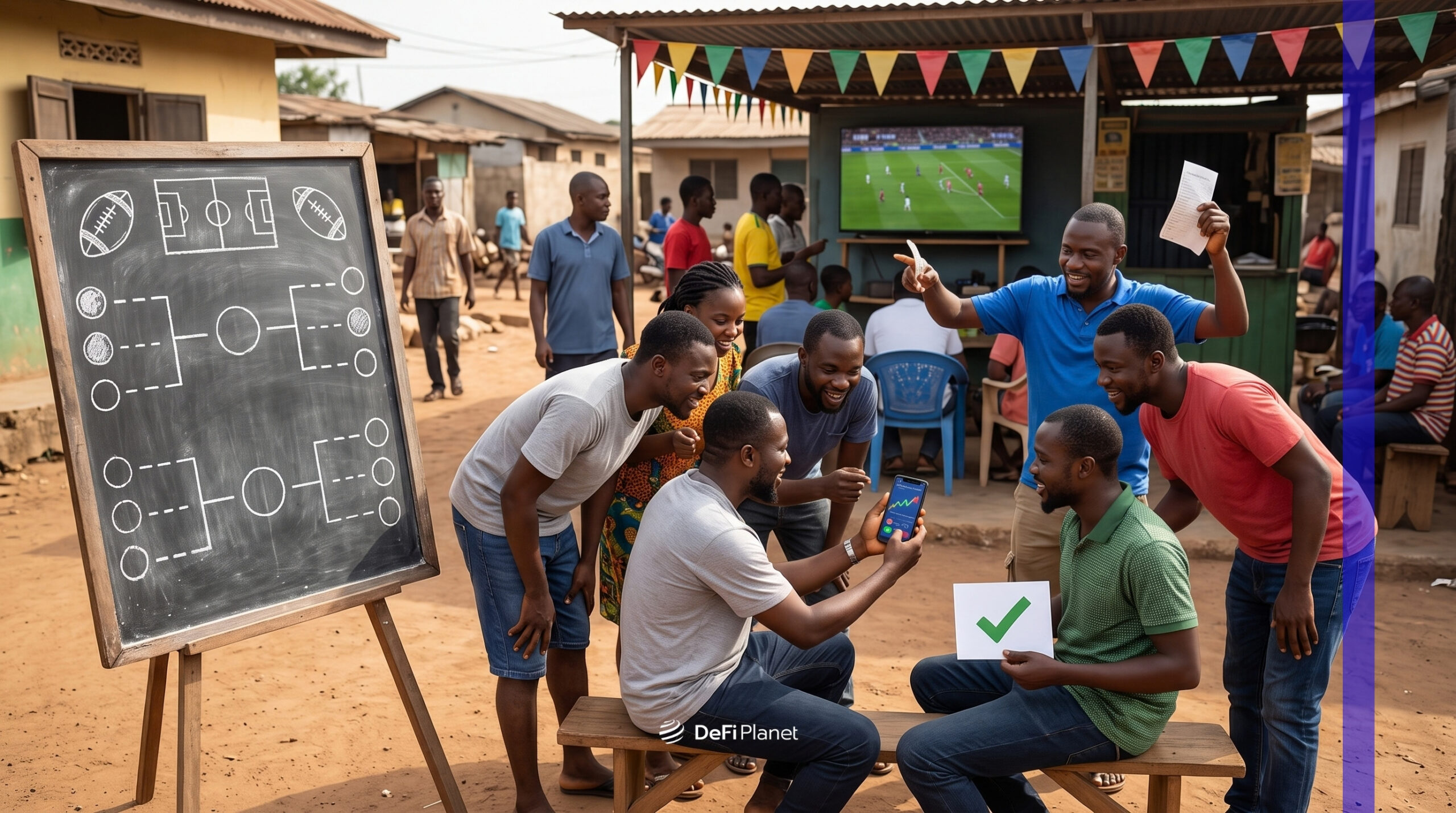
Sports betting is already a major market across Africa, with industry estimates putting its value at around $3 billion in 2025. More than 440 million peoplereportedly bet across the continent
Sports betting is already a major market across Africa, with industry estimates putting its value at around $3 billion in 2025. More than 440 million peoplereportedly bet across the continent, with Nigeria, South Africa, Kenya, Uganda, Tanzania, and Ghana among the leading markets.
Football drives much of this activity, with 67% of bettors in six major African markets saying it is their main sport for betting. On the other hand, prediction markets are starting to gain attention globally. They’re entering an African market where sports betting is already deeply established.
With millions of Africans already betting on football, many are asking: can prediction markets really replace betting platforms they already know?
Why Sports Betting Became So Popular in Africa
Across Africa, sports betting has grown from a niche activity into a major industry. The reasons are easy to see. A young population, a deep passion for football, and the possibility of turning a small stake into a much larger payout have created a market that betting platforms from Europe, Asia, and North America are competing to capture.
The appeal starts with football. Clubs like Manchester United, Liverpool, Real Madrid, and Barcelona have tens of millions of followers across the continent, while players like Cristiano Ronaldo, Lionel Messi, Mohamed Salah, and Victor Osimhen command enormous attention.
Major competitions, including the Premier League, UEFA Champions League, CAF Champions League, World Cup, and Africa Cup of Nations, provide a steady stream of matches to bet on, from match winners and goal totals to corners, cards, and individual player performances.
Then there is the money. In markets where formal employment is limited, and wages are low, the possibility of turning a small stake into a large payout can be powerful. In Namibia, a student from Outapi named Handula reportedly won N$1.2 million through online sports betting on Castlebet. He said he planned to use the money for his education and stop betting entirely.
In Nigeria, Lukman Teriba reportedly turned a ₦1,000 stake into a ticket worth ₦16 million after correctly predicting 37 football matches. The story spread quickly online, followed by controversy when Teriba claimed he received only ₦3 million after taking the ticket to an agent, sparking a dispute over the remaining payout.
Stories like these give the industry something that advertising alone cannot: a real example of a small stake producing a life-changing amount of money. For some bettors, a large win can mean paying for education, starting a business, or gaining financial room that could otherwise take years to achieve. The stories also spread the idea that another big win could be one ticket away.
Smartphones have made that possibility easier to chase. Sports betting is already deeply established across several African markets, with football remaining the main betting product. A 2026 GeoPoll survey across Nigeria, Ghana, South Africa, Kenya, Tanzania, and Uganda found that 95% of bettors place bets using mobile devices. Platforms such as Betway, SportyBet, 1xBet, and bet365 allow users to place wagers and manage deposits and withdrawals without visiting a betting shop.

Survey on betting across Africa. Source:
GEOPOLL
That combination has helped move sports betting from something people did occasionally at physical shops into an activity they can access throughout the day. Football provides the audience, the potential payout provides the motivation, and mobile access removes much of the friction between the two.
READ ALSO: Will Prediction Markets on Private Companies Change How Investors Value Startups?
How Sports Betting Works
Sports betting lets users predict the outcome of a sporting event and put money on their prediction. Bookmakers set odds for different outcomes based on how likely they believe each result is. Users then choose an outcome, decide how much to stake, and place their bet at the listed odds.
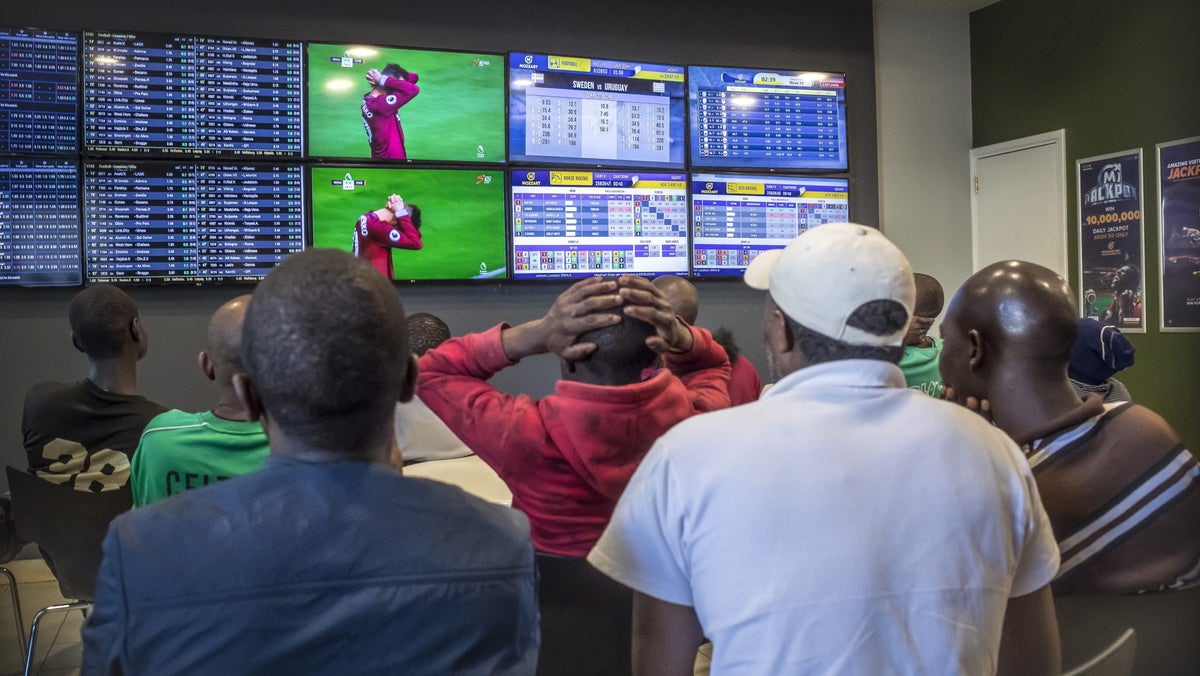
Nigerians at a sports betting shop. Source:
RestofWorld
If the prediction is correct, the user receives a payout based on the odds and amount wagered. For example, a $10 bet at odds of 2.00 would return $20, including the original stake. The bookmaker builds a margin into the odds, giving it an advantage over the long term and allowing it to make money across the bets it accepts.
What Prediction Markets Do Better Than Sportsbooks
Sportsbooks mainly focus on sporting events, while prediction markets cover a much wider range of outcomes. Users often trade on elections, economic data, entertainment events, policy decisions and other real-world developments.

PolyMarket website interface. Source:
PolyMarket
This gives prediction markets a broader range of opportunities throughout the year, rather than tying activity mainly to football seasons, major tournaments or other sporting competitions.
Market prices provide a collective signal
Prediction-market prices show what traders collectively expect to happen. If a contract trading at 70 cents represents a 70% chance of an event occurring, the price reflects the market’s current view based on what participants are willing to buy and sell.
This is different from a bookmaker publishing odds for a sports event. A bookmaker sets odds based on its own pricing model and adjusts them to manage risk and account for its margin, while a prediction-market price develops through trading between market participants.
Users can trade their positions
Prediction markets allow users to exit a position before an event is resolved, depending on the platform and contract. For example, someone who buys a contract expecting an event to happen may sell it later if its price rises, allowing them to lock in a profit without waiting for the final outcome.
This creates a different experience from a traditional sports bet, where users generally place a stake and wait for the event to finish before the bet is settled.
Potentially broader financial use cases
Prediction markets appeal to people who are interested in information and market signals, not just betting for entertainment. Traders use them to express views on events, assess market expectations or follow how sentiment changes as new information emerges.
This gives prediction markets potential uses beyond sports betting, particularly where people want to track expectations around politics, economics, business or other measurable events.
Could Prediction Markets Capture Africa’s Sports Bettors?
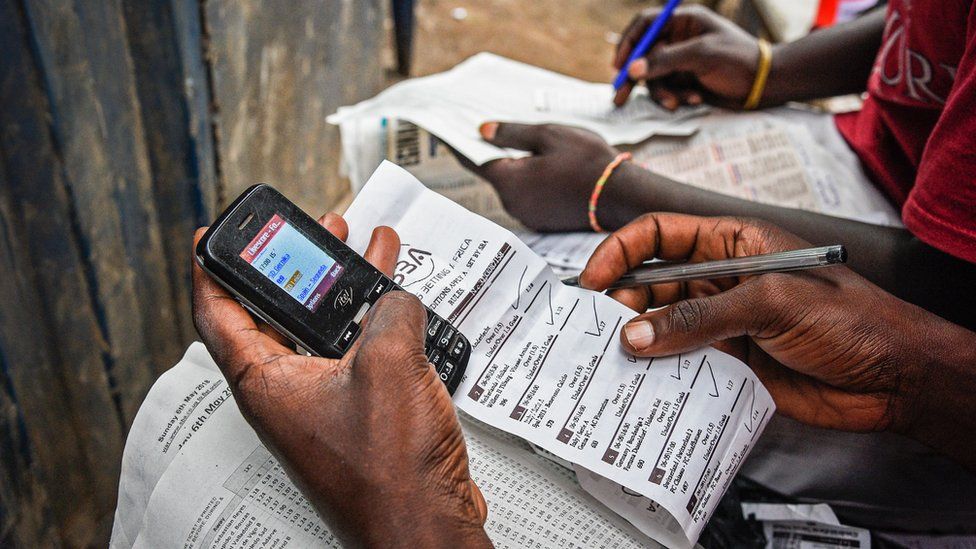
Sport bettors holding and tracking their tickets. Source:
The Voice of Africa Group
Prediction markets in Africa could attract some sports bettors, but replacing sportsbooks entirely would be difficult. For a bettor who already knows how to use a sportsbook, switching means learning a different way to find markets, understand prices, and manage positions. Prediction markets would therefore need to offer a clear benefit, not just another place to bet.
How Does the User Experience Compare?
Consider a Nigerian bettor who wants to bet on the Super Eagles in a major football match.
On a traditional sportsbook, the process is familiar. The user opens the app, finds the Super Eagles match, selects Nigeria to win, enters a stake in naira, and confirms the bet. The sportsbook shows the potential return before the user places the wager, so the process takes only a few taps.
On a prediction market such as Polymarket or Bayse Markets, the same user takes a different route. Instead of selecting a bookmaker’s betting option, the user finds a contract linked to the match, chooses the outcome they expect, and buys contracts. The position then appears in the user’s account, where they can monitor its value.
The difference is that sportsbooks focus on placing a bet and waiting for the result, while prediction markets give users a position they can manage before the event ends. For someone already familiar with mobile sports betting, the sportsbook process feels more straightforward, while the prediction-market model requires a different way of thinking about the wager.
How Do Payouts and Pricing Compare?
The same Super Eagles match shows how the money works differently.
Suppose a sportsbook offers 2.00 odds on Nigeria to win. A bettor who stakes ₦10,000 would receive ₦20,000 if Nigeria wins, including the original ₦10,000 stake. The sportsbook sets the odds before the bet is placed and builds its margin into the pricing.
Now consider an illustrative prediction-market contract priced at $0.60 for “Nigeria wins.” A trader buying 1,000 contracts would pay $600. If Nigeria wins, the contracts could settle for $1,000, giving the trader a $400 gross gain before applicable fees.
The prediction-market position can also change in value before the match ends. If the contract rises from $0.60 to $0.80, for example, the trader could sell the contracts for $800 instead of waiting for the final result. If the price falls, the position is worth less.
The key difference is how the potential return is determined. A sportsbook tells the bettor the payout through its odds when it accepts the wager. A prediction market prices the contract through trading activity, so the position’s value can change before settlement.
Neither model automatically offers a higher return. Sportsbook payouts depend on the odds offered, while prediction-market returns depend on the price paid, the final outcome, trading fees, and whether the trader exits before settlement.
Why Some Users May Use Both
The most likely outcome may not be a complete switch from sportsbooks to prediction markets. Some users could use sportsbooks for familiar football betting and live markets while turning to prediction markets for events that sportsbooks do not cover.
For example, a football fan might use a sportsbook to bet on a Premier League match, including an accumulator or live bet, but use a prediction market to trade on an election, economic announcement or another event. African prediction markets do not necessarily have to take the entire sports betting market to become a significant product.
This makes competition between the two less about one platform replacing the other and more about whether prediction markets in Africa can become an additional option for bettors who want a broader range of events and a more trading-focused experience.
ALSO READ: How Are AI Agents Reshaping Arbitrage in Prediction Markets
Regulation Could Decide Who Wins
Sports betting is already regulated as gambling in several African markets, although the rules and regulators differ by country. In Nigeria, sports betting is regulated through a combination of federal and state frameworks. Following a 2024 Supreme Court ruling, states have primary authority over lotteries, gaming and betting, while the Federal Capital Territory remains under federal jurisdiction.
In Kenya, the Gambling Control Act 2025 requires online bookmakers and other gambling operators to obtain licences, while also setting requirements around player verification, responsible gambling and consumer protection.
South Africa also has an established gambling framework under the National Gambling Act 2004, with national and provincial authorities sharing responsibility for regulation and licensing. The framework covers gambling and wagering and sets standards for the industry.
This gives traditional sportsbooks a relatively clear regulatory path: an operator offering sports betting generally knows that it is entering a regulated gambling market and must meet the relevant licensing, tax and consumer-protection requirements.
Prediction markets are harder to classify because their structure can resemble both betting and financial trading. That distinction can matter to regulators. If a prediction market is treated as gambling, it could face gambling licensing requirements.
If regulators treat its contracts as financial or derivative products, they could instead fall under securities or financial-market rules. The regulatory debate around prediction markets in the US shows how complicated this distinction can become.
Recent legal battles involving Kalshi in New Jersey show how difficult it can be to classify prediction markets. In New Jersey, Kalshi sued after the state said its sports event contracts were unauthorized sports wagers; a federal appeals court later ruled in Kalshi’s favour, finding that federal commodities law preempted the state’s sports-betting rules.
RELATED: Court Temporarily Blocks Tennessee Regulators From Taking Action Against Kalshi
Licensing and Consumer Protection Will Matter
Whatever regulatory category African prediction markets fall into, operators will need rules covering who can use the platform, how customer funds are handled, how contracts are settled, and what happens when disputes arise.
Consumer protection is also important because prediction markets in Africa would work differently from traditional sports betting. Users need to understand the fees, how contracts work, age restrictions, and what happens to their money if something goes wrong.
The Bigger Opportunity May Be Beyond Replacement
Prediction markets may not need to take sports bettors away from sportsbooks to become successful in Africa. Their bigger opportunity could be to create a new type of market for people who already follow sports but also want to trade on politics, economics, business, and other events that traditional betting platforms do not typically cover.
For operators, the challenge will be turning that potential into a product that feels simple and familiar to African users. If prediction markets can combine the accessibility of mobile betting with the flexibility of trading, they could expand the market beyond its current focus on football rather than simply competing for the same bettors.
Disclaimer: This article is intended solely for informational purposes and should not be considered trading or investment advice. Nothing herein should be construed as financial, legal, or tax advice. Trading or investing in cryptocurrencies carries a considerable risk of financial loss. Always conduct due diligence.
Enjoyed this? BookmarkDeFi Planet, explore related topics, and follow us onTwitter,LinkedIn,Facebook,Instagram,Threads, and CoinMarketCap Community for seamless access to high-quality industry insights.
Take control of your crypto portfolio with DEFI PLANET PRO, DeFi Planet’s suite of analytics tools.
The post Can Prediction Markets Really Replace Sports Betting in Africa? appeared first on DeFi Planet.