Cardano Makes Thousands Of Onchain Signature Checks Cheaper
The @Cardano Foundation has confirmed that Plutus smart contracts can now verify thousands of cryptographic signatures natively on-chain, using BLS12-381 elliptic curve cryptography. The chan
A
AnonymousCryptoCompass newsroom
July 17, 2026
2 min read
NEWS
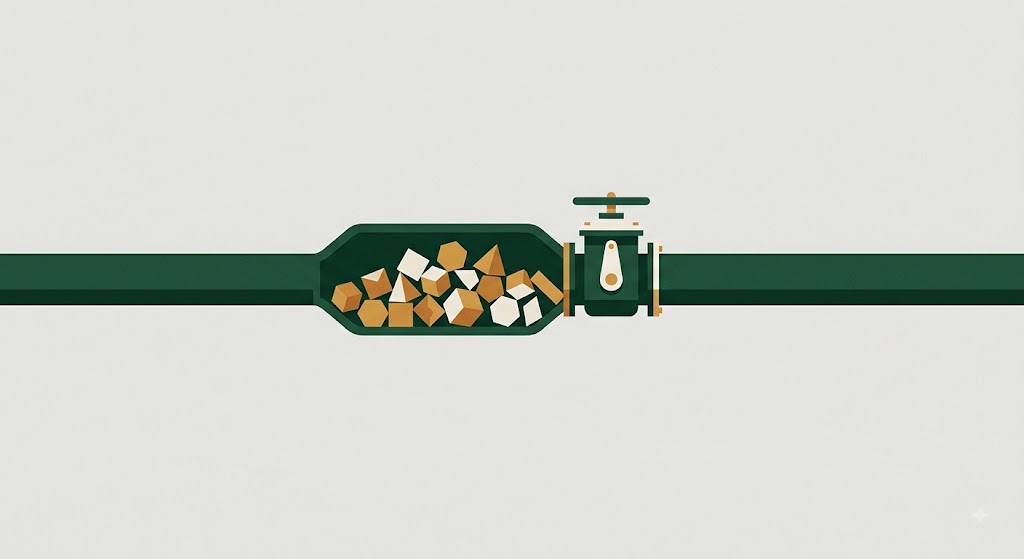
CryptoCompass editorial visual for defi coverage.
The @Cardano Foundation has confirmed that Plutus smart contracts can now verify thousands of cryptographic signatures natively on-chain, using BLS12-381 elliptic curve cryptography. The change lowers the cost of large-scale signature checks while keeping execution costs predictable.
How It Works
BLS12-381 is a pairing-friendly elliptic curve that allows multiple signatures to be compressed into a single proof. According to Cardano's own improvement proposals, this technology compresses multiple signatures into a single proof, reducing computational expense and eliminating reliance on off-chain verification. Previously, running such checks off-chain added transaction overhead and placed extra computational burden on the party constructing the transaction.
Pairing-friendly curves enable a large number of cryptographic primitives that are essential for the scalability of Cardano. The BLS12-381 support in Plutus was formalised through CIP-0381, which extended the Plutus language with basic operations over the curve. A further proposal, CIP-0133, adds multi-scalar multiplication (MSM) as a built-in, a key operation for verifying pairing-based proofs at scale. Incorporating this function directly is expected to streamline cryptographic operations, reduce transaction costs, and maintain the integrity of existing tools.
What It Means in Practice
The upgrade is part of Protocol Version 11 and is expected to benefit multi-signature custody platforms, cross-chain bridges, and governance-heavy DeFi protocols. By handling signature aggregation natively within the Plutus runtime, developers no longer need to rely on external computation or accept the higher fees that come with larger transaction sizes when off-chain workarounds are used.
Public key aggregation in the BLS multi-signature scheme is one direct beneficiary. It is a popular scheme that allows many signatures to be aggregated into a common message, so that verifying the short multi-signature is fast. That property is particularly useful for cross-chain bridge designs and on-chain governance systems where large validator sets must co-sign transactions.
The practical impact will ultimately depend on how quickly developers integrate the new primitives into production applications. Wider adoption across the Cardano ecosystem will determine whether the cryptographic upgrade translates into measurable gains in throughput and user costs.
Bitcoin developer Luke Dashjr has been removed as a Bitcoin Improvement Proposal (BIP) editor following the stalled BIP-110 fork, a personnel change that puts renewed attention on how Bitcoin
Ravencoin, a proof-of-work chain worth around $57 million, warns about an attack exploiting a critical consensus flaw in which the compromised nodes will be able to validate blocks that shoul
You deposit funds with a Brazilian exchange. You then try to send $12,000 to a wallet you control. From January 1, 2027, that transfer does not go anywhere for 24 hours. Brazil’s central bank