Opposition to the proposed event spending outweighed support by roughly five to one, according to reported voting data. Cardano's governance participants have voted down a Cardano Foundation
Opposition to the proposed event spending outweighed support by roughly five to one, according to reported voting data.
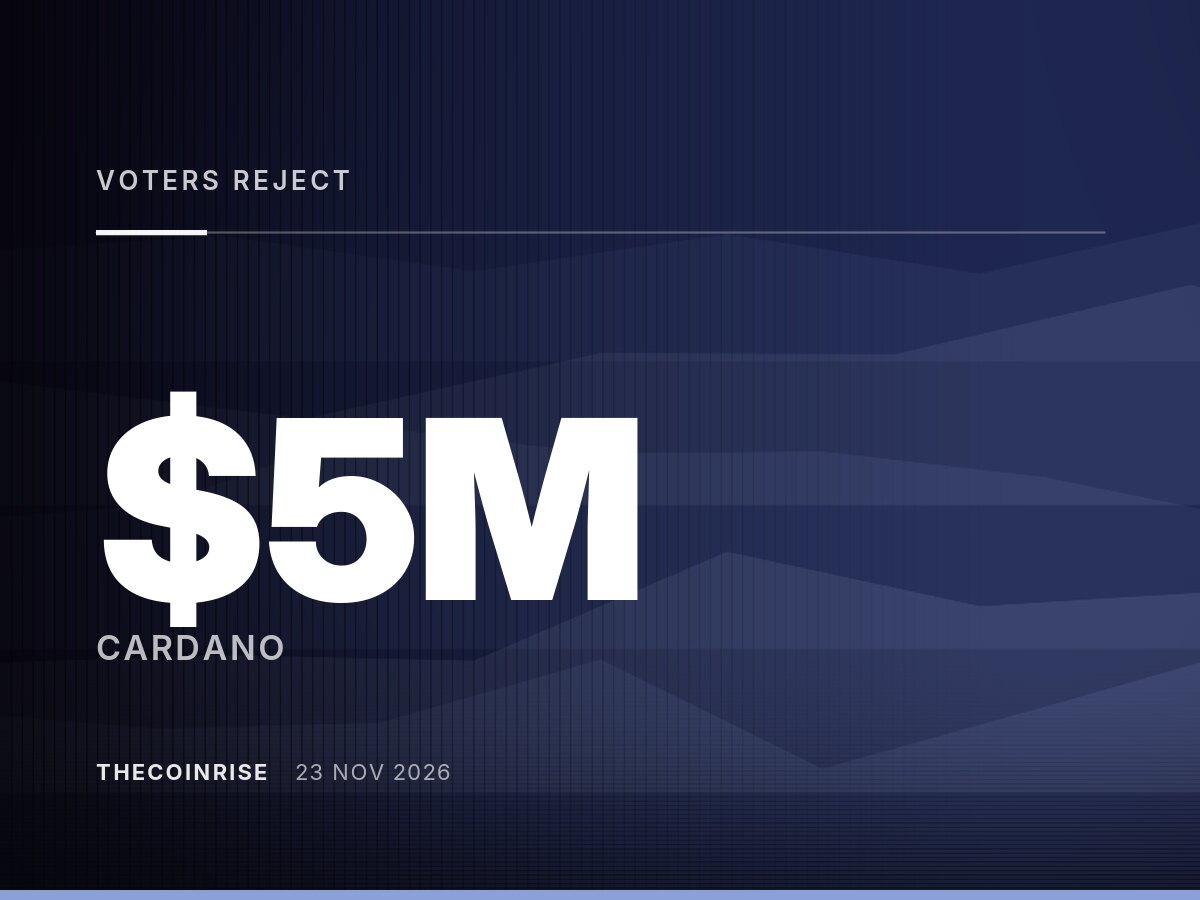
Cardano's governance participants have voted down a Cardano Foundation proposal seeking approximately $5 million for conference and event spending planned for 2027. Reported figures show opposition votes outnumbering support by roughly five to one. The scale of the pushback stands out even by the standards of Cardano's often contentious treasury debates.
Cardano operates one of the more formalized on-chain governance systems in the crypto industry. ADA holders and delegated representatives, known as DReps, vote directly on treasury proposals submitted by the Cardano Foundation, Intersect, and other ecosystem bodies. Budget requests covering marketing, conferences, and operational costs routinely go through this process before funds are released from the protocol's treasury.
The rejected proposal reportedly covered spending tied to conference appearances and related promotional activity planned for 2027. Large multi-year budget requests of this kind have previously drawn criticism from community members who argue that treasury funds should prioritize core development, infrastructure, or direct ecosystem grants over marketing-heavy initiatives.
The lopsided vote margin suggests the disagreement extends beyond routine budget skepticism. A five-to-one opposition ratio indicates broad consensus among participating voters rather than a narrow procedural objection. This level of pushback can shape how future Foundation proposals are structured, potentially encouraging smaller, more itemized budget requests rather than large multi-year allocations.
Treasury governance disputes are not unique to Cardano. Other proof-of-stake networks with on-chain treasuries, including Polkadot and Tezos, have faced similar friction between foundations proposing large marketing or event budgets and token holders wary of outsized spending. Cardano's governance framework, formalized through its CIP-1694 upgrade, was designed in part to give the community direct authority over exactly these kinds of decisions.
The Cardano Foundation has not been detailed in available reporting regarding how it plans to respond to the rejected proposal. Whether it will resubmit a smaller budget, break the request into separate votes, or pursue alternative funding mechanisms remains unclear based on current information.
For a network built around the idea of decentralized, voter-driven treasury management, this episode serves as a visible test of that system in practice. Community rejection of a Foundation-backed budget shows voters are willing to exercise that authority even against proposals from Cardano's central steering organization.
Market Impact
The vote itself is a governance event rather than a market-moving announcement, and no price reaction has been reported in connection with it. Its significance lies in what it signals about treasury discipline within Cardano's ecosystem heading into 2027 planning cycles.
Investors and ecosystem participants often watch treasury governance outcomes as a proxy for how disciplined a protocol is about capital allocation. A strongly rejected budget request may be read as a sign of healthy community oversight, while repeated friction between the Foundation and voters could raise questions about coordination within Cardano's governance structure.
The rejected budget underscores how actively Cardano's community now exercises its on-chain governance powers over treasury spending. How the Cardano Foundation responds will likely shape the tone of future budget proposals submitted to voters.
Frequently Asked Questions
What was the Cardano Foundation's 2027 conference budget proposal?
It was a proposal seeking roughly $5 million from Cardano's treasury to fund conference appearances and related event spending for 2027, according to reported figures.
How much opposition did the proposal face?
Reported voting data indicates opposition votes outnumbered support votes by roughly five to one, reflecting broad community disagreement with the proposed spending level.
Who votes on Cardano treasury proposals like this one?
ADA holders and delegated representatives, called DReps, participate in Cardano's on-chain governance system to approve or reject treasury-funded proposals, including budgets submitted by the Cardano Foundation.
Does this vote affect Cardano's token price or market activity?
No price or market impact has been reported in connection with the vote. It is a governance outcome related to treasury fund allocation rather than a market event.
What happens next for the Cardano Foundation's budget plans?
Available reporting does not specify the Foundation's next steps, such as whether it will resubmit a revised or smaller proposal following the rejection.
Originally reported by AltcoinGordon, written by Daniel Foster. Republished with permission.
View the original on AltcoinGordon →
The post Cardano Voters Reject Foundation’s $5 Million 2027 Conference Budget appeared first on TheCoinrise.com.