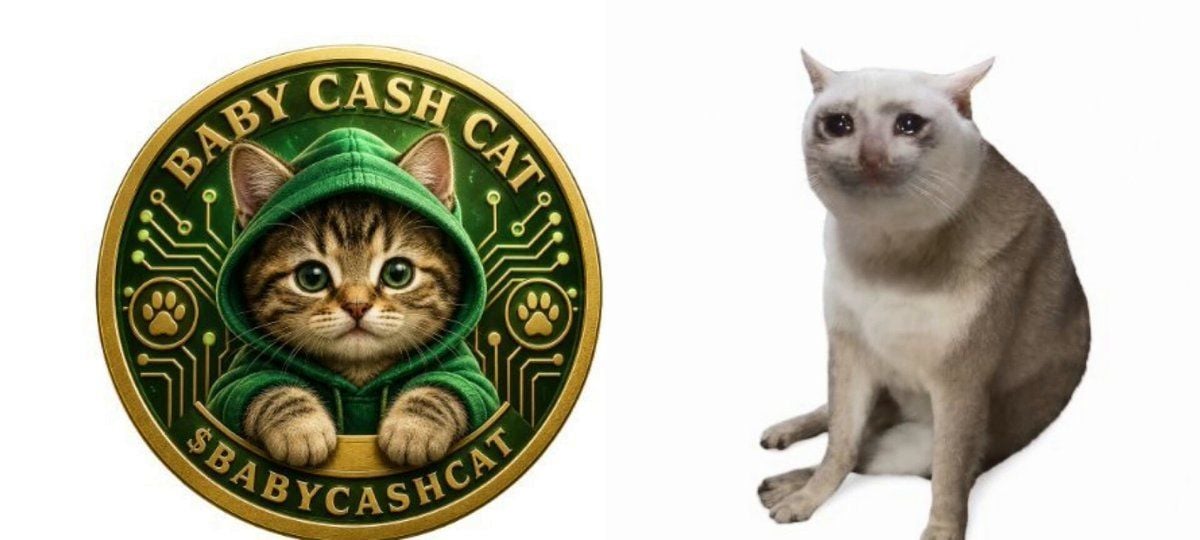
BabyCashCat, a spinoff of the Cash Cat memecoin, has surged 270% in 24 hours to a reported market capitalisation of $42 million, according to CoinGecko data. The token is also up 200% over se
BabyCashCat, a spinoff of the Cash Cat memecoin, has surged 270% in 24 hours to a reported market capitalisation of $42 million, according to CoinGecko data. The token is also up 200% over seven days, making it one of the stronger performers in the memecoin market this week.
The token trades on Robinhood Chain, the network where its parent token, Cash Cat ($CASHCAT), first gained traction.
Community model and creator fees
BabyCashCat uses a community-driven structure that includes creator fees. Those fees are designed to fund purchases of the parent Cash Cat token, with rewards for eligible holders.
Project details listed by MEXC and CoinMarketCap show the token launched on September 1, 2026, through the Pons launchpad on Robinhood Chain. According to MEXC, the launch carried a 1% Pons trading fee and a separate 1% creator tax, with proceeds intended for community development, marketing, token buybacks and support for the wider Cash Cat narrative. CoinMarketCap lists a fixed maximum supply of 1 billion tokens and presents the project as the baby of Cash Cat.
Price tracker data for small tokens can differ widely by platform and over time. Some aggregators report much lower market capitalisations for BabyCashCat than the $42 million figure cited by CoinGecko, so readers should check live data before drawing conclusions.
Background on the parent token
Cash Cat is a memecoin on Robinhood Chain, the Layer 2 network Robinhood launched on July 1, 2026. Fortune reported that Cash Cat reached a market capitalisation of around $150 million within days of the chain's launch, citing CoinGecko. The name is a callback to the early days of Robinhood, when co-founders Vlad Tenev and Baiju Bhatt first called their company CashCat, per Fortune's reference to a New Yorker profile.
The token is not a Robinhood product. Datawallet notes that Robinhood did not create or endorse it, and that the token later fell more than 90% from its peak as early holders sold into demand. That history is a reminder of how volatile memecoins tied to a single narrative can be.
Spinoff tokens such as BabyCashCat typically rely on the attention of the parent project and on social momentum rather than on product utility. Liquidity is often thin, and sharp gains can reverse quickly. The creator-fee mechanism may add steady buying pressure for Cash Cat, but it does not remove the risks of trading low-liquidity tokens.
This article is for information only and is not investment advice.
Sources: