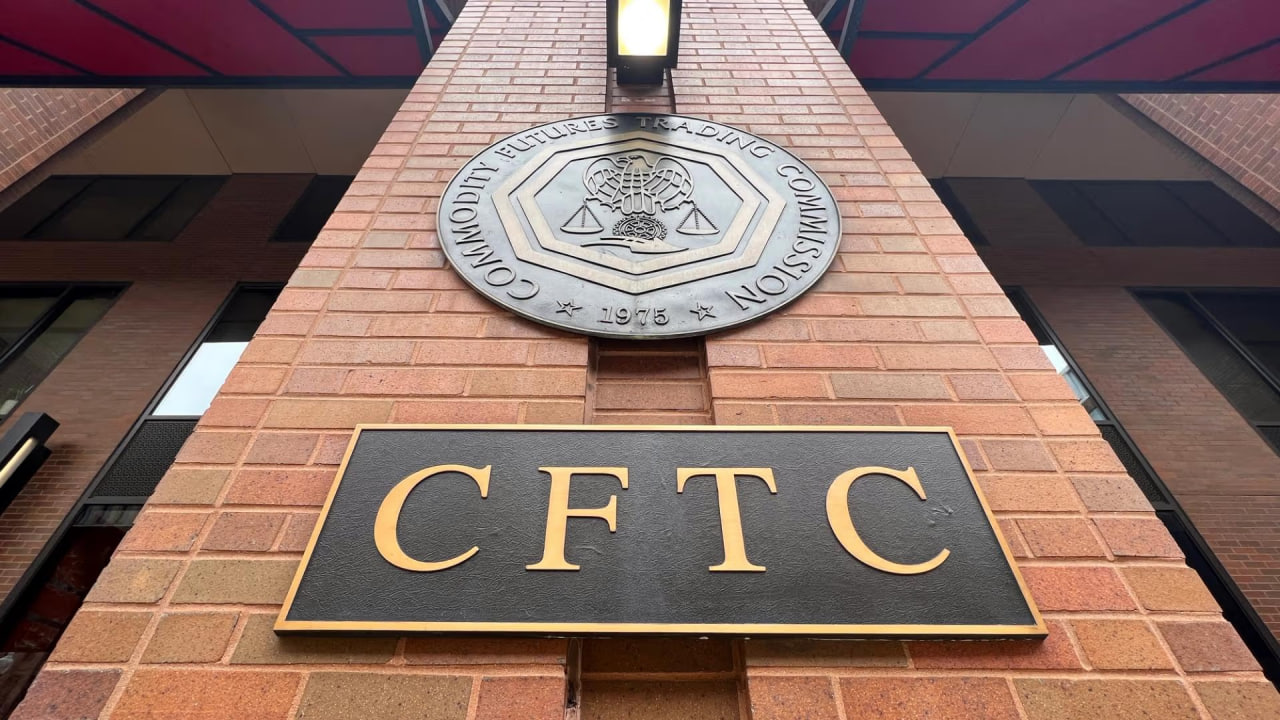
Current status: The draft is undergoing White House review. What has changed: The CFTC has moved its alternative plan into the federal rulemaking process. What has not changed: No crypto rule
Current status: The draft is undergoing executive review.
What has changed: The CFTC has moved its alternative plan into the federal rulemaking process.
What has not changed: No crypto rules, licenses or customer protections have taken effect.
White House review comes before public release
The filing concerns a CFTC rulemaking titled “Blockchain and Digital Assets,” identified as RIN 3038-AF66. Its public description says the agency is considering changes to its regulations for blockchain-based trading systems and digital assets.
The description is brief because the proposed text has not been released. The White House Office of Information and Regulatory Affairs, or OIRA, reviews major federal proposals before they become public. It may clear the draft, request revisions or return it to the agency.
White House clearance would not make the proposal binding. The CFTC would still need to approve and publish it before seeking public comments. According to the agency’s rulemaking guide, proposed rules normally receive a comment period of between 30 and 60 days. A separate decision would be required before any final requirements took effect.
Selig previewed the legal approach in August
CFTC Chair Michael Selig had described what the agency intended to do if Congress did not pass CLARITY four weeks before the Senate vote. In an August 20 address, he said staff had been directed to explore crypto market rules using powers the agency already holds.
“The CFTC will utilize its existing authorities to begin establishing a regime for crypto asset markets,” Selig said.
His remarks described a possible registration path based on designated contract markets, or DCMs. These are federally regulated exchanges that list futures and other derivatives, monitor trading and enforce rules intended to protect market integrity.
Selig said existing registrants and some crypto exchanges that are not currently registered could seek designation as a type of DCM called a “crypto asset market.” Approved venues could then offer leveraged or margined crypto trading under requirements written for those products.
The CFTC already regulates derivatives and certain retail commodity transactions financed with leverage or margin. Selig did not, however, describe a comprehensive route for fully paid purchases on ordinary crypto spot exchanges.
The CFTC cannot recreate CLARITY through rulemaking
The failed CLARITY vote left the CFTC without the broader spot-market authority contemplated by the bill. Under current law, the agency can pursue fraud and manipulation involving commodity spot markets, but it does not supervise non-security crypto exchanges through a comprehensive federal regime.
What a CFTC rule may cover
What CLARITY was meant to add
Leveraged and margined crypto trading
Broader oversight of non-security spot markets
Requirements for CFTC-regulated venues
A statutory division between SEC and CFTC responsibilities
A possible registration path for eligible exchanges
Registration categories covering digital-commodity intermediaries
Rules based on the
CFTC’s current mandate
Statutory authority that would survive a change in agency policy
The proposed rule may therefore cover particular products and regulated venues, but it cannot give the CFTC general authority over non-security spot exchanges. It also cannot settle the legal status of every token or remove all areas of overlap with the SEC.
Onchain protocols do not fit neatly into an exchange model
Extending the plan beyond centralized venues creates another problem. A DCM has an identifiable operator that can register, monitor customers and enforce trading rules. An onchain protocol may divide its software, interface, governance, liquidity and transaction settlement among different participants.
Selig said staff would consult protocol developers about lawful ways to offer onchain financial services in the United States. His remarks did not identify which participant would carry the resulting obligations.
The eventual text will need to show whether the CFTC intends to regulate front-end operators, protocol developers, governance bodies, fee-collecting businesses or some combination of them. Until then, the filing should not be treated as either an approval or a prohibition of decentralized finance.
READ MORE:
 SEC Opens Tokenized Stock Route After CLARITY Setback
What exchanges and customers should watch next
No platform can rely on the draft until a final rule becomes effective. Once the proposal is published, its practical reach will depend on several provisions:
- Which crypto assets and transactions would qualify.
- Whether any fully funded spot trading would be covered.
- How exchanges would hold and separate customer assets.
- What capital, surveillance and conflict controls would apply.
- Whether offshore platforms could seek US registration.
- How the rules would treat self-custody and onchain software.
These conditions will show whether major crypto exchanges receive a workable federal registration path or whether the proposal mainly adapts derivatives rules for a smaller group of leveraged products.
The public draft will show how much the CFTC can accomplish
The proposal’s value will depend on whether it reaches trading activity that currently lacks direct federal supervision without exceeding the CFTC’s legal mandate.
A usable registration process, custody requirements and defined responsibilities for onchain businesses could bring part of the market under closer oversight. If the text remains limited to leveraged trading, ordinary spot activity will continue waiting for the authority that Congress declined to provide through CLARITY.
This article is provided for informational purposes only and does not constitute legal, financial or investment advice. The proposal may change during review and rulemaking.
The post CFTC Sends Crypto Proposal to White House After CLARITY Fails appeared first on Coindoo.