The U.S. Commodity Futures Trading Commission is signaling that prediction markets should dial back faulty filings tied to trading incentives, sharpening its scrutiny of how these venues desi
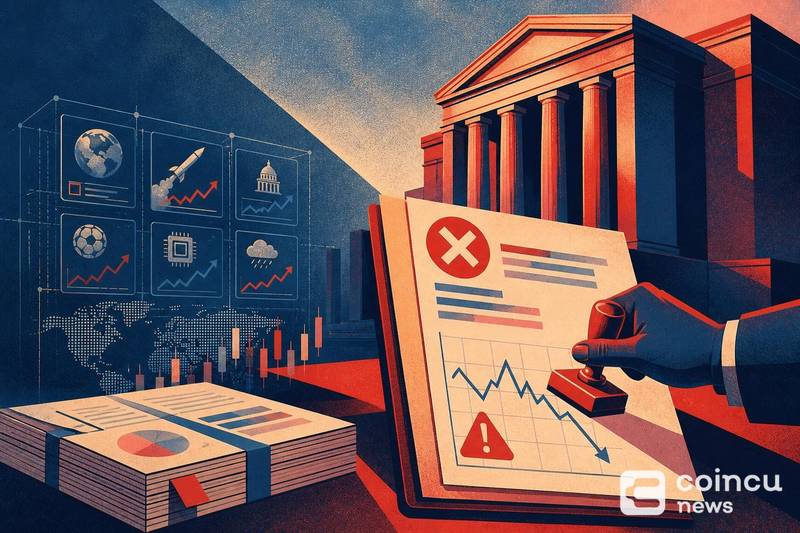
The U.S. Commodity Futures Trading Commission is signaling that prediction markets should dial back faulty filings tied to trading incentives, sharpening its scrutiny of how these venues design and disclose programs meant to boost trading activity.
What the CFTC said about prediction market incentive filings
The core of the regulator's message centers on filings connected to trading incentives, the mechanisms platforms use to attract order flow and grow participation. The concern was laid out in a CFTC statement flagged as the primary source for this development. For related coverage, see CFTC Charges Florida Man Over $397M Crypto Ponzi Scheme.
The story is a regulatory one rather than a market-price event, and it was first reported in detail by CoinDesk on August 12, 2026. This article is anchored to that CFTC release and does not assert any enforcement outcome, penalty, or settlement, none of which are confirmed in the available material. For related coverage, see Treasury Secretary Bessent Urges Congress to Pass Clarity Act for Digital Asset Rules.
Why trading incentives are drawing regulatory scrutiny
Incentive design and filing quality are linked because the programs platforms use to reward trading must be described accurately in the paperwork submitted to the regulator. When those descriptions are incomplete or inconsistent, the CFTC treats it as a disclosure and compliance matter rather than a marketing question.
The relevant paperwork flows through the agency's trading organization rule filing process, which governs how registered venues submit and amend their operating rules. Faulty submissions in that channel are what the regulator is asking prediction markets to reduce.
For operators, the practical implication is tighter attention on the accuracy of incentive-related rule filings before they are submitted. The tension over who oversees these venues has been building, as seen when Polymarket tested CFTC authority amid state-level actions.
For traders, there is no confirmed price, volume, or liquidity impact to report. The research underlying this story contains no market data, so any claim of a token or platform-level financial reaction would be unsupported.
The debate over how prediction markets should be regulated also extends beyond the CFTC, with a16z Crypto urging the SEC to update prediction-market rules amid overlapping jurisdictional questions.
How this fits into the broader CFTC oversight narrative
This development is best read as part of the agency's ongoing oversight of market structure and the quality of rule filings, not an isolated dispute. The CFTC has continued to issue policy and enforcement communications, including a separate press release in the same period.
State-level friction has run alongside the federal picture, such as when a Minnesota prediction market ban was paused for Kalshi and Polymarket. The filing-quality concern adds a compliance dimension to that broader contest over jurisdiction.
FAQ
What did the CFTC say about prediction markets? The regulator indicated that prediction markets should reduce faulty filings tied to trading incentives, framing it as a disclosure and compliance issue per the regulatory context around informed trading in these venues.
Why are trading incentives part of the filing debate? Because incentive programs must be described accurately in rule filings, and inaccurate descriptions become a compliance problem for the venue.
Does the research confirm any direct market impact yet? No. The available research contains no verified price, volume, or market-cap data, so no market impact can be confirmed.
Disclaimer: This article is for informational purposes only and does not constitute financial or investment advice. Cryptocurrency and digital asset markets carry significant risk. Always do your own research before making decisions.
The post CFTC Urges Prediction Markets to Revise Faulty Incentive Filings was initially published on Coincu.