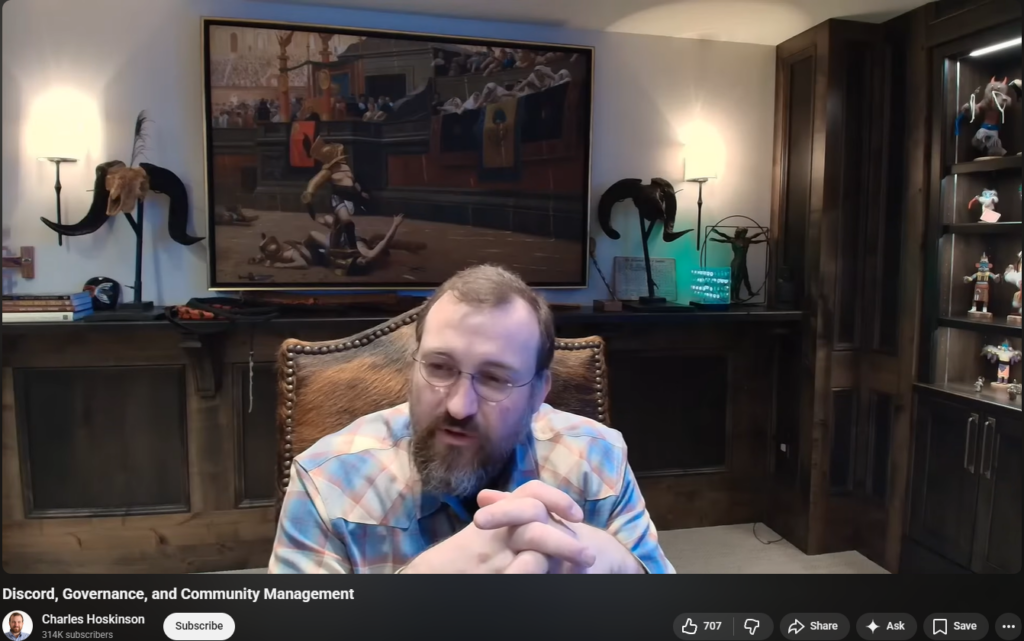
Charles Hoskinson Defends Cardano Treasury Strategy Amid Ecosystem Challenges
Charles Hoskinson stood for Cardano’s approach to the treasury but cautioned about possible ecosystem breakdowns due to market performance. This controversy heated up after various Cardano in
A
AnonymousCryptoCompass newsroom
June 15, 2026
3 min read
NEWS
CryptoCompass editorial visual for policy coverage.
Charles Hoskinson stood for Cardano’s approach to the treasury but cautioned about possible ecosystem breakdowns due to market performance.
This controversy heated up after various Cardano initiatives folded and Cardano users refused to accept plans that included treasury allocations.
Charles Hoskinson, the founder of Cardano ($ADA), has addressed concerns regarding the treasury spending and ecosystem support within Cardano. This discussion emerged after the shutdown of several projects, such as TapTools. He said that the market conditions have become difficult. This has increased the pressure on projects that function in Cardano’s ecosystem. He added that earlier this year, he warned about the possibility of project failures due to the current market situation. Hoskinson stated, “I said at the beginning of the year, we’re going to see a lot of people collapse because the markets are really bad.” He also warned that “there’s going to be a wave of failures in the ecosystem” as projects that are struggling in their pace continue to face challenges financially.
During a livestream this weekend, Hoskinson made his remarks to clarify comments. The debate has been around whether Cardano should position its treasury funds more vigorously to support the development of its ecosystem. He argues that a lot of other firms could have benefited from the additional funding, acquisition, and strategic support. He pointed to the previous acquisitions, including its wallet provider Nami, and Blockfrost, an infrastructure company, as examples of arbitration that assisted in the process of strengthening the ecosystem infrastructure. Hoskison is frustrated that many members of the community hesitate to approve their treasury spending proposals. He stated that “there doesn’t seem to be a desire to spend the treasury to take these ventures to the next level.”
This controversy underscores the questions that have arisen around Cardano’s treasury management and governance model structure. Cardano has been following a decentralized governance framework, where the representatives of the community hold authority over treasury allocation decisions. Despite being backed up by ecosystem leaders like Hoskinson, several projects have failed to secure sufficient support. These resulted in igniting a debate on whether the system can respond to the difficulties in the market environment effectively.
On the other hand, participants continue to keep an eye on the Cardano network as it declines in market conditions and navigates project closure. It should be noted that there have been more discussions around treasuries as ecosystems consider strategies for future growth. According to some analysts, maintaining treasury funds ensures future growth potential. Some believe that designated funds can keep developers, infrastructure providers, and businesses through rough market periods. Nevertheless, the ongoing discussion revolves around the Cardano Treasury Management approach.
Security researchers found a fake AppleiPhone Duo preorder page using a $500 voucher lure to target vulnerable iPhones and crypto wallets before Oct. 16 preorders. Key Points: Exploit attempt
Ethereum price has entered October near $2,695 after gaining 32.6% in August and another 8.8% in September, leaving $2,775–$2,800 as the main barrier standing between ETH and a possible move
Summary Two whale wallets accumulated 572.56 million PUMP tokens worth approximately $3.58 million as the token recorded substantial daily price gains. PUMP futures turnover exceeded $1.04 bi