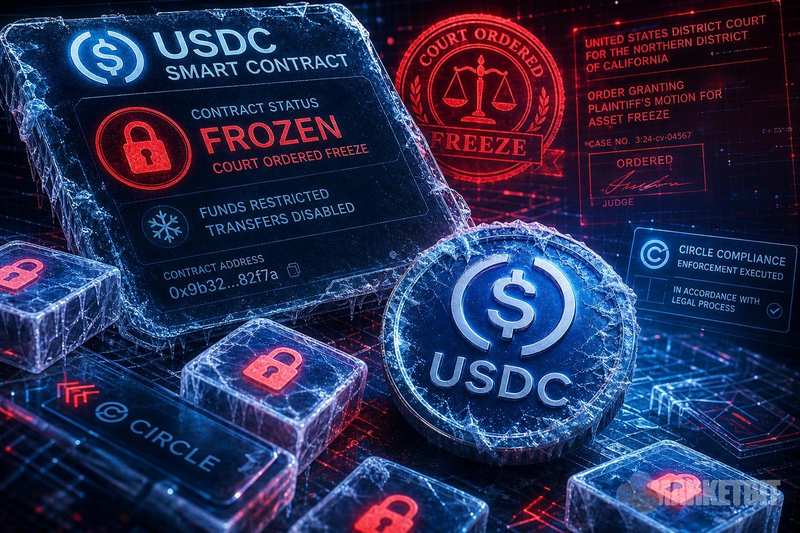
Circle has reportedly frozen $12.6 million in USDC held in a smart contract associated with Zama, following what is described as a court order. The action highlights the ability of stablecoin
Circle has reportedly frozen $12.6 million in USDC held in a smart contract associated with Zama, following what is described as a court order. The action highlights the ability of stablecoin issuers to restrict access to funds at the contract level when compelled by legal authorities.
What the report says about Circle's freeze of Zama's USDC contract
According to a report from SignalPlus, Circle blacklisted an address tied to Zama's cUSDC contract, effectively freezing the $12.6 million in USDC held within it. The freeze was triggered by a court order, though the specific jurisdiction and case details have not been publicly confirmed.
The report frames the action as a compliance measure. Circle, as the issuer of USDC, maintains the technical capability to add addresses to a blacklist, preventing any transfers of tokens held at those addresses.
Neither Circle nor Zama has issued a public statement confirming the freeze or providing additional context as of this writing. Circle's transparency page outlines the company's approach to compliance and reserves but does not reference this specific incident.
Why a court-ordered USDC freeze matters
The reported freeze underscores a fundamental characteristic of centralized stablecoins: the issuer retains administrative control over the token's smart contract. Unlike decentralized assets, USDC includes a blacklist function that allows Circle to prevent specific addresses from sending or receiving tokens.
For holders and protocols that custody significant USDC balances, this mechanism introduces counterparty risk distinct from market or credit risk. Funds can be rendered immovable by a single issuer action, even when the holder has not lost custody of their private keys. Past incidents involving bridge exploits and protocol hacks have shown how frozen funds can become part of a broader recovery or enforcement process.
Circle's compliance with court orders is consistent with its positioning as a regulated financial services company. The company has previously cooperated with law enforcement requests, and the ability to freeze funds is part of the infrastructure that regulators expect from stablecoin issuers operating within traditional legal frameworks.
The incident also raises questions relevant to the broader stablecoin and digital asset market. When large token supply events routinely draw market scrutiny, a freeze of this size, while modest relative to USDC's total circulation, adds to the ongoing debate about regulatory compliance versus censorship resistance in stablecoin design.
What traders and crypto observers will watch next
The immediate question is whether the freeze is a temporary hold pending a legal proceeding or part of a longer enforcement action. Court-ordered asset freezes can range from short-term injunctions to permanent seizures, and the duration will determine the practical impact on the affected contract and its users.
Market participants will likely monitor for official statements from Circle or Zama that clarify the legal basis and expected timeline. Any court filings that become public could shed light on the nature of the underlying case and whether additional addresses or assets are involved.
For the broader crypto market, this event serves as a reminder that stablecoin infrastructure operates within reach of traditional legal systems. Traders holding significant stablecoin positions in smart contracts may reassess concentration risk, particularly in protocols where a single freeze could affect pooled liquidity. Observers weighing these risks should also consider how figures like Robert Kiyosaki have urged investors to think critically about where and how they hold digital assets.
The next key developments are legal and operational: court filings, issuer statements, and any changes to the contract's blacklist status. Those updates, not market speculation, will determine the lasting significance of this freeze.
Disclaimer: This article is for informational purposes only and does not constitute financial or investment advice. Cryptocurrency and digital asset markets carry significant risk. Always do your own research before making decisions.
Read original article on marketbit.net