Circle OCC Approval: A Major Step for USDC and Crypto Infrastructure Circle Internet Group (NYSE: CRCL) received final approval from the U.S. Office of the Comptroller of the Currency on July
Circle OCC Approval: A Major Step for USDC and Crypto Infrastructure
Circle Internet Group (NYSE: CRCL) received final approval from the U.S. Office of the Comptroller of the Currency on July 10, 2026, to establish First National Digital Currency Bank, N.A. 
Source: Official Announcement
This is a federally chartered national trust bank, operating as Circle National Trust, focused on fiduciary digital asset custody services.
What the Circle's OCC National Trust Bank Approval Means
The approval clears the way for First National Digital Currency Bank, N.A. to open under the Circle National Trust name. The OCC first gave the firm conditional approval back in December 2025, following an application the company filed in June of that year. This final sign-off lets the bank actually begin operating.
At launch, the trust bank will only handle custody duties for Circle and its own affiliates. It is not a commercial bank, there's no lending or deposit-taking involved. Instead, it's built specifically to hold digital assets under strict fiduciary standards, the same standards that have governed national trust banks for decades.
Down the road, the bank plans to take on USDC reserve management too. The cash and short-term Treasurys backing USDC could eventually sit inside Circle's own federally regulated walls instead of third-party banks.
Custody starts with Circle and its affiliates only
Institutional custody may open later for regulated banks and financial firms
USDC reserve management is planned as a future step, not immediate
The move also lines up with the GENIUS Act, the federal framework that sets reserve and reporting rules for stablecoin issuers. Stablecoin regulation keeps tightening, and Circle now sits closer to the center of that system than most rivals.
For everyday USDC holders:
Minimal immediate changes
USDC stays redeemable 1:1 for USD
Reserves are expected to benefit from more robust, transparent federal custody over time
Redemption, transfers, and on-chain functionality stay the same
The main benefit is added confidence in stability and regulatory backing, which can lower perceived counterparty risk
For the Circle platform and institutions:
Bigger operational upgrades
Custody, future reserve management, and related services now sit inside one federally regulated entity, which simplifies compliance for institutional clients
Reduces due diligence burdens, since institutions often deal with complex state-level or offshore structures otherwise
The firm can offer clearer, federally supervised custody solutions, appealing to banks, asset managers, and payment providers integrating stablecoins
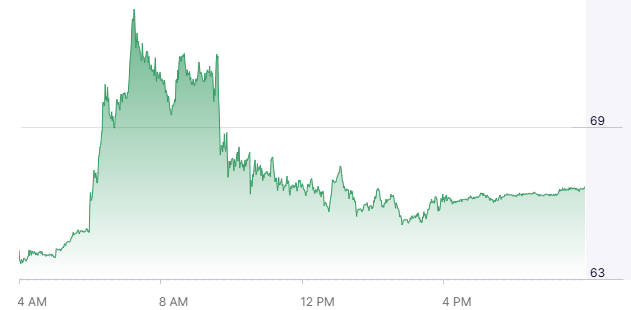
Markets Respond: CRCL Stock Jumped After the Circle OCC Approval News
CRCL stock opened at $70.66 and swung through a wide range — $65.07 to $72.86, before settling at $66.14 by the close, a gain of $3.13 on the day.
Source: Nasdaq Official
Trading volume hit 36,802,180 shares, well above the stock's average of 14,697,624, a clear sign that the approval pulled in serious buying interest rather than just casual attention.
Where Circle Stands Against the Competition
Circle isn't the only company that has gone after this kind of charter. The OCC granted conditional approvals to several digital asset firms back in December 2025, including Ripple, Paxos, BitGo, and Fidelity Digital Assets. Circle is simply the first of that group to cross the finish line with final approval.
The comparison that matters most is with Tether, still the largest stablecoin issuer by volume worldwide. Tether has continued to operate with far less direct engagement from U.S. regulators, and that gap is exactly where Circle's new charter could start to matter. Institutions that have stayed cautious about USDT's transparency now have a clearer, federally supervised alternative sitting right in front of them.
Ripple's push centers more on cross-border payments infrastructure than direct USD stablecoin competition, while Paxos has built its reputation on regulatory credentials without Circle's scale in circulation.
Fidelity and BlackRock, meanwhile, are playing a different game entirely, tokenized funds and asset management rather than stablecoin custody, so their approvals complement Circle's move more than compete with it.
Final Words: Why Does It Matters
Stablecoins are the core infrastructure for cryptocurrencies. And their growth depends on trust, transparency, and regulatory acceptance.
A national charter to USDC provides direct OCC supervision, aligning with U.S. efforts to regulate digital assets under frameworks like the GENIUS Act. This reduces fragmentation from state-by-state licensing and positions stablecoins as credible alternatives or complements to traditional banking rails.
Such milestones rebuild confidence and attract capital from conservative players, and for the U.S. it helps maintain leadership in financial innovation rather than ceding ground to offshore issuers.
Disclaimer: This article is for informational purposes only and does not constitute financial or investment advice. Crypto markets carry significant risk.