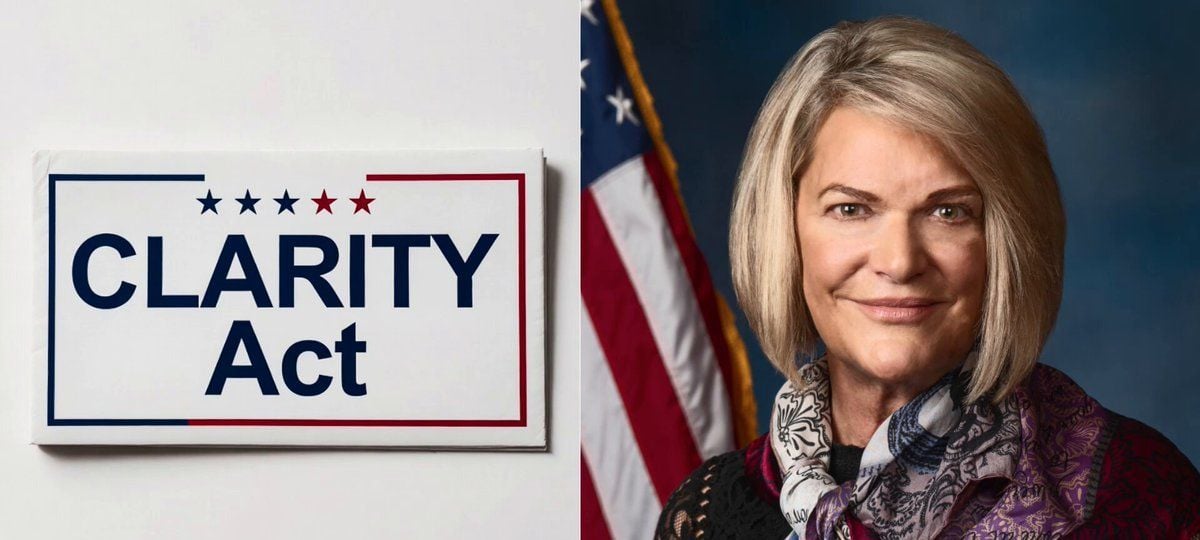
CLARITY Act Is The Fix For America's Crypto Brain Drain
Lummis Warns of Developer Exodus Senator Cynthia Lummis (@SenLummis) used a recent address to make a pointed case for the Digital Asset Market Clarity Act, better known as the CLARITY Act, ar
A
AnonymousCryptoCompass newsroom
June 23, 2026
2 min read
NEWS
CryptoCompass editorial visual for policy coverage.
Lummis Warns of Developer Exodus
Senator Cynthia Lummis (@SenLummis) used a recent address to make a pointed case for the Digital Asset Market Clarity Act, better known as the CLARITY Act, arguing that years of legal uncertainty have pushed talented crypto developers out of the United States and into the arms of more permissive jurisdictions. Her message to Congress was direct: "They want to build here. Let them."
The warning carries weight. Regulatory ambiguity over which federal agency governs digital assets has produced enforcement actions, court disputes, and what critics describe as a steady offshore drift of blockchain talent and capital. Countries including the UAE and Hong Kong have moved quickly to fill that gap, passing clear digital asset frameworks specifically designed to attract the builders and entrepreneurs that the US risks losing.
Where the CLARITY Act Stands
The CLARITY Act, formally introduced as H.R. 3633, passed the House in July 2025 by a bipartisan vote of 294 to 134, making it the most comprehensive crypto market structure bill ever to clear a chamber of Congress. The legislation is designed to end the long-running jurisdictional dispute between the Securities and Exchange Commission and the Commodity Futures Trading Commission by drawing a clear line: decentralised digital commodities would fall under CFTC oversight, while investment contracts and fundraising activity would remain with the SEC.
The bill cleared the Senate Banking Committee 15 to 9 in May 2026, a milestone for the industry, though significant hurdles remain before it can reach the president's desk. Disputes over stablecoin yield rules, DeFi oversight, and a proposed ethics provision covering officials who profit from crypto holdings have complicated floor negotiations. With the November 2026 midterm elections approaching and usable Senate floor time shrinking, the legislative window is tight.
Lummis, who chairs the Senate Banking Subcommittee on Digital Assets and has been the bill's most vocal Senate champion, is pushing for a final vote before her term ends in early 2027. She has said she intends to deliver the legislation to President Trump's desk before she leaves office. The stakes extend beyond her tenure: without passage, advocates warn the US risks ceding ground in what has become a fiercely competitive global race for blockchain innovation leadership.
The US Treasury has expanded its Iran-related sanctions across five sectors, and crypto is now explicitly one of them. The move treats digital assets as a named channel for enforcement, putti
Coinbase has chosen Chainlink to offer price infrastructure for its tokenized stocks, thus allowing shares of companies like Apple and NVIDIA to move around freely in decentralized lending an
Bitcoin surged past $80,000 on Tuesday for the first time since May, continuing a powerful rally that has marked its strongest weekly performance in over two years. ETF inflows and rising dem