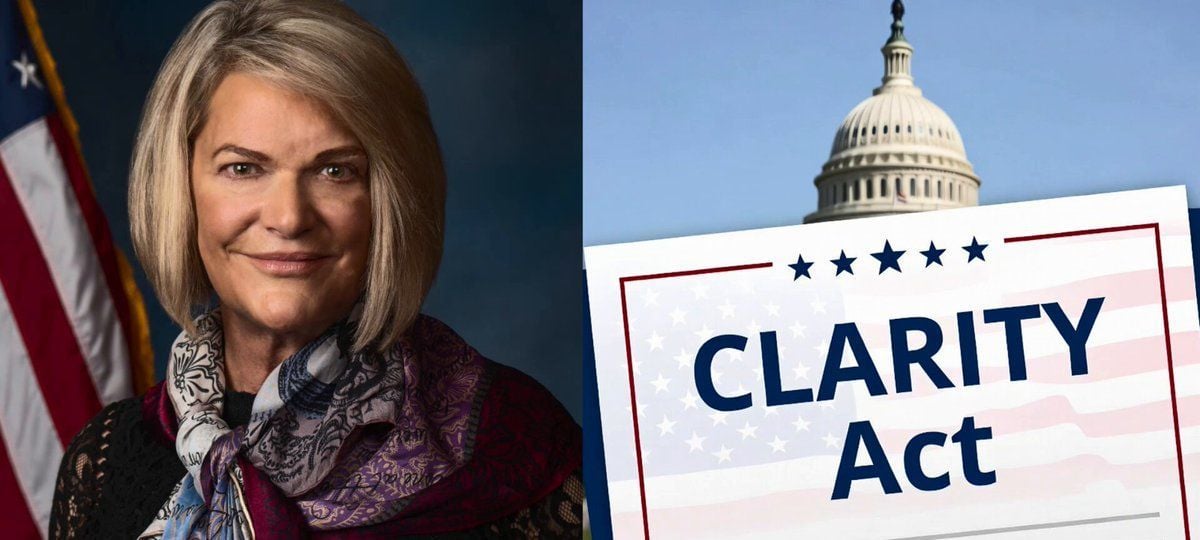
Lummis Frames Crypto Regulation as a Freedom Issue Senator Cynthia Lummis (@SenLummis) is making the case that digital assets are not just a financial instrument but an expression of American
Lummis Frames Crypto Regulation as a Freedom Issue
Senator Cynthia Lummis (@SenLummis) is making the case that digital assets are not just a financial instrument but an expression of American values. The Wyoming Republican, who chairs the Senate Banking Committee's subcommittee on digital assets, has argued that policymakers should focus on enabling innovation rather than restricting it, framing the debate around the CLARITY Act as one of financial freedom for ordinary Americans.
Lummis has long positioned herself as one of Washington's most vocal advocates for the crypto industry, pushing for clear rules that give developers, investors, and companies a defined path forward. Her broader argument is that digital assets represent a natural evolution of the financial system, not a threat to it.
Where the CLARITY Act Stands
The bill at the center of that debate is the Digital Asset Market Clarity Act, formally H.R. 3633. The CLARITY Act cleared the Senate Banking Committee on May 14, 2026, in a 15-9 bipartisan vote, marking a significant step forward after months of stalemate. Two Democrats, Senators Ruben Gallego and Angela Alsobrooks, joined all Republicans on the panel to support the measure.
Key issues remain unresolved, including an ethics provision related to government officials' crypto holdings and outstanding law enforcement concerns. A full Senate floor vote will require 60 votes, meaning broader bipartisan support is still needed. The bill would also need to clear the House before heading to President Trump's desk, as the House passed a different version of the bill last year.
The bill would divide regulatory oversight between the SEC and the CFTC. Under the proposal, the CFTC would take a central role regulating digital commodities and related intermediaries, while the SEC would retain authority over primary market crypto transactions that resemble traditional securities offerings. The aim is to end years of regulatory overlap and enforcement-driven ambiguity that critics say pushed crypto development offshore.
The bill has drawn support from major crypto companies including Coinbase, Circle, and Ripple, as well as the White House, which has been active in shaping negotiations. Opposition has come from banking groups, labor unions including the AFL-CIO, and law enforcement agencies, who argue certain provisions could create consumer risks or financial system vulnerabilities.
With midterm elections on the horizon, the legislative window is narrowing. The White House has set a July 4 target for passage, and any Senate floor vote likely needs to happen before August 2026, when campaigning begins in earnest and the Senate's calendar effectively closes for controversial votes.
Sources:CNBC: Crypto industry scores win as Clarity Act clears Senate hurdleCoinDesk: Senate Banking Committee advances Clarity Act to full Senate floorSenate Banking Committee: The Facts on the CLARITY Act