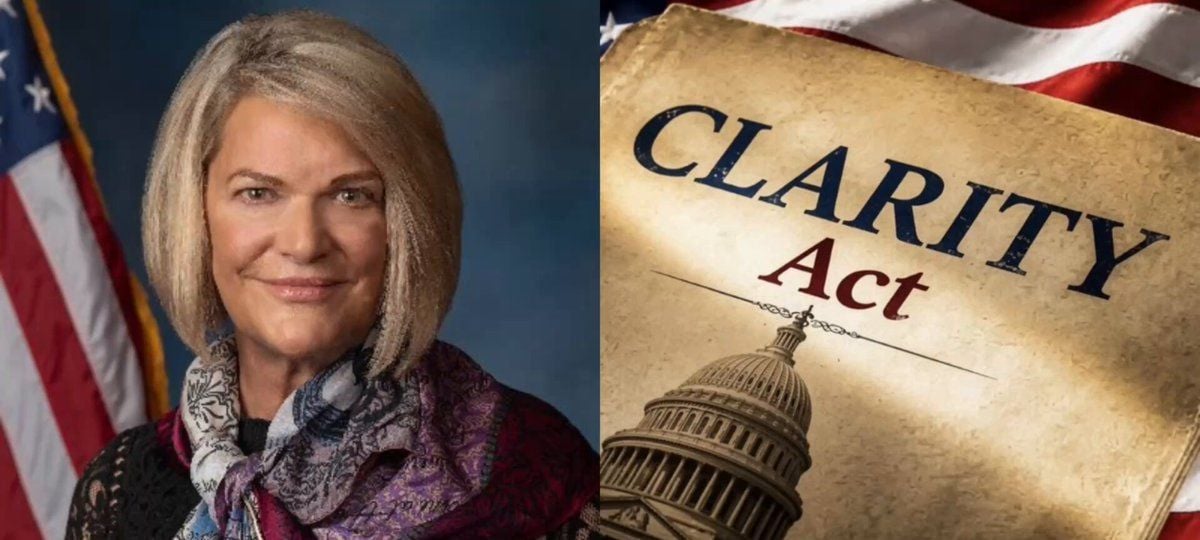
Clarity Act Treats DEFI as a Worthy Innovation, not a Loophole
Lummis Reframes DeFi as a Feature, Not a Flaw @SenLummis has declared decentralized finance a "worthy innovation" rather than a regulatory loophole, marking a notable shift in how federal law
A
AnonymousCryptoCompass newsroom
June 19, 2026
2 min read
NEWS
CryptoCompass editorial visual for policy coverage.
Lummis Reframes DeFi as a Feature, Not a Flaw
@SenLummis has declared decentralized finance a "worthy innovation" rather than a regulatory loophole, marking a notable shift in how federal lawmakers are approaching non-custodial protocols. The comments reinforce what many in the crypto industry have long argued: that autonomous, permissionless software should be treated differently from traditional financial intermediaries, not forced into frameworks built for centralised institutions.
The position carries real weight given the legislative backdrop. The Digital Asset Market Clarity Act cleared the House in July 2025 with a 294-134 bipartisan vote and passed the Senate Banking Committee 15-9 on May 14, 2026. Senator Lummis is now pressing for a Senate floor vote as the legislative calendar tightens.
What the Clarity Act Means for DeFi
The Clarity Act is the most advanced attempt yet to settle the biggest open question in US crypto: whether a token answers to the SEC or the CFTC. It routes decentralised digital commodities to the CFTC. The bill resolves longstanding ambiguity by creating an activity-based test: assets that are sufficiently decentralised fall under CFTC oversight as digital commodities, removing the perpetual Howey Test overhang that has weighed on institutional participation.
For DeFi specifically, the picture is nuanced. One section of the Clarity Act freed non-controlling developers from treatment as money services businesses, but an amendment revised another section that could still leave them open to being treated as securities intermediaries. A separate section outlines how to treat trading platforms that claim a place in decentralised finance but are not genuinely decentralised. These provisions will require close attention from protocol developers as the bill moves toward a floor vote.
The broader legislative stakes are clear. The Clarity Act would not end regulatory risk, but it would move the fight from agency-by-agency enforcement into a clearer statutory framework. If it passes, compliance costs may become more predictable and institutional participation easier to justify. Galaxy Research currently puts the probability of the Clarity Act becoming law in 2026 at 60 to 75 percent.
Ondo Finance’s native token, ONDO, is showing fresh signs of a potential bullish reversal as buyers continue to defend the token’s accumulation base. Meanwhile, surging activity on the Ondo P
Bitcoin is approaching a major resistance test just as the Federal Reserve's Jackson Hole symposium opens with an unusual agenda, setting up a macro-driven event window that crypto traders ar
TLDR: RWA.xyz tracked $38.35B in distributed assets on-chain, up 1.54% in 30 days as holders neared 3 million. Ethereum led distributed RWAs with $17.3B, ahead of BNB Chain at $5.8B and Solan