Coinbase is entering the Pokémon trading card craze, announcing plans to let users open digital card packs directly in its app, with every digital pull backed by an actual, physical Pokémon c
Coinbase is entering the Pokémon trading card craze, announcing plans to let users open digital card packs directly in its app, with every digital pull backed by an actual, physical Pokémon card.
The move plants the crypto exchange squarely in a booming collectibles market that has recently outperformed both Bitcoin and the S&P 500, while bringing a familiar tokenized real-world asset structure to one of the hottest hobbies in pop culture.
What Coinbase Actually Announced
Coinbase teased the product on X on September 28 with a short, punchy pitch:
“Rip packs on your phone. Every pull backed by a real, physical card. Vault it or ship it.”
The announcement itself didn’t name Pokémon directly, but Coinbase subsequently confirmed the connection in a reply to a user, making clear the initial packs will be built around the Pokémon Trading Card Game.
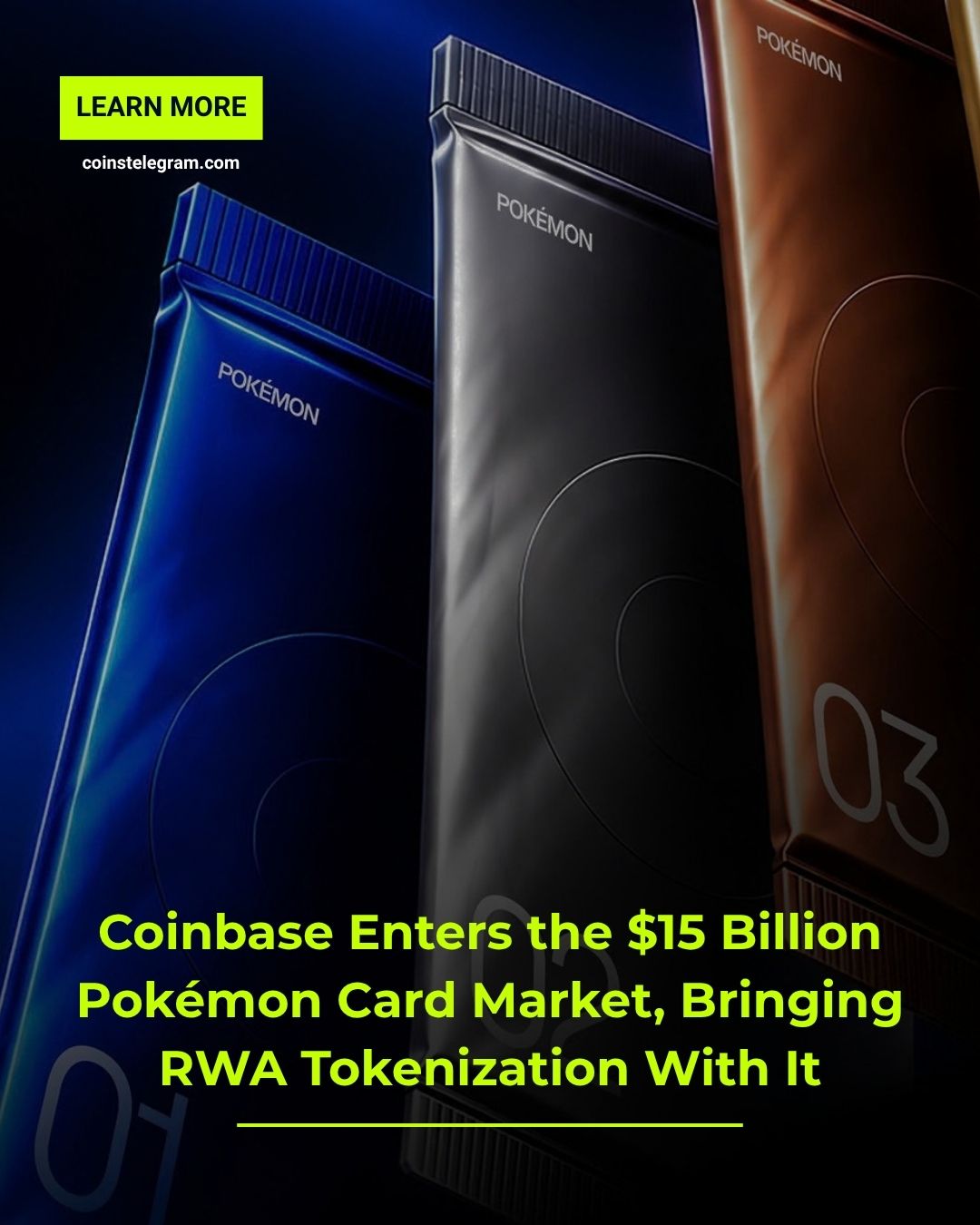
The promotional artwork accompanying the announcement displayed five differently colored packs numbered 01 through 05. Coinbase has not clarified whether these numbers and colors represent different price tiers, distinct card categories, or something else entirely. The company also has not disclosed pricing or a firm launch date for the product.
How the Experience Is Meant to Work
Based on Coinbase’s announcement, the basic mechanic is straightforward: a user opens a digital pack through the Coinbase app, the app reveals which card they’ve pulled, and that digital reveal is tied to an actual physical card held on the user’s behalf. From there, users get two options — store the physical card in Coinbase’s vault without ever touching it, or request it be shipped directly to their home.
What remains unconfirmed is whether users will be able to resell or trade their pulled cards without ever taking physical possession — functionally treating the digital representation of the card as a tradeable asset in its own right. Coinbase’s announcement and follow-up exchanges left this detail open. That gap matters: collecting a card and being able to freely trade it are two fundamentally different product experiences, even when both nominally happen through the same app interface.
Not the First Mover in Digital Card Packs
Coinbase isn’t the first major retailer to experiment with this model. GameStop already sells digital Pokémon packs through its own platform, with some packs priced as high as $2,500 — demonstrating there’s already established appetite for premium digital-pack products tied to physical collectibles. What differentiates Coinbase’s entry is its crypto industry background: in blockchain-based versions of similar collectibles markets, ownership of a card can already change hands entirely on-chain, with no physical movement of the underlying item required at all. Coinbase has not yet said whether its Pokémon product will function this way, using blockchain-based ownership records, or whether it will operate more like a traditional digital storefront with a vaulting and shipping option layered on top.
Why Pokémon Cards, and Why Now
The timing of Coinbase’s move lines up with a genuinely remarkable run for physical Pokémon card values. According to market tracking data, an index of Pokémon card prices has climbed approximately 28% year-to-date, a performance that has notably outpaced both Bitcoin, which has declined between 27% and 29% over a comparable period, and the S&P 500, which gained around 13%.
It’s important to keep this outperformance in proper context, however. While Pokémon cards have posted stronger percentage gains recently, the overall market for the collectible remains far smaller in absolute terms than either Bitcoin or U.S. equities. The total global Pokémon card market is estimated at somewhere between $10 billion and $15 billion — a fraction of Bitcoin’s market capitalization, which sits well above $1 trillion, and a tiny sliver of the S&P 500’s combined market value spanning 500 major public companies. In short, Pokémon cards have delivered better recent returns, not a bigger overall market.
The Tokenization Angle
Coinbase’s entry into physical collectibles fits into a broader trend the crypto industry has been pursuing: tokenizing real-world assets (RWA) to make traditionally illiquid physical items tradeable using blockchain infrastructure. In this model, a physical item — in this case, a graded, professionally authenticated card — is placed into secure storage, and a corresponding digital token is created to represent verified ownership of that specific physical item. That structure theoretically allows an owner to sell their claim to the card at any time, 24/7, without needing to physically ship anything to a buyer until and unless the new owner specifically requests physical delivery.
Why This Matters Beyond Collectibles
Coinbase’s Pokémon initiative arrives as the exchange continues expanding well beyond its original core business of cryptocurrency trading. The move signals continued interest from crypto-native companies in applying blockchain and tokenization concepts to markets that have nothing inherently to do with digital assets — physical trading cards, in this case — as a way of both diversifying revenue and demonstrating practical, mainstream-facing applications for tokenized ownership models beyond speculative crypto trading itself.
For Pokémon collectors specifically, Coinbase’s entry brings a major, publicly traded financial company with significant brand trust and existing user infrastructure into a space that has historically been dominated by specialized collectibles platforms and marketplaces. Whether that translates into meaningfully different pricing, liquidity, or trading experience compared to existing options like GameStop’s digital packs remains to be seen until Coinbase releases further product details.
What Comes Next
With no confirmed launch date, pricing, or clarity on resale functionality, prospective users and collectors will need to wait for additional details from Coinbase before knowing exactly how the product will function in practice. Given the strength of the current Pokémon card market and Coinbase’s substantial existing user base, however, the announcement alone has already generated significant attention within both the crypto and collectibles communities — with the biggest open question being whether Coinbase’s version of “ripping packs” will ultimately operate as a blockchain-based ownership system or function more conventionally as a digital storefront with vaulting and shipping bolted on.