An analyst has identified Coinbase, Robinhood and Circle as potential early beneficiaries if the SEC advances a formal policy framework for tokenized stocks, a regulatory shift that could res
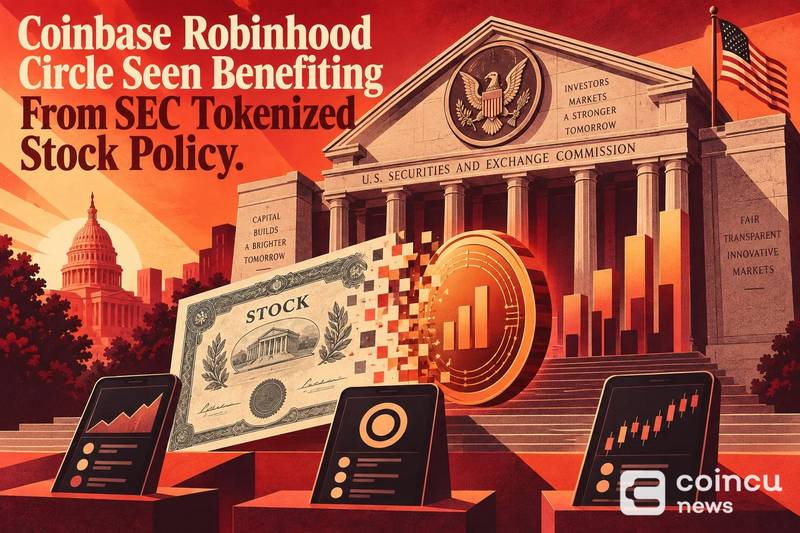
An analyst has identified Coinbase, Robinhood and Circle as potential early beneficiaries if the SEC advances a formal policy framework for tokenized stocks, a regulatory shift that could reshape how equity exposure is distributed and settled across crypto-native infrastructure, according to the thesis circulating among policy watchers in September 2026.
Analyst flags Coinbase, Robinhood and Circle as early tokenized-stock beneficiaries
The analyst's thesis centers on positioning: each of the three companies sits at a distinct intersection of regulated financial services and crypto infrastructure, giving them a structural head start over competitors that would need to build compliance frameworks from scratch. The analysis is explicitly conditional, framing the opportunity as potential upside contingent on the SEC issuing workable guidance rather than confirmed revenue or product plans. For related coverage, see Crypto Stocks Edge Higher Premarket as Coinbase (COIN) Rises 0.78%.
Coinbase has been actively deepening its ties to regulated finance, including efforts to help U.S. community banks integrate stablecoin infrastructure, positioning it as an institutional-grade bridge between traditional markets and on-chain settlement. That existing relationship with regulated counterparties could accelerate any tokenized-equity offering if SEC rules permit exchange-registered platforms to list blockchain-based stock representations. For related coverage, see ARK Invest Acquires 4.5 Million Circle Shares on NYSE Debut.
Robinhood's case rests on its retail distribution footprint. A tokenized-stock framework that allows fractional, around-the-clock equity trading on blockchain rails would map directly onto the brokerage's core user base, particularly younger investors accustomed to 24/7 crypto markets. Execution risk remains, as Robinhood would still need SEC approval to list tokenized instruments, but the demand-side fit is structurally clear.
Why Circle's infrastructure role could matter
Circle occupies a different layer in this thesis. As the issuer of USDC, Circle's value in a tokenized-stock ecosystem would likely concentrate in settlement and payments infrastructure rather than distribution. Tokenized equities require a stable, regulated settlement asset, and USDC already functions in that capacity across several institutional workflows. Circle's Arc payment agent, which launched with managed x402 access, signals continued investment in programmable payment rails that could underpin tokenized-asset settlement. ARK Invest's decision to acquire shares in Circle at its NYSE debut further reflects institutional conviction in Circle's infrastructure thesis, per reporting on that transaction.
What the SEC would need to clarify
No final SEC rule on tokenized stocks exists as of September 2026. The SEC's official newsroom has not published a final policy specifically governing blockchain-based equity tokens, and any framework would need to address investor protections, custody standards, trading venue requirements, and cross-border market structure before companies like Coinbase, Robinhood or Circle could commercially act on the opportunity. The analyst's view is a forward-looking thesis about who is best positioned once those questions are resolved, not a prediction that resolution is imminent.
Regulatory clarity is the load-bearing variable. A framework that imposes broker-dealer requirements on tokenized-stock issuers could narrow the field to incumbent licensed entities, which would favor all three companies. Alternatively, guidance that restricts tokenized equities to specific venue types or settlement assets could advantage one company over the others, depending on how the SEC defines eligible infrastructure.
What to watch next
The concrete triggers to monitor are any SEC concept releases, staff guidance, or no-action letters directed at tokenized securities, as well as Congressional movement on legislation such as the CLARITY Act, which Coinbase has actively mobilized users to support by contacting senators directly. Progress on that legislative track could accelerate the regulatory environment the analyst's thesis requires. Until a formal policy framework exists, the early-beneficiary case for all three companies stays conditional on outcomes that have not yet materialized.
Additional source references: source document 1.
Disclaimer: This article is for informational purposes only and does not constitute financial or investment advice. Cryptocurrency and digital asset markets carry significant risk. Always do your own research before making decisions.
The post Coinbase, Robinhood, Circle Seen Benefiting From SEC Tokenized-Stock Policy was initially published on Coincu.