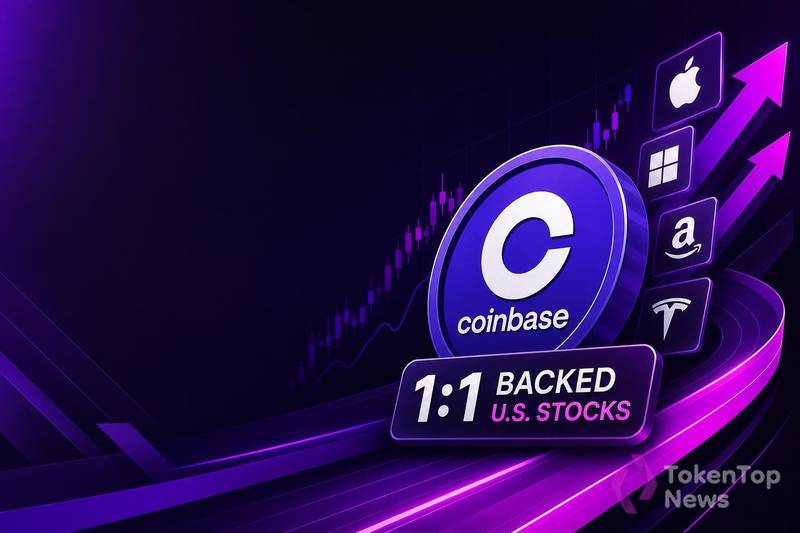
Coinbase is moving to launch tokenized versions of U.S. stocks, with each token backed 1:1 by the underlying equity. The initiative would bring traditional equities onto blockchain infrastruc
Coinbase is moving to launch tokenized versions of U.S. stocks, with each token backed 1:1 by the underlying equity. The initiative would bring traditional equities onto blockchain infrastructure, marking one of the largest crypto exchanges' most direct push into conventional securities territory.
What Coinbase Is Launching
The company is seeking U.S. SEC approval to offer blockchain-based stocks, a step that signals the product is intended for a regulated U.S. audience rather than an offshore-only offering.
Tokenized stocks are digital representations of real equities issued on a blockchain. A 1:1-backed structure means each token corresponds to one actual share held in custody, distinguishing the product from synthetic or derivatives-based approaches that carry counterparty risk unrelated to the underlying asset.
Coinbase entering this segment is notable because of the platform's scale and regulatory profile. The exchange recently opened conventional stock trading to all U.S. customers, suggesting the infrastructure for equity access is already in place. Layering tokenized equities on top of that foundation could compress the path from announcement to usable product.
Why the 1:1-Backed Model Matters
The backing model determines whether tokenized stocks function as a transparent wrapper around real equity or as a separate financial instrument with its own risk profile. A 1:1 reserve means holders have a claim tied directly to a custodied share, not to a margin position or algorithmic peg.
This matters because previous tokenized equity products on other platforms have drawn scrutiny over whether the backing was verifiable and whether holders could redeem tokens for actual shares. Coinbase's emphasis on the 1:1 structure appears designed to address those trust concerns upfront.
The distinction between holding a tokenized representation and holding direct stock ownership remains important. Token holders would likely not appear on a company's shareholder register. Questions around voting rights, dividend distribution mechanics, and redemption windows will define how closely the product mirrors traditional brokerage accounts.
Coinbase has been publicly researching major trends in tokenization through its institutional arm, framing the technology as a key direction for financial infrastructure. That broader thesis now appears to be translating into a consumer-facing product.
What the Market Will Watch Next
The most immediate question is which stocks will be available at launch and whether the product will be accessible to all U.S. users or rolled out in phases. Projects already gaining traction on the Coinbase roadmap show how product decisions on the platform ripple across the digital asset landscape.
Regulatory clarity is the largest variable. Tokenized equities sit at the intersection of securities law and digital asset regulation, and the SEC's posture toward blockchain-based securities products will shape whether other exchanges follow. The approval process itself will signal how regulators view the category, a topic drawing attention as institutional capital moves toward regulated digital asset frameworks globally.
Custody and settlement arrangements will also face scrutiny. Investors will want to know which custodian holds the underlying shares, how frequently reserves are audited, and what happens to tokens if the custodian or Coinbase itself faces operational disruption.
Liquidity is another open question. Tokenized stock markets have historically struggled with thin order books compared to their traditional counterparts. Whether Coinbase's user base can generate enough volume to make tokenized equities practical for active traders, rather than a novelty, will be a key metric in the months following any launch. Activity across crypto exchanges, where leverage ratios have been climbing on major pairs, suggests appetite for new trading products remains strong.
Disclaimer: This article is for informational purposes only and does not constitute financial or investment advice. Cryptocurrency and digital asset markets carry significant risk. Always do your own research before making decisions.
Read original article on tokentopnews.com