Coinbase just got some good news. A judge has thrown out a lawsuit that has hung over the company for more than four years. It was filed after one of the biggest crashes in crypto. On Nov. 20
Coinbase just got some good news.
A judge has thrown out a lawsuit that has hung over the company for more than four years. It was filed after one of the biggest crashes in crypto.
On Nov. 20, U.S. District Judge Maxine M. Chesney dismissed a lawsuit accusing the exchange of misleading investors about TerraUSD (UST), a stablecoin that collapsed in May 2022.
What is a stablecoin? Explained (3:33)
The case was brought by Larry Pearl, who bought approximately $13,000 worth of UST through Coinbase days before the token lost its $1 peg. Pearl alleged he lost more than 90% of his investment and sought to represent other affected investors.
He didn't start out alone.
The original 2022 complaint also named Eric Vladimirsky, who said he held about $1.46 million in UST when it collapsed. His claims were later sent to arbitration, leaving Pearl to carry the case.
The lawsuit followed the Terra ecosystem's collapse, which wiped out tens of billions of dollars from crypto markets.
Related: New Yorkers can finally borrow without a credit score
What Coinbase was accused of
Pearl claimed Coinbase failed to properly explain the risks behind TerraUSD.
UST lost its dollar peg in a crash that erased about $40 billion. Terraform Labs co-founder Do Kwon was later arrested and then jailed. The timeline below shows how the case got here.
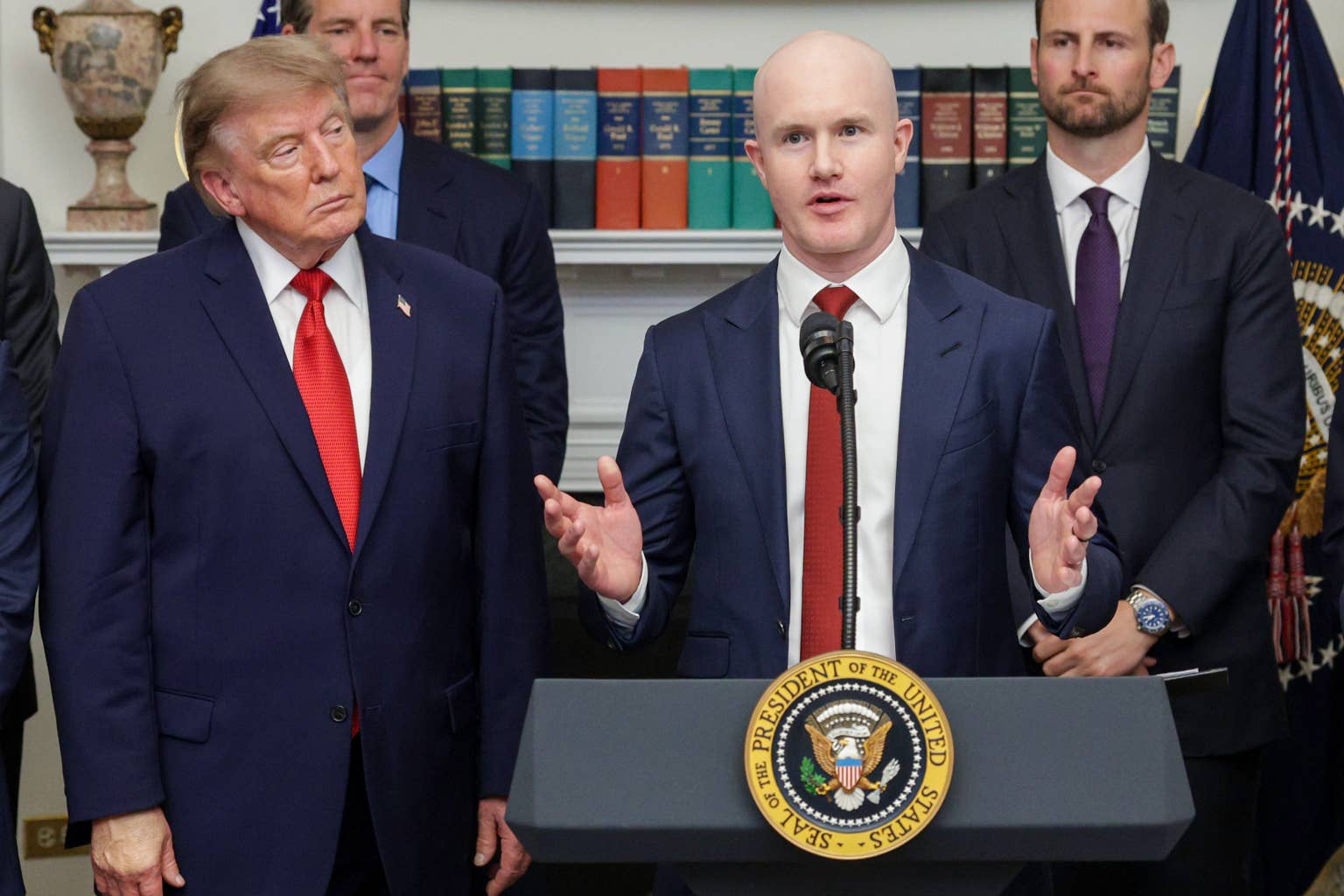
Coinbase CEO Brian Armstrong (R) as U.S. President Donald Trump looks on speaks during a summit of crypto and technology leaders in the Roosevelt Room of the White House on August 19, 2026 in Washington, DC.
Getty Images
Unlike stablecoins backed by cash reserves, UST relied on an algorithmic system involving its sister token, LUNA.
The system used trading incentives to maintain UST's $1 value. When confidence collapsed, both cryptocurrencies plunged.
Pearl argued that Coinbase marketed UST as a stable investment without adequately explaining its structure.
The original complaint pointed to Coinbase's own "What is a stablecoin?" page, which described stablecoins as pegged to a reserve asset like the U.S. dollar or gold. UST had no such reserves. The complaint also noted that rival exchanges Robinhood, Kraken and Gemini explained to users how algorithmic stablecoins differ from reserve-backed ones.
It also alleged a conflict of interest: Coinbase's venture arm, Coinbase Ventures, had invested millions in Terraform Labs in 2021 and 2022, which the complaint said Coinbase did not disclose to customers.
His complaint included allegations of false advertising, negligent misrepresentation and securities law violations.
Why the judge dismissed the lawsuit
The court found that Coinbase had already disclosed important details about TerraUSD.
Its website explained that UST “attempts to maintain a value of US$1.00” and “isn't backed by US dollars in a bank account.” (court order)
In a twist, Pearl's own original complaint acknowledged that disclosure, arguing it didn't go far enough. Four years later, the same line helped sink his case.
Coinbase also provided information about how UST relied on LUNA to maintain its peg.
The judge found Pearl had not pleaded an actionable misleading statement and had not shown the information was hard to find.
Pearl's securities claims also failed because he could not adequately establish that UST qualified as an investment contract under the Howey test.
After four amended complaints, the court refused further revisions.
The case was officially terminated on Nov. 23.
Trending on TheStreet Roundtable:
Where this leaves Coinbase
The ruling ends the case at the trial court but does not establish that TerraUSD was not a security. It remains unclear whether Pearl will appeal.
The stablecoin world has also moved on since 2022. Under the GENIUS Act, U.S. payment stablecoins must be backed by cash, Treasuries or similar safe assets, the opposite of UST's design. And this week, the CFTC's staff said regulated exchanges can count payment stablecoins toward their operating reserves.
The stock slipped to $105.50, down 3.02%, in premarket trading on Nov. 24 at press time.
The Roundtable 100
If you follow our market coverage, don’t miss the Roundtable 100. Updated every Friday, it's a power ranking of the 100 most investable tech stocks, including digital assets. Check out the latest RTB 100 rankings at roundtable100.com.
Related: Before the bell: Bitcoin can’t catch a break