CoinMarketCap has just taken control of Coinglass. The amount of the deal will remain secret. But the merger itself is hard to miss. On one side, the website that millions of users visit to t
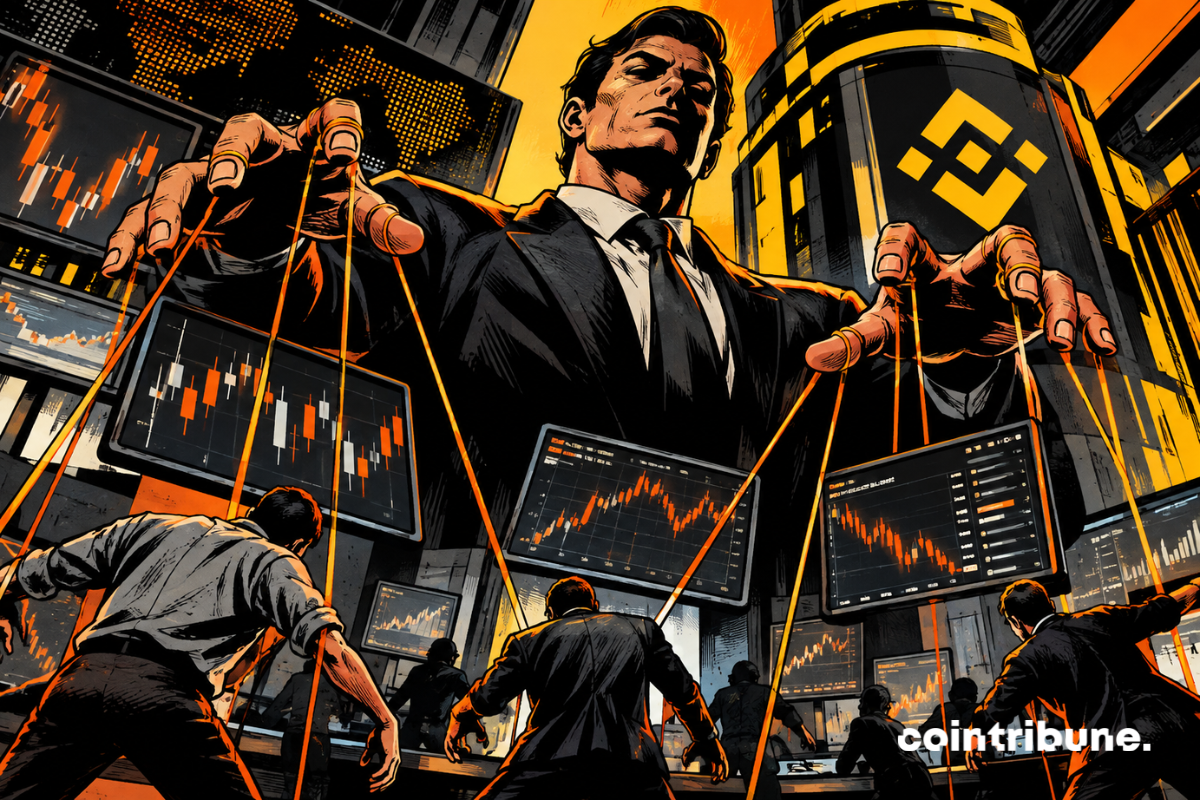
CoinMarketCap has just taken control of Coinglass. The amount of the deal will remain secret. But the merger itself is hard to miss. On one side, the website that millions of users visit to track prices. On the other, a platform that has become essential to observe liquidations, open interest, and funding rates. And behind CoinMarketCap, there is Binance. Naturally, this acquisition goes far beyond merely buying a data website.
In Brief
- CoinMarketCap buys Coinglass, enhancing its offering with data on liquidations, open interest, and crypto derivatives markets.
- Coinglass covers 28 exchanges and over 2,500 instruments, with more than five million monthly users.
- The operation raises concerns as CoinMarketCap belongs to Binance and now concentrates more strategic data.
- Coinglass claims to remain independent for now, while its data will gradually be integrated into CoinMarketCap services.
- Crypto traders are already looking for alternatives, including Glassnode, CryptoQuant, Token Terminal, Goldsky, ExoCharts, or Quantower.
CoinMarketCap had the prices, Coinglass shows where the market breaks
CoinMarketCap claims about 115 million users each month. Its role is known: prices, capitalizations, rankings, asset information. For many individuals, it’s even the first stop when a cryptocurrency like BNB starts moving.
Coinglass plays in another league. The platform tracks open interest, funding rates, liquidations, long/short positions, and options. It covers 28 exchanges and more than 2,500 instruments. Over 5 million people use it every month, plus 10,000 API clients.
The merger therefore has quite a simple logic. CoinMarketCap shows what moves. Coinglass helps understand what happens behind the movement.
Rush, head of CoinMarketCap, explains it straightforwardly:
Derivatives are where the bulk of market risk is taken, and Coinglass is where most people go to watch it. Our role is to make this insight accessible to many more people, not to alter it.
Source: CoinMarketCap
For crypto traders, the change could thus be very tangible: fewer back-and-forths between multiple platforms to understand a market move.
“You already owned the scoreboard. Now you own the autopsy”
This part of the operation is what sparks reactions. On X, Katherine (@Katherine_XBT) summarized the unease in one sentence. The phrase is deliberately provocative, but it strikes the heart of the problem. CoinMarketCap was already linked to Binance. Coinglass now adds a layer of much more sensitive data for crypto traders: the kind that tracks leveraged positions and liquidation zones.
The White Whale Labs, for its part, asked the question much more directly. The account explains it uses Coinglass data daily before adding:
Do I trust Binance to provide accurate data that continues to help me win? Not really. What are the best alternatives with API access?
Source: White Whale Labs, X
Other users are already mentioning Glassnode, CryptoQuant, Token Terminal, Goldsky, ExoCharts, or Quantower. There is nothing proving Coinglass data will change. But in the crypto community, trust itself is a key factor.
28 exchanges, more than 2,500 instruments: the concentration problem
We must go back to the structure of the operation. CoinMarketCap was purchased by Binance in 2020. The amount was not officially disclosed at the time, although estimates suggested up to 400 million dollars, with part of the transaction in shares and BNB.
Today, Coinglass adds another piece to the puzzle. Its platform tracks 28 exchanges, including Binance, and gathers a considerable amount of information on derivatives markets.
It’s not just about charts. Derivatives concentrate a large part of crypto sector volumes. Liquidations, funding rates, and open interest evolution give traders clues on how positions are built — and sometimes on how they can disappear.
The acquisition thus creates a particular situation. The same ecosystem now groups a major price tracking platform with a widely used tool to analyze risk.
Alternatives are not lacking. Glassnode, CryptoQuant, Token Terminal, or Goldsky already have their place in the ecosystem. But Coinglass benefits from a habit that is hard to replace: its liquidation charts and tables circulate everywhere.
The question then becomes quite awkward: if the owner of an exchange also owns the tool to observe the positions and liquidations occurring there, where does data neutrality start and stop?
Binance in the background, Coinglass on the front line: how long will it last?
On paper, nothing changes. Coinglass clearly stated: the brand stays the same, the website and app continue to operate, free tools remain available, as well as the API and pricing.
CoinMarketCap, on its side, assures it wants to integrate Coinglass data into its offering. Open interest, liquidations, funding rates, and options could therefore gradually join the information already offered to users.
Your 1st cryptos with BinanceThis link uses an affiliate program.
This is where the topic gets interesting. A company can remain legally independent while being much more present in its owner’s ecosystem. For the user, the difference might become hard to perceive.
Coinglass wants to reassure: “Coinglass will continue to operate as an independent company under the Coinglass brand. Our website, our app, our free tools, our API, and our pricing remain unchanged, and our team continues developing the product our users rely on every day.” – Source: CoinMarketCap / Coinglass
The important word remains “today,” however. The product may not have changed. The structure around it has.
- 115 million monthly users currently visit CoinMarketCap.
- Over 5 million monthly users use the Coinglass platform.
- 28 exchanges are covered by Coinglass data.
- More than 2,500 instruments are tracked on the platform.
- 10,000 API clients use Coinglass data.
The acquisition of Coinglass comes as Binance also seeks to regain its place in Europe with a different approach, notably in France. Two months after MiCA, the hypothesis of a return through the AMF adds another dimension to the operation. On one side, Binance wants to regain regulatory ground. On the other, its ecosystem strengthens its access to crypto data. These are two separate matters. But their timeline clearly deserves monitoring.