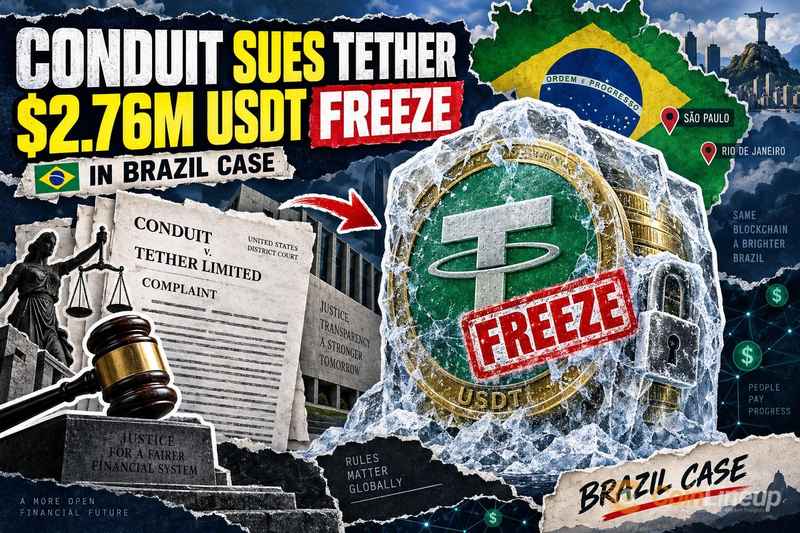
Conduit, a payments company, has filed a lawsuit against Tether, the issuer of the USDT stablecoin, over the freezing of $2.76 million in USDT funds. The freeze is reported to be connected to
Conduit, a payments company, has filed a lawsuit against Tether, the issuer of the USDT stablecoin, over the freezing of $2.76 million in USDT funds. The freeze is reported to be connected to an investigation in Brazil, and the case raises direct questions about who controls frozen stablecoin funds and what legal options exist to challenge those freezes.
A lawsuit over $2.76 million in frozen USDT
Conduit is the plaintiff in the case, with Tether named as the defendant. The central issue is the freeze of $2.76 million worth of USDT, the dollar-pegged digital currency issued by Tether. USDT is a stablecoin, meaning its value is designed to stay fixed at one US dollar per token. For related coverage, see Strategy's $4.1B Bitcoin Tax Benefit Explained.
Tether has the technical ability to freeze USDT held in specific wallets. This is built into the USDT smart contract, which is an automated program that runs on a blockchain and can be instructed to block transfers from a given address. Conduit argues the freeze on its funds was not justified. For related coverage, see CFTC to Provide Federally Regulated Path for Crypto.
The reported link to a Brazil investigation
The freeze is reportedly connected to a law enforcement or regulatory investigation in Brazil. Tether has previously cooperated with international authorities by freezing wallets linked to investigations, a practice the company has described as part of its compliance work.
The connection between the Brazilian investigation and Conduit's funds is the core disputed question in the lawsuit. Conduit's legal action suggests the company believes its funds were frozen without sufficient legal basis, or that it was not given adequate process before the freeze was applied. As with broader regulatory questions around crypto compliance, the case highlights a tension between law enforcement cooperation and the rights of companies holding frozen assets.
What the lawsuit could determine
The $2.76 million in USDT remains frozen while the case proceeds. Conduit is seeking a legal ruling that would, at minimum, establish its right to challenge the freeze. The outcome could affect how Tether responds to future freeze requests tied to foreign investigations.
For anyone who holds stablecoins, this case is a reminder that USDT is not purely decentralized. Tether retains the ability to freeze tokens, and that power has been used in cooperation with law enforcement globally. Debates around regulatory oversight of crypto transactions often touch on exactly this kind of issuer control.
The dispute is unresolved at the time of publication. A court will decide whether Conduit is entitled to recover the frozen funds or seek other relief. Until then, the $2.76 million remains inaccessible to Conduit, and the legal questions around stablecoin freezes linked to cross-border investigations remain open.
Additional source references: source document 1, source document 2.
Disclaimer: This article is for informational purposes only and does not constitute financial or investment advice. Cryptocurrency and digital asset markets carry significant risk. Always do your own research before making decisions.
Read original article on coinlineup.com