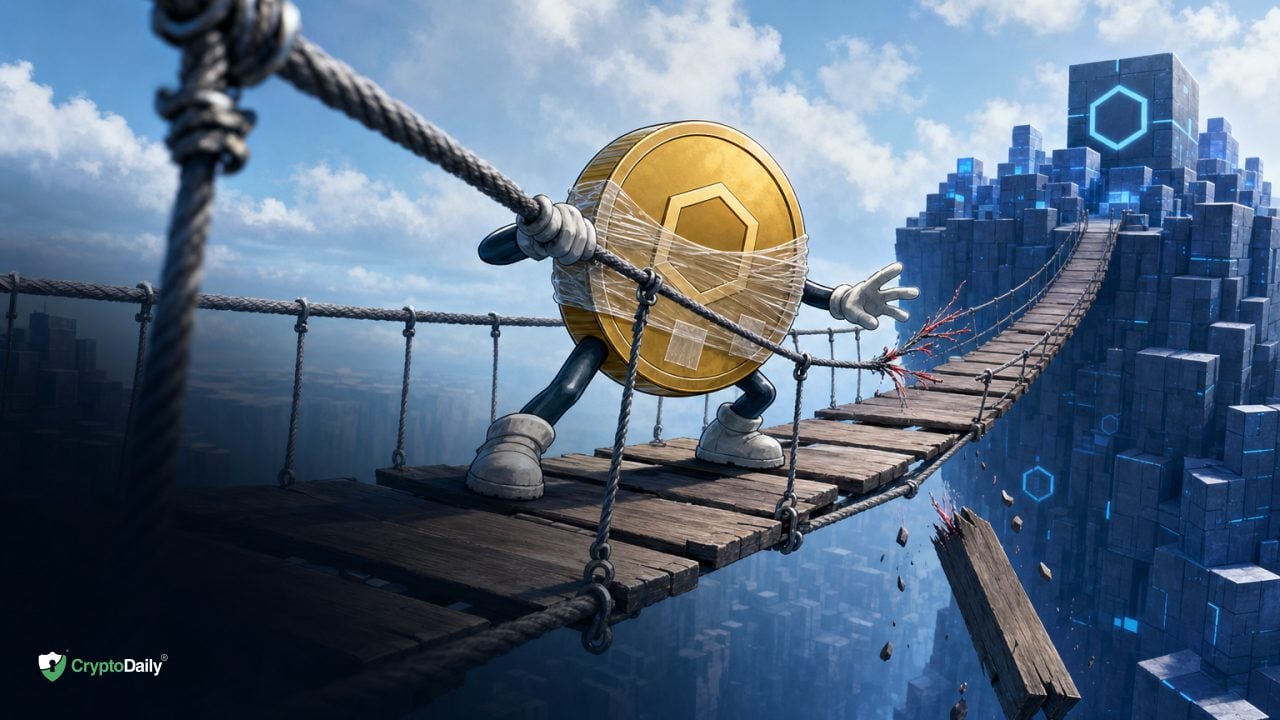
You wake up with wrapped BTC sitting in an Ethereum wallet. By lunch, the bridge that minted it is paused. Liquidity thins on DEXes, prices wobble, and the redemption queue goes quiet. That s
You wake up with wrapped BTC sitting in an Ethereum wallet. By lunch, the bridge that minted it is paused. Liquidity thins on DEXes, prices wobble, and the redemption queue goes quiet.
That stomach-drop feeling? It is the sound of a wrapped asset losing some of its story. Not just a token price, but the promise behind it.
And lately, that promise has been tested. Hard.
Value sloshes across chains every minute. Traders chase fees on L2s, funds rebalance collateral between Ethereum and Solana, and treasuries park stables where yields make sense. Bridges and messaging layers knit this together. They also create new places for things to break.
In late July 2026, a flurry of incidents re-centered the conversation around wrapped assets and bridge risk. CoinDesk reported that at least three bridges and cross-chain protocols were drained in roughly six hours for a combined loss topping $35 million, a nasty cluster that hit liquidity and confidence at the same time (CoinDesk).
Wrapped assets work until the assumptions behind them crack. The question is not if bridges can fail, but whether your position survives the pause.
Who is affected? Everyone touching bridged value. That includes lenders accepting wrapped collateral, LPs on AMMs, prop desks hopping chains, DAOs managing treasuries, and retail holders who just wanted their BTC on Ethereum.
What wrapping really means: IOUs with moving parts
Wrapped assets are receipts. You lock something on Chain A, then mint a claim on Chain B. You trust the system to keep the claim true through time and stress.
How the wrapping actually happens
- You deposit the origin asset on its home chain into a contract or custodian.
- A verifier set confirms that deposit and approves a mint message for the destination chain.
- The destination chain contract mints a wrapped token to your address.
- To redeem, you burn the wrapped token and submit a proof back to the origin chain.
- If all goes well, the origin asset unlocks and is paid out.
Custody vs contract risk
Where can it go wrong? Everywhere along that path. Keys controlling the origin-side vault can be compromised. Message verification can be spoofed. Destination-side contracts can be paused or upgraded in a hurry. Even if the tech holds, liquidity can thin so much that redemptions or exits become painful.
How bridges verify messages: multisigs, optimistic systems, and light clients
Most wrapped-asset stories hinge on how a bridge verifies that something happened on another chain. Different models bake in different trade-offs.
Model How it verifies Latency Trust assumptions Common failure modes Multisig/MPC guardians A fixed set of signers attest to events Fast Honest majority of signers, secure key ops Key compromise, collusion, signer downtime Optimistic bridges Accept messages by default unless disputed in a window Medium (challenge delay) At least one honest watcher to challenge fraud Watcher liveness failures, incentive misdesign Light client bridges On-chain verification of headers and proofs Slower, costlier Security of both chains, correct client implementation Client bugs, chain reorg edge cases Native/canonical bridges Protocol-level or officially blessed mint/burn Varies Issuer governance and upgrade safety Admin key risk, governance capture
Why the model matters
Fast is useful until it is not. Multisigs move quickly but concentrate risk. Optimistic systems slow things down to give honest actors time to shout. Light clients push verification closer to first principles, but they can be expensive and still depend on correct implementations. No free lunch here, just trade-offs you can measure.
Where wrapped assets break: pegs, redemptions, and liquidity feedback loops
Wrapped tokens can trade at a discount when redemption paths look cloudy. Even a small pause can spark price gaps, especially on long-tail chains or smaller pools.
Soft depegs happen quietly
Most days, wrapped stables sit within a few basis points of par. Under stress, that spread can widen, then stick. Arbitrage needs confidence and working rails. If the bridge is paused or the verifier set is under review, the incentive to buy the discount shrinks.
Collateral and margin knock-on effects
When a wrapped asset drops below par, borrowing power falls. That can trigger liquidations, which widen the discount further as positions unwind. If a protocol or DAO treasurer used the wrapped version as a base asset, risk piles up fast.
A hard week in bridges: clustered exploits and protocol pauses
Mid to late July 2026 offered an uncomfortable live-fire demo of these dynamics.
Multiple hits in hours
In a six-hour window, at least three cross-chain systems were drained for more than $35 million, according to CoinDesk. One of the biggest individual losses reportedly came from AFX, a perpetuals venue running a bridge on Arbitrum, at around $24.15 million, with fallout rippling to market makers and LP routes during the freeze (CoinDesk).
Not just one stack
The same CoinDesk report cited an exploit of the Verus to Ethereum connection for roughly $7.54 million, highlighting that risk lives across very different codebases and signer sets (CoinDesk).
Flash-loan manipulation on Solana-side liquidity
Allbridge Core, which focuses on cross-chain stablecoin flows, paused after a Solana-side flash-loan pool manipulation that drained about $1.65 million, as reported by CoinDesk on July 19–20, 2026 (CoinDesk). Even though the number looks smaller, the pause hit routes that many arbitrageurs had come to rely on during busy Asian hours.
Across Protocol on Solana
Protos noted that Across Protocol’s Solana deployment faced an attack on July 17, 2026, with around $3.35 million flowing to flagged addresses. Across said user funds were safe and the loss was limited to the relayer, but it still tightened liquidity and rattled confidence on that lane (Protos).
How a bridge scare usually unfolds
- Rumors pop up in Telegram and X that something looks off. TXs start failing.
- Price gaps appear on DEX pools holding the wrapped asset. LPs pull, slippage spikes.
- The team pauses contracts or increases delays while they audit proofs and keys.
- Arb traders hedge or dump the wrapped version, widening the discount.
- Protocols reconsider collateral factors, which can force unwinds.
- Post-mortem lands. Sometimes funds are recovered. Often, confidence is not, at least for a while.
What a bridge pause actually changes for you
A pause is not just a status message. It rewrites routes and incentives in real time.
DEX pricing and LP behavior
When a redemption path closes, the spot peg can drift. LPs are not paid to be heroes. They will often derisk, which leaves thinner books for everyone else.
Borrowing power and liquidation bands
If you are using a wrapped asset as collateral, check its collateral factor and oracle source. A price discount or oracle lag can push positions into liquidation bands sooner than you think. On volatile days, redemption uncertainty can matter more than the underlying coin’s own volatility.
Settlement friction
Market makers and OTC desks rely on predictable settlement. A bridge incident adds hair to every ticket: higher haircuts, wider spreads, and longer settlement quotes. That flows back to retail via worse swap rates and more frequent failed transactions.
Choosing routes and hedging bridge risk
You probably cannot avoid bridges entirely. But you can choose how to use them.
Prefer native where you can
If there is a canonical asset with native issuance and redemption on your target chain, that is usually safer than a third-party wrap. For dollars, native USDC via official minting and burn routes tends to be more robust than homebrew bridged stables. For BTC, weigh the difference between custodial wrappers and newer non-custodial pegs, then map their specific risks.
Split routes for size
Moving size? Break it up. Use two or three independent paths with different trust models. That could mean one optimistic route plus an exchange withdrawal plus a light client path. Correlated failure is the enemy.
Mind the upgrade keys
Read the docs before you deposit. Who can pause? Who can upgrade contracts? Is there a time-lock? Multisig size is not everything, but small committees with hot-key authority are red flags.
Watch liquidity, not just code
Healthy redemption queues, active market makers, and deep pools reduce the odds of a sticky discount. Tools that surface bridge queue health and pool depth are worth keeping open when you size positions.
Price in delays
An optimistic bridge with a 30-minute challenge window may save you from a hasty exploit at the cost of time. That can be a fair trade if you are not on a deadline. Build it into your plan.
Aave V3 available‑liquidity by token (Jan–Apr 2026) showing the sudden collapse in WETH and overall available liquidity after the April 18 rsETH bridge exploit — visualizes how a wrapped/bridged asset failure can trigger a cross‑protocol liquidity freeze. — Source: Glassnode Research
Risks & What Could Go Wrong
- Signer or MPC compromise that mints unbacked assets on the destination chain.
- Bug in proof verification or light client code that lets forged messages through.
- Liquidity mining incentives dry up, LPs exit, and the peg drifts for longer than expected.
- Oracle mismatches that overvalue wrapped collateral during a pause, then snap back.
- Governance or admin key misuse, including emergency pauses at the wrong time.
- Economic manipulation like flash loans on the origin or destination side that skew pools.
- Regulatory freezes or blacklists that trap the backing without touching the wrappers.
The wrapped token on your screen is only as good as the path back to the thing it claims to be. When that path clogs, price and policy both move against you.
Keeping score in real time
When incidents stack up, information speed matters. Outlets like Crypto Daily track bridge pauses, exploit post-mortems, and on-chain signs of stress in one place, which helps you cut through the rumor fog and focus on the data that actually moves risk.
Frequently Asked Questions
Is a wrapped asset always backed 1:1?
It should be, but the word “backed” hides moving parts. If the origin-side vault or contract is compromised, or if a verifier signs a bad message, wrappers can be over-minted. In a pause, assets may still be fully backed yet temporarily illiquid, which can still cause a market discount.
Why do some wrapped tokens depeg while others hold?
Liquidity and trust. Deep redemption queues, clear status dashboards, and strong watcher sets help wraps hold par. Thin pools, admin-key drama, or unclear comms push prices off. The verification model and who runs it matter just as much as TVL headlines.
Are light client bridges the answer?
They are a strong step, not a cure-all. On-chain verification reduces reliance on small committees, but client code can still have bugs, and costs or latency can be higher. Many teams pair light clients with limits, alerts, and conservative circuit breakers.
Should I avoid bridges entirely and use exchanges to move funds?
Centralized exchanges can be a pragmatic hop for large moves, with different risks: custodian exposure, withdrawal queues, compliance holds. Splitting routes across an exchange and one or two independent bridges can reduce single-point failure.
What signals should I watch before using a bridge?
Check public audits and bug bounty size, time-locks on upgrades, signer set size and rotation, live dashboards for queue health, and how quickly teams publish incident reports. Also watch liquidity depth on both sides of your route.
How do protocols manage wrapped asset risk?
Many set lower collateral factors, add circuit breakers that halt borrows when pegs drift, and maintain allowlists for safer routes. Treasurers often diversify among native assets, canonical mints, and limited exposure to third-party wraps.
Can a wrapped asset recover its peg after a scare?
Yes, if backing was intact and redemption routes re-open with clear audits and credible comms. Recovery usually starts with market makers stepping back in and protocols restoring parameters. If backing is impaired, discounts can linger or become permanent.
Disclaimer: This article is provided for informational purposes only. It is not offered or intended to be used as legal, tax, investment, financial, or other advice.