TLDR Brent crude advanced 0.5% to $83.98 while WTI climbed 0.3% to $78.44 during Monday’s session Tehran indicates a Hormuz shipping corridor agreement with Oman is nearing completion but cau
TLDR
- Brent crude advanced 0.5% to $83.98 while WTI climbed 0.3% to $78.44 during Monday’s session
- Tehran indicates a Hormuz shipping corridor agreement with Oman is nearing completion but cautions against expectations of immediate implementation
- Yemen-based Houthi forces took credit for striking Saudi Arabia’s Jazan refinery facility along the Red Sea coast
- An ADNOC tanker came under attack while navigating the Strait of Hormuz during the weekend
- Kyiv pledged to avoid targeting specific non-Russian vessels, reducing Black Sea supply disruption concerns
Oil prices advanced during Monday trading but retreated from earlier session peaks as market participants assessed diplomatic developments in Hormuz negotiations while regional energy infrastructure faced ongoing militant assaults throughout the Middle East.
Brent crude futures advanced 0.5% to settle at $83.98 per barrel. West Texas Intermediate posted a 0.3% increase to $78.44. The benchmarks had accumulated gains exceeding 5% across the previous three trading days.
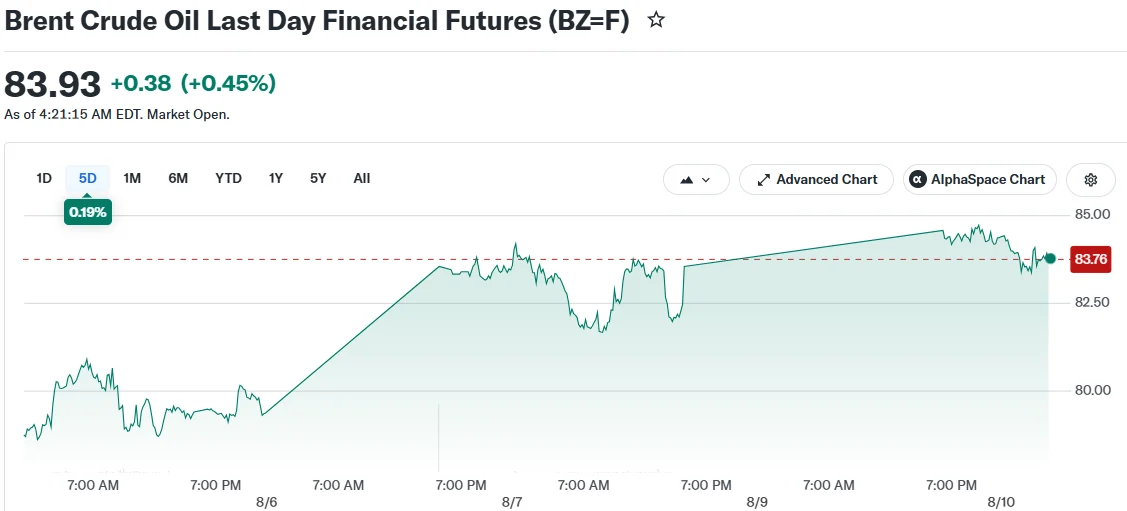 Brent Crude Oil Last Day Financial Futures (BZ=F)
Strait of Hormuz Agreement Approaching but Timeline Unclear
During weekend statements, Iran’s Foreign Minister Abbas Araghchi indicated that negotiations with Oman regarding a shipping corridor through the Strait of Hormuz had reached an advanced stage. The strategic waterway represents a critical passage for global petroleum transportation.
Araghchi cautioned, though, that finalizing any arrangement would not translate into instant waterway access. This qualification dampened trader optimism regarding a swift restoration of conventional energy transport operations.
Tehran ruled out engaging in immediate bilateral discussions with Washington, citing American breaches of terms established in a June interim peace framework. Iranian officials reiterated their stipulations for complete waterway restoration, encompassing termination of the U.S. naval blockade, lifting of economic sanctions, and compensation for conflict-related damages.
The United States confirmed its participation in waterway management consultations. Iran contests this characterization.
In Sunday remarks to Axios, President Trump indicated the U.S. was adopting a more measured approach toward Iran, describing the posture as “low-keying it” following several weeks of threatened military intervention.
Yemen-Based Militants Escalate Infrastructure Targeting
Houthi militants, backed by Iran, asserted responsibility for launching an offensive against Saudi Arabia’s Jazan refinery positioned near Red Sea waters. Saudi authorities verified that a blaze erupted at the Aramco-operated Jazan complex and reported successful fire suppression.
A vessel under Abu Dhabi National Oil Co. operation also sustained an attack while traversing the Strait of Hormuz during weekend hours. ADNOC confirmed three of its tankers encountered hostile action while passing through the strait throughout the previous week.
Houthi military units additionally claimed executing a comprehensive assault on Yemen’s Saudi-supported governmental forces and reported striking a Saudi-flagged tanker in Gulf of Aden waters.
Market observers from ANZ highlighted petroleum’s turbulent trading week. Quotations initially declined following Washington’s decision to suspend Iranian strikes pending diplomatic engagement, then rebounded as clarity emerged that potential waterway access might include vessel-specific limitations.
Friday brought sharp price acceleration after Iran’s semi-official Fars news service documented attacks on installations near Qeshm Island.
Black Sea Supply Route Uncertainties Diminish
Supply disruption concerns partially subsided following Ukraine’s commitment to exempt particular non-Russian petroleum tankers and Black Sea energy facilities essential to Kazakhstan’s crude shipment operations from targeting protocols.
The Caspian Pipeline Consortium terminal had endured multiple assaults throughout recent weeks, jeopardizing approximately 1.8 million barrels daily of Kazakh export volumes. Ukraine’s assurance provides measurable stability for this transportation corridor.
The post Crude Oil Gains Momentum Amid Hormuz Negotiations and Yemen-Linked Saudi Refinery Strike appeared first on Blockonomi.