Key Highlights Brent crude declined 2.6% to reach $86.30 per barrel while WTI decreased 2.7% to $80.18 on Wednesday Tehran and Muscat resumed discussions regarding a temporary joint navigatio
Key Highlights
- Brent crude declined 2.6% to reach $86.30 per barrel while WTI decreased 2.7% to $80.18 on Wednesday
- Tehran and Muscat resumed discussions regarding a temporary joint navigation passage through the Strait of Hormuz
- Pakistani mediators indicate advancement in wider peace negotiations between Washington and Tehran
- Vessel traffic through the strait dropped to just 5 commodity ships on Tuesday, significantly below the pre-conflict average of 15
- American crude stockpiles increased by 4.2 million barrels, substantially exceeding the 600,000-barrel forecast
Crude oil markets experienced a sharp downturn exceeding 2% during Wednesday’s trading session as fresh diplomatic engagement concerning the Strait of Hormuz led market participants to reduce supply disruption premiums.
Brent crude futures declined 2.6% to settle at $86.30 per barrel. U.S. West Texas Intermediate futures retreated 2.7% to $80.18. Both major benchmarks had previously recorded losses surpassing 3% during Tuesday’s session.
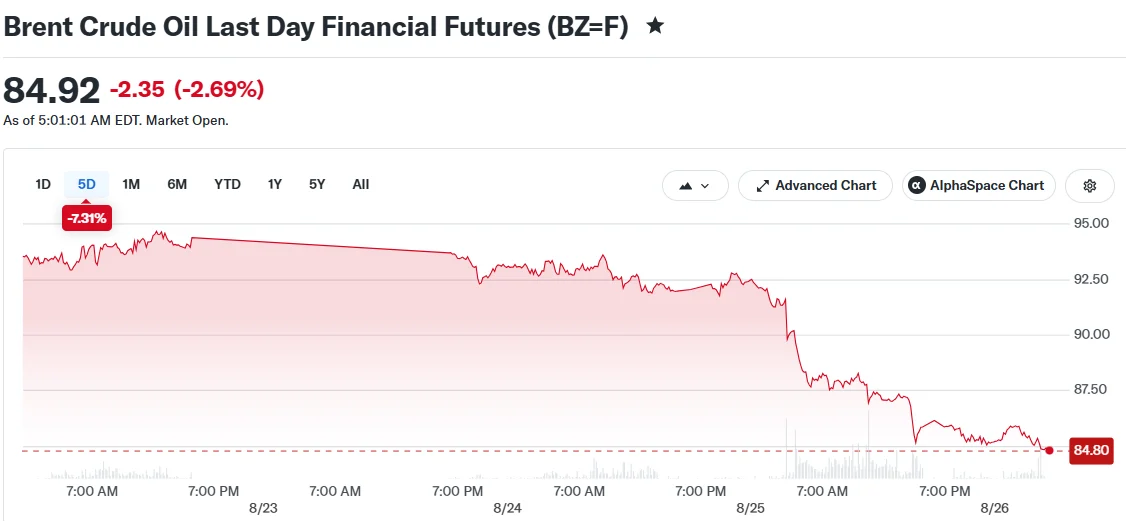 Brent Crude Oil Last Day Financial Futures (BZ=F)
Tehran and Muscat Explore Provisional Shipping Channel
Officials from Iran and Oman verified they conducted negotiations in Tehran focused on establishing a collaborative temporary maritime corridor through the Strait of Hormuz. Both nations additionally committed to coordinating efforts on demining operations within the critical waterway.
A high-ranking Iranian representative stated the strategic strait would remain partially closed until Washington fulfills obligations outlined in a preliminary ceasefire framework agreed upon in June. Pakistani diplomats facilitated that earlier agreement.
Russian news agency RIA Novosti published a report, referencing Pakistani and Iranian diplomatic sources, suggesting Washington and Tehran are nearing a fresh ceasefire arrangement. The reported agreement encompasses unrestricted navigation rights through Hormuz and may be unveiled within days. Investing.com could not independently confirm these claims.
Pakistan’s interior minister confirmed meaningful advancement occurred during Tehran discussions aimed at resolving the U.S.-Israeli military campaign against Iran, which commenced in February.
Prior to hostilities erupting, approximately one-fifth of global world’s oil supplies and liquefied natural gas shipments transited through the Strait of Hormuz. Maritime traffic has plummeted dramatically since conflict began.
During Tuesday alone, merely five commercial cargo vessels navigated through the passage. This represents a stark contrast to the 10-day moving average of 15 vessels and remains considerably beneath pre-war traffic volumes.
Washington’s Sanctions and Supply Reports Weigh on Markets
Earlier this week, the United States broadened its sanctions regime targeting Iran, warning of consequences for nations maintaining commercial ties with Tehran. American officials indicated a preference for economic measures rather than military interventions.
Market strategists at Vital Knowledge noted that a “geopolitical risk factor will be permanently embedded in the price” of crude oil, regardless of diplomatic progress.
The American Petroleum Institute disclosed U.S. crude stockpiles expanded by approximately 4.2 million barrels during the week concluded August 21. Market analysts had projected a modest increase of only 600,000 barrels. Official data from the Energy Information Administration was scheduled for release later Wednesday.
Mitsuru Muraishi, a market analyst with Fujitomi Securities, noted that ambiguity surrounding market direction was encouraging selective bargain purchasing, which prevented steeper declines. He suggested prices would probably remain confined within current trading ranges near-term.
Brent crude previously reached its weakest level since August 13 during Wednesday’s trading. WTI touched its lowest mark since August 10.
The post Crude Oil Prices Plunge as Hormuz Corridor Negotiations Signal Relief appeared first on Blockonomi.


 BREAKING: Oil crashes over 5% below $81 as reports emerge that the US and Iran have reached a ceasefire.