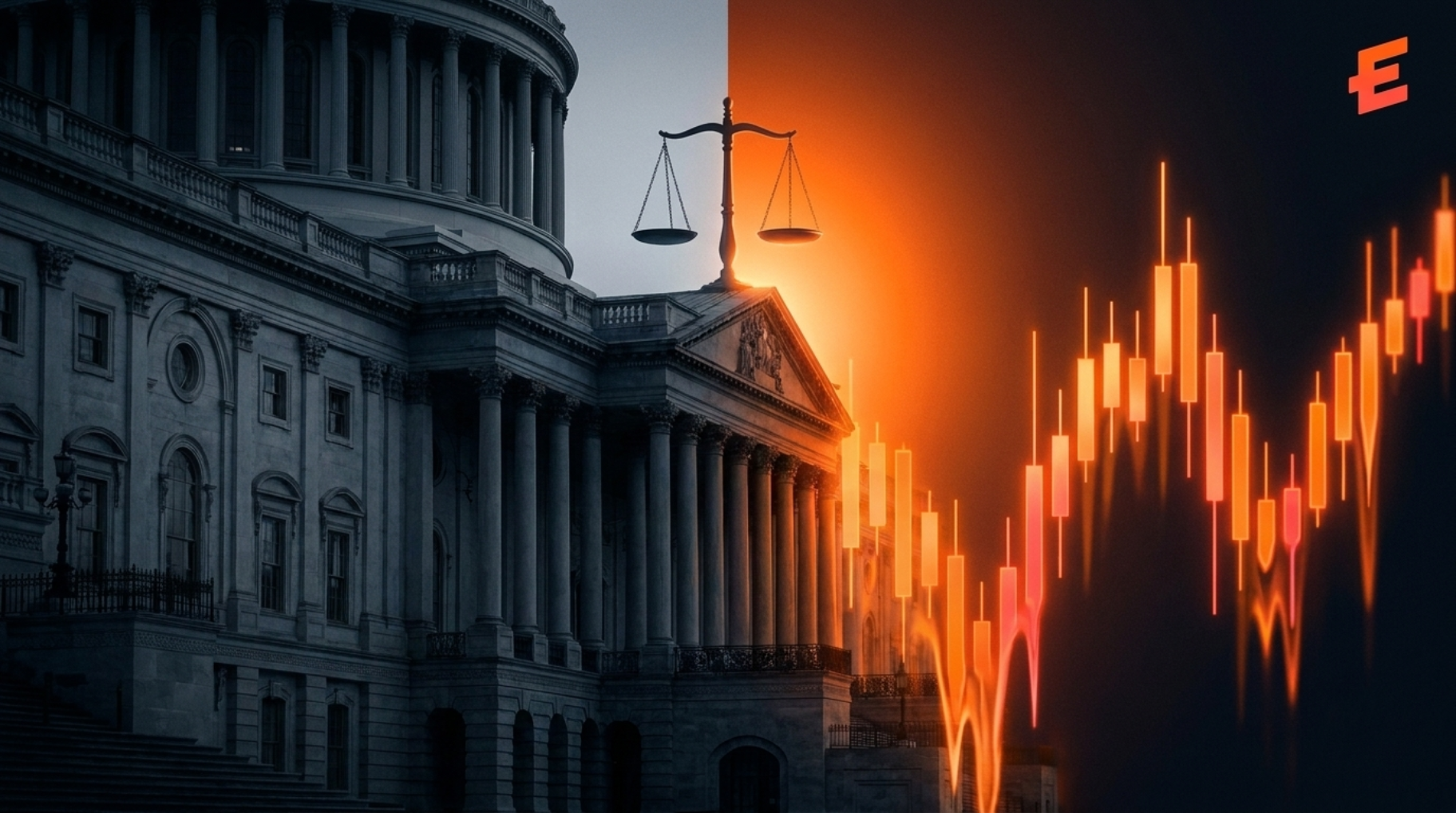
The single biggest overhang on US crypto is not price. It is the question of who writes the rules. That question just got a clearer answer, and it did not depend on Congress. The head of the
The single biggest overhang on US crypto is not price. It is the question of who writes the rules. That question just got a clearer answer, and it did not depend on Congress. The head of the CFTC said the agency will build a crypto market structure framework with or without the CLARITY Act, and the market read it as the bullish signal it is. $EAT, the compliant Wyoming-registered cause coin, is up on the news.
Here is what was said, why it matters more than another stalled Senate vote, and how it connects to $EAT.
What the CFTC actually said
On August 20, 2026, CFTC Chairman Mike Selig told the agency's first Innovation Advisory Committee meeting that if the CLARITY Act keeps stalling, the CFTC will not wait for Congress. In his words, "the CFTC will utilize its existing authorities" to begin building a regime for crypto markets.
He went further than a talking point. Selig said he has directed staff to explore rules that would create a "crypto asset market" category for firms, modeled on the CFTC's existing designated contract markets, and to work with developers of on-chain finance protocols on legal ways to operate in the United States.
The news broke widely. As crypto historian account Bitcoin Archive posted to its followers: "BREAKING: CFTC Chair Selig isn't waiting for Congress." The full breakdown, including the People Also Ask detail, is on the WYDE Newsroom's coverage of the CFTC market structure plan.
Why this matters more than the CLARITY Act vote
For two years the industry has pinned its hopes on one bill. The Digital Asset Market Clarity Act would set federal rules for crypto markets, but it failed to get a Senate vote before the August recess and now faces a narrow three-week window that still needs 60 votes. On its own, that is the kind of headline that usually sinks sentiment.
What flipped the story is that the framework is now getting written either way. Washington is running two tracks at once: the SEC advanced its own Regulation Crypto Assets proposal this week, and the CFTC is publicly preparing to fill the gap through its own rulemaking if the bill dies. Selig framed the agency route as a backup rather than a replacement, and said passing CLARITY remains the surest path. But the message the market heard was the one that counts: regulatory clarity no longer hinges on a single 60-vote threshold.
For traders, that removes a binary risk. A stalled bill is no longer a dead end. Whether the rules come from Congress or the agencies, compliant US crypto projects get a lane to operate in.
Why $EAT is up since the news
$EAT is exactly the kind of asset that benefits when the rulebook gets written. It is issued through a Wyoming nonprofit structure, its economics run through a registered foundation, and its entire design leans into being a compliant, US-based token with a real charitable purpose rather than a regulatory gray zone. Clarity is a tailwind for that profile, not a threat.
The price action tracked the sentiment. In the week the CFTC comments landed, $EAT climbed by double digits, extending a monthly gain even as broader volume stayed thin. That is what a clarity narrative looks like on a small, mission-driven cap: the projects built to live inside the rules get rewarded when everyone finally believes the rules are coming.
None of this is a promise about where the price goes next. It is a read on why a regulatory headline that would normally be neutral or negative for the space acted as a catalyst for a token whose whole thesis is compliance. For live numbers, check the $EAT market page on CoinMarketCap.
What is $EAT?
$EAT, or WYDE: End Hunger, is the first "cause coin," built by WYDE, the Wyoming Decentralized Exchange. It trades on Base, and its model directs value from real economic activity toward hunger-relief grants. The same compliance-first design that makes it a fit for a clarity rally also powers the EAT Card, a free Visa debit card that funds a meal every time you spend.
Frequently asked questions
What did CFTC Chairman Mike Selig say about crypto rules? That if the CLARITY Act stalls, the CFTC will use its existing authorities to begin writing crypto market structure rules, and that he has already directed staff to start, including building a "crypto asset market" category.
What is the CLARITY Act? The Digital Asset Market Clarity Act, a market structure bill that would set federal rules for crypto markets. It failed to get a Senate vote before the August 2026 recess and faces a final three-week window that needs 60 votes.
Does the CFTC still want Congress to act? Yes. Selig called agency rules a backup and said passing the CLARITY Act remains the surest way to give crypto markets durable rules.
Why would regulatory clarity push $EAT higher? Because $EAT is built as a compliant, US-registered token with a charitable purpose. A clearer rulebook favors projects designed to operate inside it, and the market treated the CFTC's stance as a positive for that profile.
Where can I track $EAT? On its CoinMarketCap page, which shows live price, market cap, and volume.
This article is for information only and is not financial advice. It does not predict future prices. Cryptocurrency involves risk and prices are volatile. Always do your own research.
Sources: WYDE Newsroom, Bitcoin Archive on X, $EAT on CoinMarketCap.