Eric Trump accepts in black and white not to get involved in the management of the future deposit bank of World Liberty Financial. On paper, a gesture of regulatory goodwill. In fact, a file
Eric Trump accepts in black and white not to get involved in the management of the future deposit bank of World Liberty Financial. On paper, a gesture of regulatory goodwill. In fact, a file that already drags its share of shadows… Between ongoing crypto lawsuits, loans recalling bad memories, and criticisms coming from all political sides.
In brief
- Eric Trump, Zak Folkman and an Emirati investor agree to stay away from the management of the future bank of World Liberty Financial.
- Justin Sun accuses World Liberty of freezing his tokens and blocking his voting rights; the case remains before a federal court.
- The OCC has already approved similar charters for Ripple, Paxos, Fidelity, and Coinbase, signifying a well-assumed pro-crypto shift.
Crypto: Eric Trump Agrees to Kneel Before Regulators
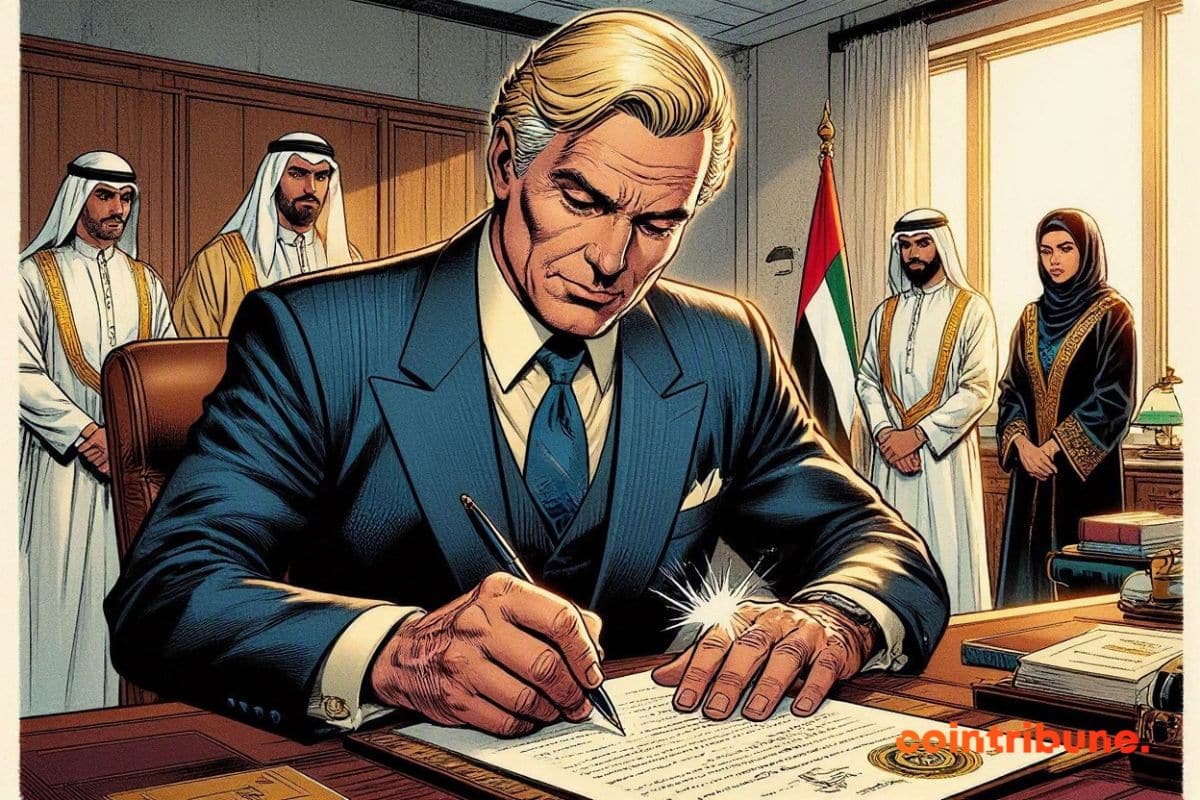
Eric Trump, the co-founder of World Liberty Zak Folkman, and the Emirati investor Hamad Khalfan Ali Matar Alshamsi have each accepted through related companies to stay away from management decisions of the group’s future federal deposit bank. The technical term is “passivity commitment”, a non-control commitment.
These agreements were made public at the moment when World Liberty just obtained its preliminary approval from the Office of the Comptroller of the Currency. If the federal charter is approved, the company could internally hold the reserves of its stablecoin USD1 which reaches nearly 4 billion dollars in capitalization, rather than depending on a third party for that. According to World Liberty spokesperson David Wachsman, the intention behind this maneuver is that the company plans to remain under federal supervision for years.
The Lawsuit Hanging Over the Entire Operation of World Liberty Financial
World Liberty Financial’s transparency commitment falls precisely at the moment when the company drags behind it a heavy legal file that tarnishes its image. Justin Sun, the founder of Tron and the largest external investor in the project with 75 million dollars invested, filed a lawsuit in April against World Liberty. The company would have:
- Frozen all of his tokens;
- Deprived him of his governance voting rights;
- Threatened to permanently destroy his holdings.
World Liberty countered, of course, with a defamation complaint accusing Justin Sun of orchestrating a smear campaign after breaking his own contractual commitments. Both proceedings are still ongoing and a federal judge even refused to send the Sun case to a private arbitration court.
Your 1st cryptos with BinanceThis link uses an affiliate program.Another detail fueling doubts is an investigation published in April revealing that World Liberty had deposited 5 billion of its own WLFI tokens on the Dolomite lending platform as collateral to borrow about 75 million dollars in stablecoins. The procedure has a déjà-vu air for all those who followed the fall of FTX… Using its own token as collateral to raise funds… a circular leverage scheme that several observers have judged risky. This has fueled public criticism from all sides. Notably Hunter Biden, who today denounces what he calls a blatant conflict of interest.
The Regulatory Climate Turned Pro-Crypto in the United States?
This World Liberty file is not played in a void because the current Comptroller of the Currency, Jonathan Gould, seems to have made the approval of new banking charters one of his stated priorities. A sharp turn compared to the previous administration, much more cautious about requests coming from the crypto sector. Ripple, Paxos, and Fidelity Digital Assets also won similar conditional approvals in 2025. Coinbase followed earlier this year.
In other words, the climate has reversed. What was an exception just two years ago is becoming almost the norm today for big names in crypto aiming for a federal banking charter. Recently, it was Donald Trump himself who met at the White House with leaders of several crypto companies, while the SEC finalized in parallel a broader regulatory framework for the entire sector.
The non-control commitment signed by Eric Trump for World Liberty Financial meets on paper the requirements of federal regulators. But between an ongoing Justin Sun lawsuit, a loan that recalls the worst hours of FTX, and family financial ties never fully cleared… The promise to remain “passive” struggles to erase the persisting questions.