Crypto firms are pressing the US Securities and Exchange Commission to speed up its ETF review process and to let issuers submit confidential draft filings, a procedural push that could resha
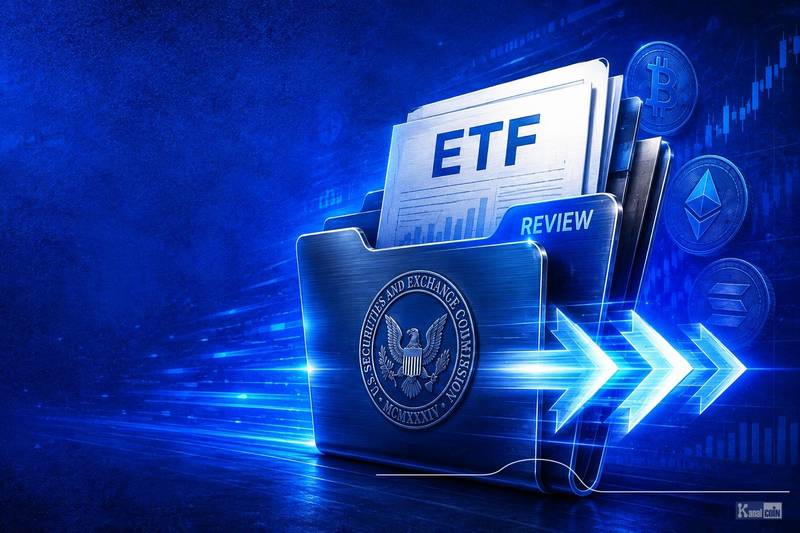
Crypto firms are pressing the US Securities and Exchange Commission to speed up its ETF review process and to let issuers submit confidential draft filings, a procedural push that could reshape how quickly digital asset funds reach investors in the US and, indirectly, across Southeast Asia.
TLDR KEYPOINTS
- Crypto firms are asking the SEC to shorten ETF review timelines and permit confidential draft filings.
- The requests were filed as public comments in the SEC's rulemaking docket, spanning several industry submissions.
- Any change would still leave final approval subject to the SEC's existing standards.
What crypto firms are asking the SEC to change
The industry appeal centers on two concrete asks: faster reviews of exchange-traded fund applications and permission to file draft registration documents confidentially, as reported by The Block. An ETF review is the process by which the SEC, the US equivalent of regulators like Indonesia's Bappebti or the Monetary Authority of Singapore, examines a fund's disclosures before it can list. For related coverage, see Spain Rejects MiCA Extension for Non-Compliant Crypto Firms.
The requests appear across multiple submissions in the SEC's comment docket, including letters filed under the agency's rulemaking record (comment file S7-2026-24). That breadth signals an industry-wide regulatory push rather than a complaint from a single issuer. For related coverage, see Laser Digital Japan Wins Approval for Institutional Crypto Services.
A confidential draft filing lets a company share a preliminary registration statement with regulators without it becoming immediately public. Grayscale, a16z and the Crypto Council for Innovation are among the parties raising concerns about current ETF restrictions, according to CryptoBriefing.
Why confidential draft filings matter for crypto ETF applicants
Confidential drafts differ from fully public initial submissions in one key way: the issuer can refine its disclosures and respond to regulator feedback before rivals and the market see the plan. That mirrors a privacy step already common for traditional IPO registrations.
For crypto ETF applicants, the practical benefit is timing. A firm could resolve questions with SEC staff quietly, reducing the risk that an incomplete early draft signals product strategy to competitors before launch.
The limits matter too. A procedural shift toward confidentiality would not lower the substantive bar for listing; approval would still depend on the SEC meeting its existing disclosure and investor-protection standards, per the agency's rulemaking record.
What faster ETF reviews could mean for the crypto market
Faster reviews would shorten the path between an application and a live product, and more predictable timelines could encourage additional issuers to pursue crypto ETFs. Additional comment letters in the same docket, such as this filing, reflect that competitive interest.
For Southeast Asian investors, US ETF policy sets a global benchmark. Regional platforms such as Coins.ph in the Philippines and Indodax in Indonesia operate under their own licensing regimes, and shifts abroad often shape how local regulators frame digital asset products.
That places this development within a wider regulatory narrative already unfolding across the region, from Taiwan's new crypto licensing and reserve mandates to Australia's push for digital asset firms to complete their licensing transition. In Europe, ESMA has kept expanding its MiCA register, recently adding Standard Chartered and dozens of new entries.
A further submission in the docket underscores that fund sponsors and exchanges are watching the outcome closely, as one comment letter shows. For ASEAN exchanges and their users, the key point remains procedural: faster or more private filings would streamline the road to market, but they would not guarantee that any given crypto ETF wins approval.
Disclaimer: This article is for informational purposes only and does not constitute financial or investment advice. Cryptocurrency and digital asset markets carry significant risk. Always do your own research before making decisions.
Read original article on kanalcoin.com