Crypto Market Crash: Could a December 2026 Santa Rally Lift Bitcoin? Last updated:November 28, 2026 Bitcoin (BTC) has slipped hard as the crypto market crash picked up speed. forced liquidati
Crypto Market Crash: Could a December 2026 Santa Rally Lift Bitcoin?
Last updated:November 28, 2026
Bitcoin (BTC) has slipped hard as the crypto market crash picked up speed. forced liquidations, softer ETF demand, and rate worries all hit together.
A December Santa rally might help, but old seasonal data can't promise one. Treat every number below as a dated snapshot.
Has the Crypto Market Crash Left Room for a December Bounce?
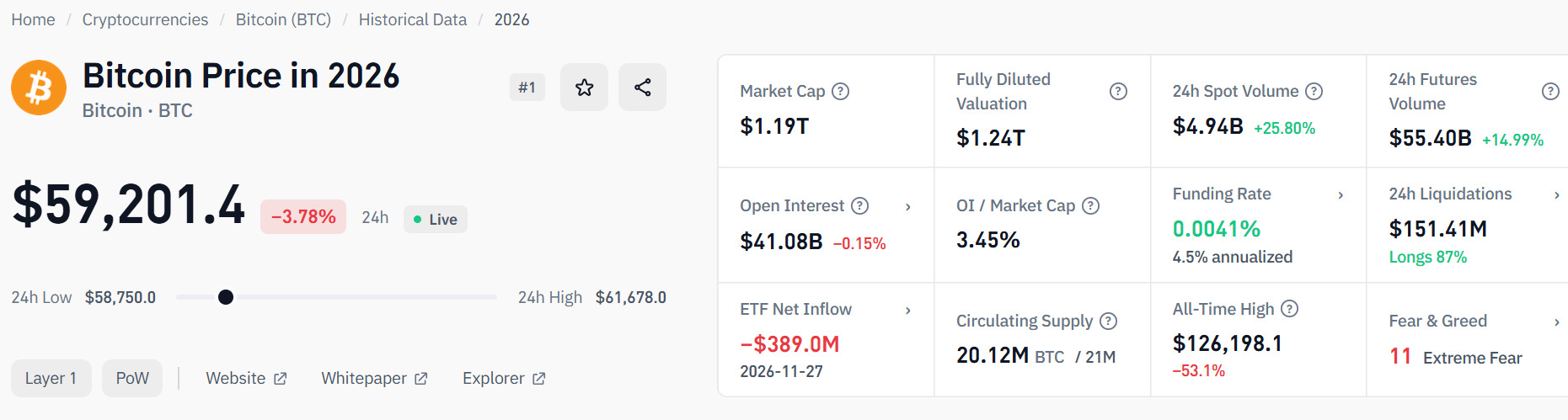
Bitcoin sat near $60,000 on November 28, 2026. That is about 52% under its October 2025 high of $126,198.
This crypto market crash hit in two rounds. October closed with a 7.32% loss. November has been rougher, and it isn't even over yet.
Now some traders are eyeing a December Santa rally, which is just a seasonal bump around year-end. It could happen. Nobody can promise it.
What Is a Crypto Market Crash and How Does It Happen?
A crypto market crash is a quick, wide drop in prices across many coins. Bitcoin usually leads the way, and smaller coins often fall even harder.
There's no official size for it. Traders simply use the word when prices slide hard over days or weeks.
Something starts it, such as bad news, rate worries, or a hack. Then borrowed money makes it worse. Many traders use leverage, which means trading with borrowed funds.
When prices fall too far, a liquidation in crypto shuts those trades down by force. The forced selling then pushes prices lower still.
What Set Off the Sell-Off in Crypto Markets During October 2026?
Bitcoin had a good run into autumn, up 25.05% in August and 6.38% in September.
October took back part of that with a 7.32% loss. Rate worries and sticky inflation were already weighing on risky assets.
Then came October 30. Tracker data showed about $1.53 billion in futures liquidations within 24 hours. Roughly $1.29 billion of it came from traders betting on higher prices.
The day also brought bad news from an exchange. Binance reported a security breach and put the impact at $6.3 billion.
The company later shared an official Binance security update. The breach shook sentiment, yet it was one event inside a longer slide, not the only reason for it.
Why Did Bitcoin Slide Deeper in November 2026 Than in October?
November began with Bitcoin near $77,400. By November 28, it traded near $60,000. The month is still open, so the final return will move.
Two days stand out. Bitcoin fell 6.04% on November 14 and 5.01% on November 20. On November 21 it touched an intraday low of about $55,150, according to CoinGlass historical data. Since then, the price has bounced around the $60,000 mark.
Each drop shook out more traders, and their forced sales dragged prices down again. That feedback loop is called aliquidation cascade.
Measure
Reading
Note
October 2026 return
-7.32%
Month closed
November 2026 return
-22.59%
The month is still open
Latest daily close
$59,945.8
November 28
2026 return so far
-31.50%
From prior-year close
Data as of November 28, 2026 (daily candle, month still open). Source: CoinGlass BTC historical data.
Why Are ETF Outflows Adding Pressure to the Crypto Market?
An ETF is a fund that lets investors hold Bitcoin-exposure through an ordinary brokerage account. When money leaves those funds, demand from bigger investors looks weaker.
US spot Bitcoin ETFs lost about $389 million in net flows on November 27. That's a single day, not the whole month.
Outflows add weight, but they don't prove one cause. Mood matters too. The Fear and Greed index read 11 on November 28, a level labeled extreme fear.
What Do the Liquidation Numbers Reveal About the Sell-Off?
A long position bets on a rising price. A short bet on a fall. The split in long and short liquidations shows who got caught on the wrong side.
On November 28, the futures data dashboard showed roughly $150 million to $190 million in Bitcoin liquidations over 24 hours, depending on the reading.
Longs made up most of it. Open interest, the total value of open futures contracts, sat near $41 billion. The funding rate, a small fee traders pay each other, stayed slightly positive.
Treat these as rolling snapshots. Neither number can predict price alone. Forced selling is also a different thing from spot selling, where a holder simply decides to sell.
Can the December 2026 Santa Rally Bring Crypto Buyers Back?
A Santa rally study covering 2014 to 2023 found that the total crypto market rose between December 27 and January 2 in 8 of 10 years. In the week before Christmas, it rose in only 5 of 10.
That 8 of 10 figure belongs to the total market. Bitcoin on its own gained after Christmas in just 5 of those years. The study also stops at 2023, and its window sits in late December.
A bounce and a recovery aren't the same. Shorts closing out can lift prices for a few days. A lasting recovery needs steady spot buying. Seasonal habits rarely end a crypto market crash alone.
How Could the December Federal Reserve Meeting Affect Bitcoin?
The Federal Open Market Committee meets on December 8 and 9, according to the official FOMC calendar. The decision arrives at 2:00 p.m. Eastern on December 9.
In October, the Fed held its rate at 3.75% to 4%. Two members wanted a hike, and the October policy statement said inflation remains elevated. Higher rates can pull money away from risky assets like Bitcoin. A softer tone might help. The outcome is open.
Which Market Indicators Should Investors Watch in December?
These indicators describe conditions. They don't buy or sell calls.
ETF flows:Daily net flows turning positive would point to demand returning.
Price: Watch whether Bitcoin remains above its November 21 low. This is a market observation, not a buy or sell signal.
Liquidations: Smaller long liquidations would mean less forced selling.
Sentiment: A slow climb out of extreme fear would show the mood easing.
What Does the Data Say About the Crypto Market Crash Now?
The loudest signal is the size of the drop. November is already the worst month of 2026.
The main worry is demand, since ETF outflows and extreme fear show buyers holding back.
The big unknown is the Fed's tone on December 9. One better sign: forced selling has cooled since October 30.
Longer-range estimates live in a separate Bitcoin price prediction outlook, though any estimate carries wide uncertainty.
Final Thoughts: Is a December Crypto Comeback Possible?
A comeback is possible, but nothing in the data promises one. The crypto market crash has left Bitcoin down about 31% this year. Heavy long liquidations, a big exchange incident, and steady ETF outflows all piled on.
Three things deserve a look next. The first is the Fed decision on December 9. The second is whether ETF flows turn positive. The third is whether liquidations stay small, and liquidation risk and leverage explain why that last point matters.
Disclaimer:This article is for information only and is not financial advice. Crypto prices are highly volatile, and seasonal patterns do not guarantee future results. Research carefully and check live data before any decision.