Introduction: crypto payments become a business payment layer Crypto payments are no longer discussed only as a way for individuals to send digital assets. For online companies, they are beco
Introduction: crypto payments become a business payment layer
Crypto payments are no longer discussed only as a way for individuals to send digital assets. For online companies, they are becoming part of a broader payment mix alongside cards, bank transfers, and local payment methods.
The market is moving in a practical direction. Businesses do not simply want to “accept crypto.” They need a process that customers can understand and internal teams can manage. A wallet address may be enough for a personal transfer, but it is not enough for a merchant that has to confirm payment, update customer access, keep records, and support users across different countries.
This is why stablecoin payments, crypto payment gateways, and merchant tools are gaining attention. They turn digital asset payments from a manual transfer into a structured payment process.

The problem: traditional payments still leave global gaps
Traditional payments remain central to online commerce. Cards and bank transfers are familiar, regulated, and widely used. Yet international businesses often face a fragmented payment reality.
A customer in one region may have a card that works smoothly, while another may face declined payments, currency conversion issues, or limited local payment options. Bank transfers can be slow or hard to match with a specific customer action. Local payment methods may work well in one country and be irrelevant in another.
For merchants, the challenge is not only receiving money. The payment must connect to a customer profile, product access, support history, finance records, and refund rules. If these parts are handled manually, each extra payment method creates more operational work.
Crypto payments are therefore developing as an additional channel, not a direct replacement for existing methods. Their value is strongest when they help international customers pay more easily and give businesses a manageable way to process digital assets.
The evolution: from wallet addresses to payment systems
The first version of business crypto acceptance was often simple: show a wallet address and wait for funds. That model can work for a few manual invoices, but it breaks down when payment activity grows.
A business needs to know which customer paid, which asset and network were used, how long the payment should remain valid, and what happens if the amount is incomplete or late. It also needs a record that support and finance teams can understand later.
Crypto payment gateways were created to solve these issues. A gateway can generate a payment page, show the asset and network, monitor blockchain confirmations, update payment status, and provide a dashboard for the merchant. The merchant still has to define policies around refunds, risk, and supported assets, but the payment process becomes easier to run.
Stablecoins are important in this shift. USDT, USDC, and similar assets make pricing and reporting more predictable than volatile coins. For SaaS, digital services, e-commerce, and cross-border sales, stablecoin payments can reduce confusion for both customers and businesses.
The change is also cultural. Crypto-native users may be comfortable sending funds directly, but mainstream customers expect a familiar checkout experience: amount, timer, asset, network, payment status, and confirmation. Businesses expect the same level of clarity on their side. They need to know when funds arrived, what record belongs to which customer, and how the payment should appear in internal reports. That expectation is pushing the market toward more structured merchant tools.

Business use cases: where crypto payments fit
For e-commerce, crypto payments can support high-value purchases or international customers who already use digital assets. The key requirement is a clear checkout page with the correct amount, network, and payment status.
For SaaS companies, stablecoin payments can help with annual plans or customers outside the main card markets. The payment should connect to subscription access so the team does not rely on manual confirmation.
For digital services, crypto invoices and payment pages can simplify payments from users in different regions. A hosted checkout reduces confusion by showing payment instructions in one place.
For platforms and merchant businesses with repeated payment activity, a crypto payment API can connect payment creation and status updates to the existing website or customer account. This is where the difference between a wallet address and a crypto payment gateway becomes clear.
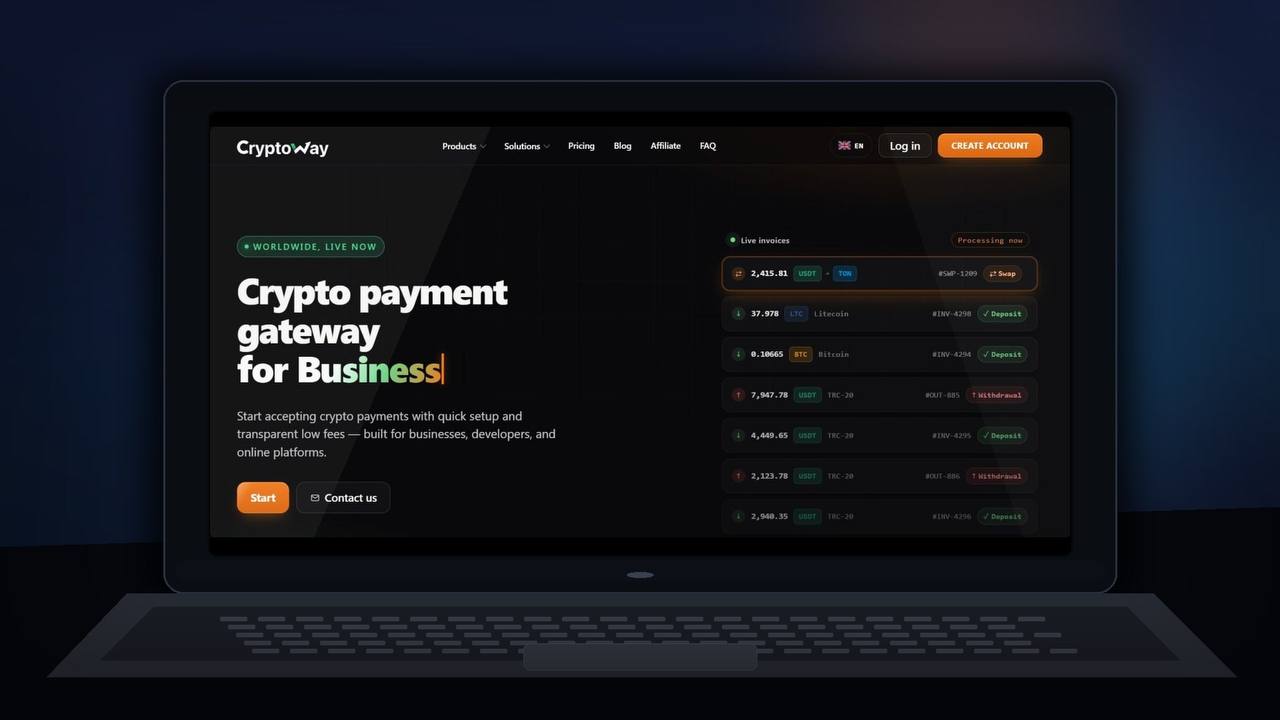
Cryptoway is one example of this type of merchant payment layer. The platform focuses on crypto checkout, invoices, payment pages, API access, supported digital assets, and merchant-side payment management. As a result, [Cryptoway](https://cryptoway.com) fits the broader market move from simple wallet acceptance toward structured crypto payment tools.
Conclusions and trends
The future of business crypto payments is likely to be practical rather than speculative. Merchants will care less about adding every possible coin and more about whether the payment process is understandable, trackable, and useful for their customers.
Several trends are already visible. Stablecoin payments are becoming more relevant for international commerce. Crypto checkout pages are replacing static wallet addresses. Dashboards, payment status tracking, invoices, and API-based tools are becoming part of what merchants expect from crypto payment providers.
Traditional payments will remain important, but crypto payments can grow as an additional channel for companies serving global or crypto-aware audiences. The main question for a business is not whether digital assets are popular in general. It is whether a crypto payment gateway can make them clear enough for customers and manageable enough for the team operating the business.
#cryptowayforbusiness #cryptopayments #cryptopaymentgateway #stablecoinpayments #internationalpayments