The US Senate has just taken an important step in regulating crypto prediction markets. On Thursday, November 19, senators adopted a bill aiming to ban bets related to wars, assassinations, a
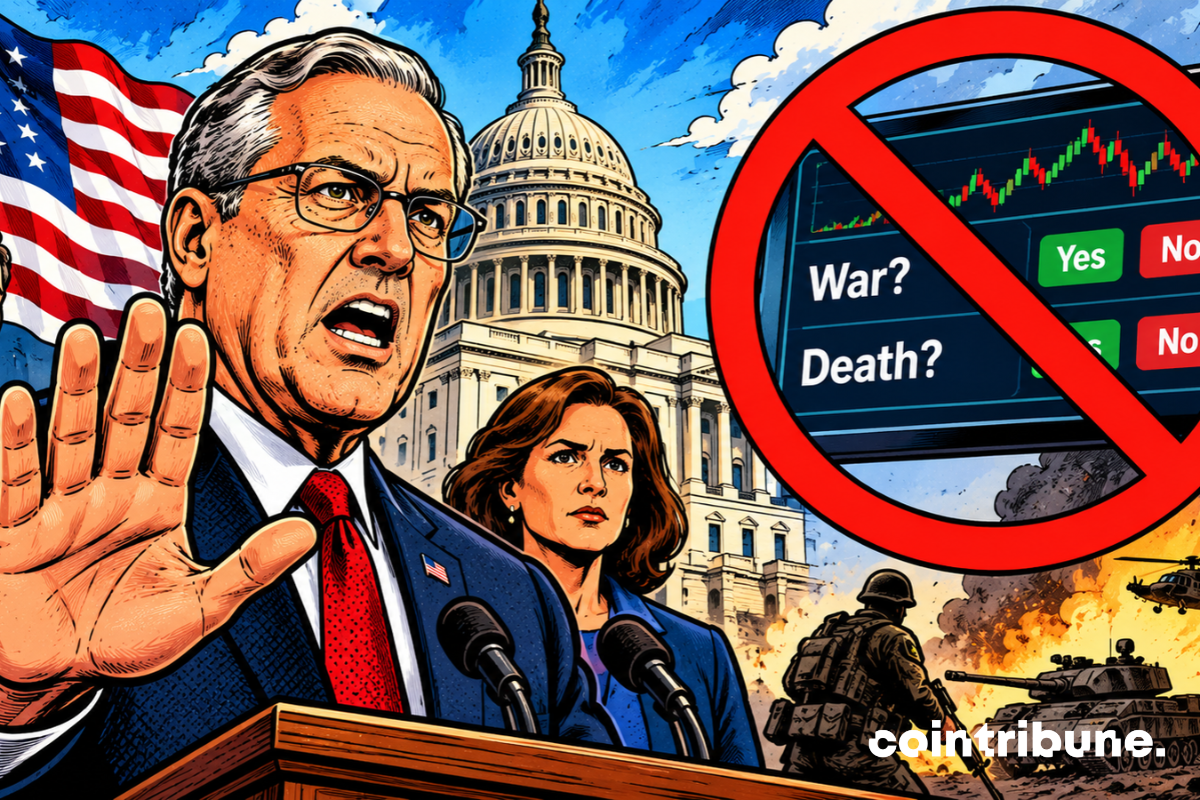
The US Senate has just taken an important step in regulating crypto prediction markets. On Thursday, November 19, senators adopted a bill aiming to ban bets related to wars, assassinations, and death. This decision responds to concerns regarding the use of confidential information to make profits. It notably concerns platforms like Polymarket and Kalshi, whose certain activities now raise questions of national security and transparency.
In Brief
- The US Senate adopts the DEATH Bets Act to ban betting on war, terrorism, and assassinations.
- The text directly targets prediction markets like Polymarket and Kalshi.
- Six Polymarket wallets earned about 1.2 million dollars before US strikes against Iran.
- The bill still needs approval from the House of Representatives to continue its legislative path.
The US Senate Adopts a New Restriction for Crypto Markets
The bill, named the DEATH Bets Act, was introduced in March by Adam Schiff, a Democratic senator from California. John Curtis, a Republican senator from Utah, also co-signed this proposal. Its adoption in the US Senate on November 19 marks a significant legislative advance. However, the bill still needs to pass the House of Representatives before any potential enactment.
The proposal directly targets contracts related to the most sensitive events. It would notably prevent federally registered platforms from offering bets on US military operations. Contracts concerning terrorism, assassinations, and a person’s death would also be affected. Thus, prediction markets would no longer be able to market these financial products.
To achieve this goal, the bill would amend US commodity exchange law. This amendment would forbid the platforms concerned from listing contracts linked to these events. The measure comes in a context where the crypto sector is developing new uses around event markets. It mainly aims to limit risks associated with insider information.
Start your crypto adventure safely with KrakenThis link uses an affiliate program.
Crypto Markets Facing Insider Trading Suspicions
Platforms Polymarket and Kalshi are already facing questions about their practices. Several observers fear that some users exploit confidential information before its release. This information may concern military operations or sensitive geopolitical events. In this context, betting becomes a potential source of profit for those informed in advance.
An incident in February strengthened these concerns. According to blockchain analytics company Bubblemaps, six Polymarket wallets earned about 1.2 million dollars. These users had bet on the schedule of US strikes against Iran. However, analysts did not determine the identities behind these wallets.
Adam Schiff himself emphasized the risks linked to these contracts. On Thursday, the senator stated they create significant insider trading possibilities. He also mentioned possible consequences for national security. This stance partly explains Congress’s desire to strengthen restrictions on platforms.
Crypto Regulation Maintains the Central Role of the CFTC
Contracts related to war and death already fall under categories banned by federal regulation. The Commodity Futures Trading Commission (CFTC) notably has the power to block these products. The new text thus seeks to reinforce this ban in US legislation. It more precisely targets exchanges registered with federal authorities.
However, the bill does not provide for new criminal penalties or specific fines. Violations would remain subject to existing federal commodity rules. The CFTC would retain a central role in overseeing these activities. It has already been reminded that insider trading on event contracts could break the law.
Other cases illustrate difficulties faced by platforms. Kalshi notably sanctioned two traders for operations based on confidential information. One received a fine exceeding 20,000 dollars and a two-year suspension. Additionally, federal justice is prosecuting a green beret accused of using classified information on an operation in Venezuela.
The adoption of this text now opens a new phase in the debate on prediction markets. If the House of Representatives approves it, platforms will have to comply with a strengthened legal ban. The crypto sector will then have to cope with stricter limits regarding sensitive contracts. The outcome of the legislative process will determine the real scope of these restrictions in the United States.