Crypto Wallet Leak Fears: OneKey Cuts Customer Data Storage to 30 Days Security scares keep piling up in the hardware wallet industry, and buyers are starting to ask a simple question: who is
Crypto Wallet Leak Fears: OneKey Cuts Customer Data Storage to 30 Days
Security scares keep piling up in the hardware wallet industry, and buyers are starting to ask a simple question: who is holding my personal details? The fear of a crypto wallet leak is now pushing brands to act early.
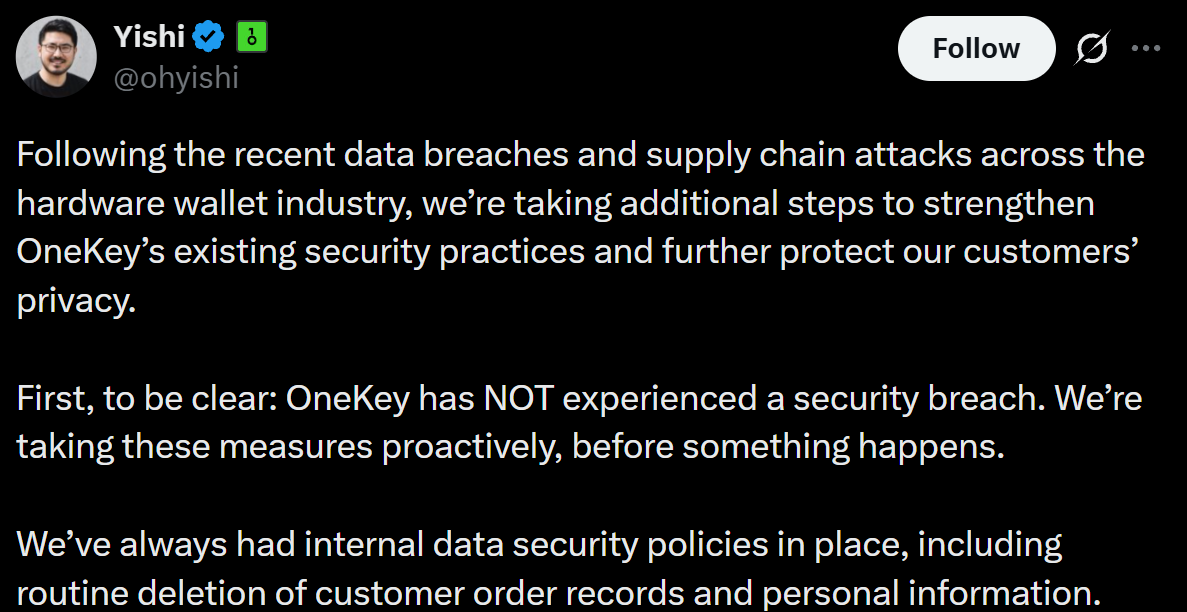
OneKey has announced tougher privacy rules, and in its statement it stresses one point first: the company has not experienced a security breach.
Here is what is changing, why it matters, and what buyers can do.
Key Points
Personal details tied to an order will be deleted within 30 days.
Historical order records were already removed, as confirmed through Shopify’s order API.
Shipping carriers such as FedEx and UPS follow their own rules, which OneKey cannot control.
The long-term goal is to leave third-party shopping platforms.
What OneKey Announced
The steps follow recent breaches and supply chain attacks across the industry.
OneKey says it already had internal rules, including routine deletion of order records and personal information, but it chose to go further and review its systems again to make sure nothing was missed.
The company calls the move proactive, meaning it is acting before any problem appears.
Its guiding idea is simple: collect as little as possible, keep it for as short a time as possible, and delete it once it is no longer needed.
Why the Timing Matters
Other brands have faced real incidents. Keystone, another hardware wallet maker, said in itsown statement that 51,083 buyer records had been created through its Shopify store.
Of these, 25,119 had already been erased, which left 25,964 affected records.
Keystone also cut its retention period from 180 days to 90 and sent deletion requests to Shopify on October 24, 2026.
OneKey does not name any company in its post, so this comparison is ours. Still, it shows why old records can become a risk when a store platform is compromised.
Shopify’s help center explains how erasure requests work for store owners, which is the kind of process brands now need to check closely.
The Three Steps OneKey Is Taking
The statement lists three actions:
Verify deletion of old orders: OneKey confirmed through Shopify’s API that the relevant historical records were deleted, including names, email addresses and shipping addresses. It is now checking its other systems and integrations again.
Keep personal details for 30 days at most: This applies to every system under its control. The team will look for new ways to handle returns, warranty claims and device verification without storing sensitive details for long.
Reduce exposure of old records: The deleted records can no longer be reached through Shopify’s order API. The aim is that even if a shopping platform is hacked, an attacker finds no unnecessary history.
Even a crypto wallet leak of shipping details can lead to phishing or other harassment, which is why shorter storage matters.
Limits and the Long-Term Plan
OneKey is honest about what it cannot promise. The table below shows where it has control and where it does not.
Area
What OneKey says
Its own systems
Personal details deleted within 30 days
Historical Shopify orders
Deleted and confirmed through the API
FedEx, UPS and similar carriers
Own retention rules; no 30-day guarantee
Opt-in updates
A privacy-protected email may be kept, not linked to name, address or orders
Shopping platform
Plan to move to infrastructure it fully controls
That opt-in email would only be used for product updates, security patches and other important notices.
The company also admits that moving away from Shopify is not simple. It points to platform security, data lifecycle management, access controls and fraud prevention as open challenges, and wants to solve them before switching.
What Buyers Should Do
Personal details and wallet funds are separate matters. OneKey’s own guide explains that the seed phrase is created and stored inside the device’s Secure Element chip, and that it is the only way to recover your assets.
So a crypto wallet leak of order details does not hand anyone that phrase.
The same guide also advises buying through the official website and following its authenticity check. Practical habits help too:
Never share your seed phrase with anyone, including support staff.
Treat unexpected emails about orders or “wallet security” with suspicion.
Check any message against the company’s official channels first.
Conclusion
OneKey’s message is simple: collect less, store it for a shorter time, and delete it sooner.
Any crypto wallet leak is damaging, but a short retention period leaves attackers with less to steal.
Buyers should still stay alert, since carriers keep their own records and the full move away from third-party platforms is still a plan, not a finished job.
Disclaimer
This article is for educational and informational purposes only and is not financial or investment advice. Crypto assets are high risk, their prices can be very volatile, and you can lose some or all of your money. Always do your own research and consider speaking with a licensed financial advisor before making investment decisions.