The old argument, everyone knows that stock markets are just glorified casinos, is back again with the addition of prediction markets. However, this time it drew a response from David Schwart
The old argument, everyone knows that stock markets are just glorified casinos, is back again with the addition of prediction markets. However, this time it drew a response from David Schwartz, the former Ripple CTO and current CTO emeritus, who pushed back against the comparison in a discussion on X.
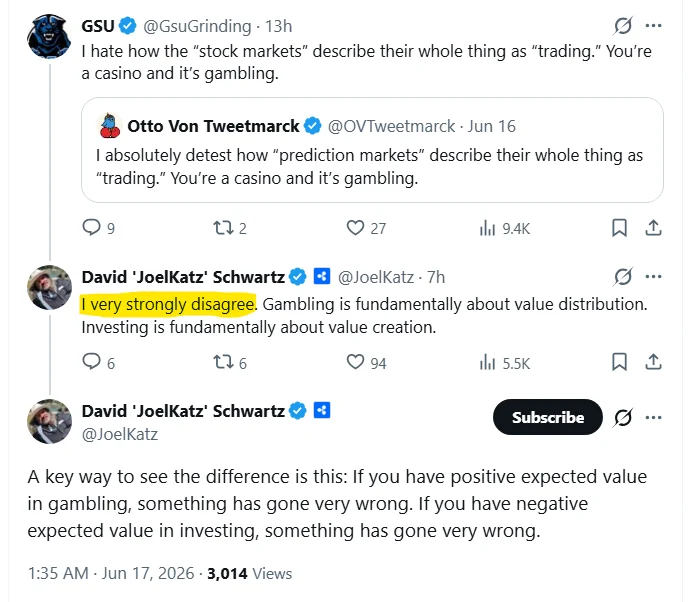
On June 17, 2026, Schwartz joined a debate in which users argued that both markets are no different from one another in terms of gambling. The claim from these users was simple: trading is just a word used these days, merely a more respectable term for betting. However, Schwartz wasn’t buying it and showed strong disagreement with those claims.
Investing And Gambling Serve Different Purposes
According to Schwartz, the distinction comes down to economic function. Gambling, he argued, simply redistributes existing value among participants. Investing, on the other hand, helps create new value by directing capital toward productive activities. That’s a difference critics often overlook when lumping markets and casinos into the same category.
More importantly, Schwartz suggested the logic can be tested in practice. A gambler who consistently beats the house may expose flaws in the system itself. By contrast, an investor who repeatedly loses money in a functioning market may need to reassess their strategy, or question whether the market is operating efficiently.
Ripple Veteran Weighs Into Market Debate
The comments carry added significance because they come from one of the most recognized technical figures in crypto.
Schwartz spent more than a decade serving as Ripple’s chief technology officer before stepping away from day-to-day operations at the end of 2025. He now serves as CTO Emeritus and remains active in public discussions surrounding digital assets and market structure.
Why The Discussion Matters Now
The debate extends beyond social media arguments. As policymakers continue examining financial markets, prediction markets, and digital assets, the way these systems are framed could influence future regulation. Supporters of Schwartz’s position see markets as mechanisms for capital formation and value creation. Critics continue to view them through the lens of speculation and betting.
For now, David Schwartz’s comments have added another high-profile voice to a discussion that isn’t likely to disappear anytime soon.