Day One of National Mourning Begins in Iran as Markets Watch for Regional Fallout
Day One of National Mourning Begins in Iran as Markets Watch for Regional Fallout
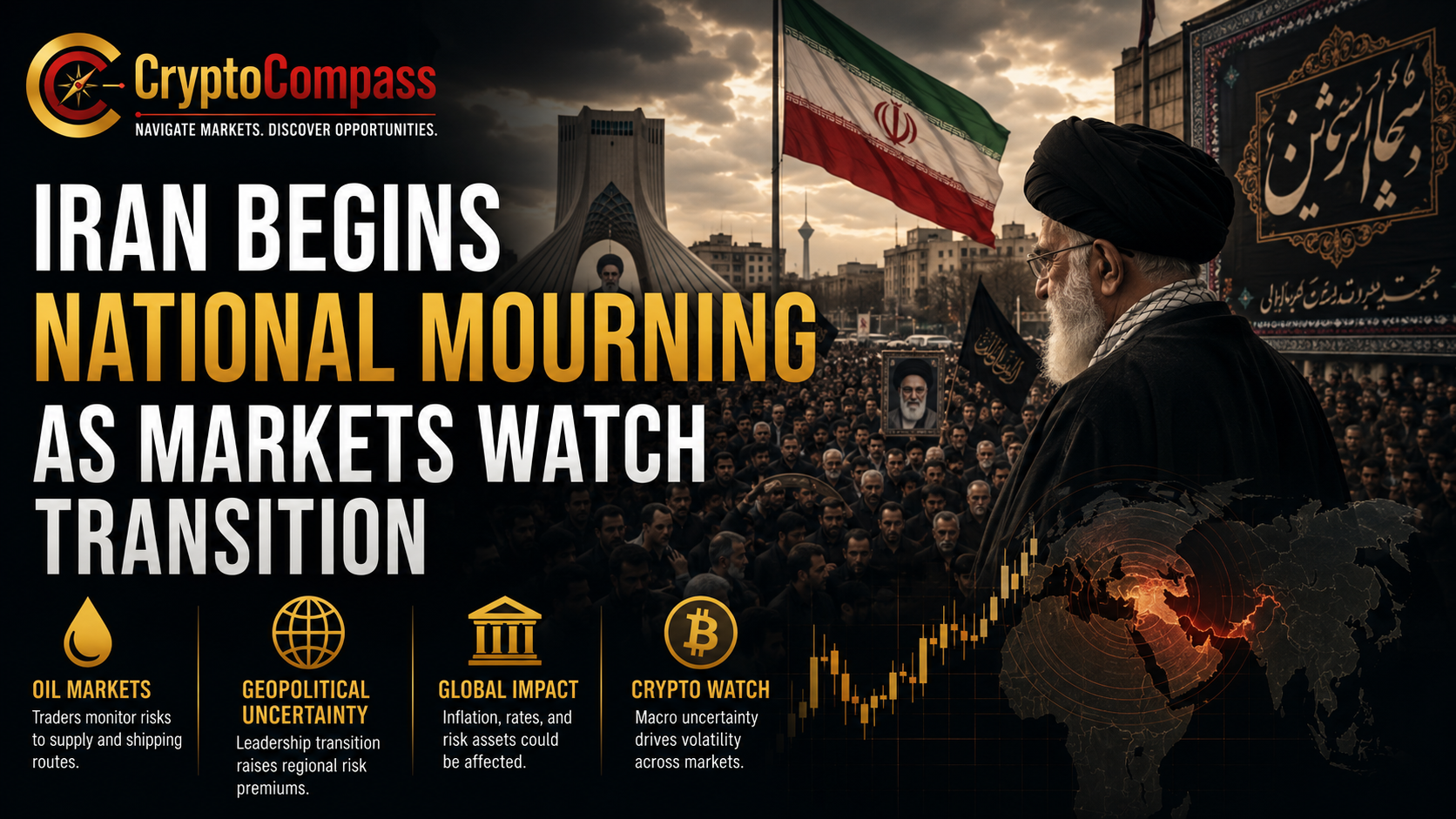
Iran has begun the first day of national mourning following the death of its Supreme Leader, with senior political leaders, military officials, religious authorities, and foreign delegations gathering in Tehran for state funeral ceremonies.
While the event is primarily a domestic political milestone, financial markets are treating it as a geopolitical event with potentially global consequences. Investors are paying less attention to the ceremonies themselves and more to what follows: the succession process, regional stability, and the future direction of Iran's foreign and security policies.
As one of the Middle East's most influential powers, any period of political uncertainty in Iran has the potential to affect energy markets, inflation expectations, and global investor sentiment.
A Leadership Transition with Global Implications
Iran's Supreme Leader holds ultimate authority over the country's military, judiciary, foreign policy, and strategic decision-making.
A transition at the top of the political system naturally raises questions about policy continuity and regional stability.
Markets will be watching closely for:
The appointment and confirmation of a new Supreme Leader.
Statements from Iran's political and military leadership.
Reactions from neighboring countries and major global powers.
Any changes in diplomatic or security policy.
Although Iran has established constitutional procedures for succession, investors typically assign higher risk premiums during periods of political transition.
Oil Markets Could React First
The immediate market focus remains energy.
Iran sits near the Strait of Hormuz, one of the world's most strategically important shipping routes, where roughly 20% of global seaborne oil exports pass each day.
Even without direct supply disruptions, increased geopolitical uncertainty can lift crude oil prices as traders price in potential risks to regional stability and maritime security.
Higher oil prices could, in turn:
Increase global inflationary pressure.
Reduce expectations for near-term interest-rate cuts.
Tighten financial conditions.
Weigh on broader risk assets.
Why Crypto Investors Should Care
Cryptocurrency markets are no longer isolated from macroeconomic developments.
Bitcoin, Ethereum, and other digital assets increasingly respond to the same macro drivers affecting equities and commodities.
If geopolitical tensions push oil prices higher and delay monetary easing, liquidity-sensitive assets could experience additional volatility.
At the same time, geopolitical uncertainty often strengthens Bitcoin's narrative as an alternative store of value, creating competing forces within the digital asset market.
This dynamic has become increasingly common during periods of elevated geopolitical risk.
What Markets Will Watch Next
Following the funeral ceremonies, investors are expected to focus on several key developments:
The formal leadership transition.
Regional diplomatic responses.
Military activity across the Middle East.
Oil price movements.
Shipping conditions in the Strait of Hormuz.
Reactions across global equity, bond, and cryptocurrency markets.
These indicators will determine whether current geopolitical concerns remain contained or evolve into a broader macroeconomic risk.
CryptoCompass View
Markets rarely move because of ceremonies.
They move because of uncertainty.
Iran's leadership transition arrives at a time when investors are already balancing inflation concerns, central bank policy, and geopolitical tensions across multiple regions.
For crypto investors, developments in the Middle East are no longer distant headlines. They are increasingly part of the macro landscape influencing liquidity, risk appetite, and capital allocation worldwide.
By Suttermill
CryptoCompass Editorial Desk