Trading oil or the S&P 500 around the clock on a blockchain sounds appealing on paper. Making it work in production is another story. Delaware-based DeepSigma is trying to bridge that gap, op
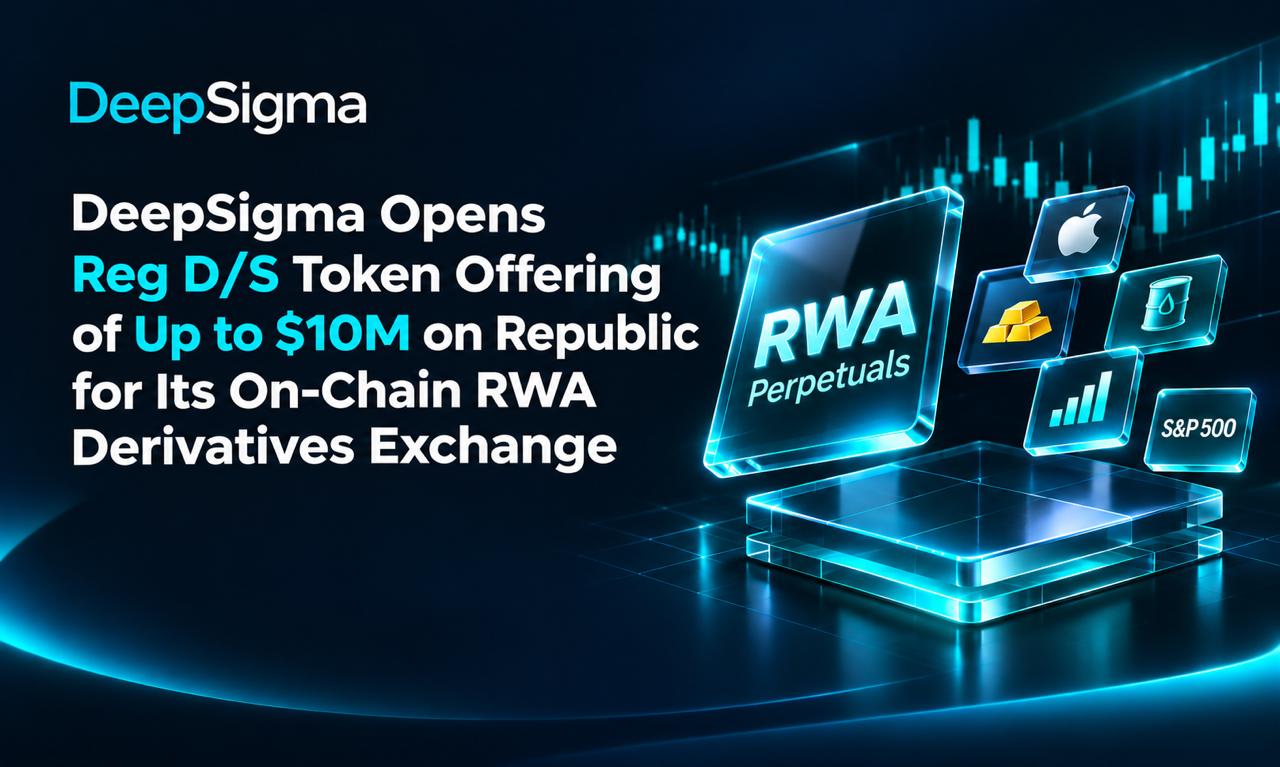
Trading oil or the S&P 500 around the clock on a blockchain sounds appealing on paper. Making it work in production is another story. Delaware-based DeepSigma is trying to bridge that gap, opening a $10 million public token sale on Republic to turn its test environment into a live, regulated derivatives venue. Investors need a minimum of $1,000 to get in, though participation comes with tight legal guardrails. U.S. participants must be accredited, while international buyers face regional screening under standard securities exemptions.
Building Beyond the Testnet Demo
DeepSigma runs an active demo where users test strategies across 77 simulated markets covering commodities, equities, and market indices. It works fine for practice. Real money changes everything. Moving from simulation to an actual trading floor demands an order-matching engine that will not buckle under pressure, a dedicated clearing layer to track margin calls, and third-party code audits. DeepSigma plans to build all of this on Cypherium, an enterprise Layer 1 network running hybrid consensus backed by four U.S. patents.
Crypto never sleeps. Wall Street does. Reconciling those realities means DeepSigma must handle weekend gaps, market holidays, and sudden liquidity dry-ups that crypto-native tokens rarely face.
Token Lockups and Regulatory Hurdles
The token sale structure reflects a market weary of quick dumps. Buyers receive 20% of their tokens at the initial generation event, with the remaining 80% unlocking gradually across a six-month stretch.
Regulation remains the elephant in the room. DeepSigma is leaning heavily into Cypherium's decentralized identity framework to verify users and block forbidden jurisdictions at the protocol level. None of this means the platform has a stamp of approval from the SEC or the CFTC. The project operates strictly under private placement exemptions, leaving the long-term regulatory status of tokenized perps open to debate.
Moving From Paper Trades to Live Markets
Tokenizing real-world assets is crowded territory, but pulling it off with perpetual contracts linked to an active central limit order book is rare. DeepSigma wants to launch its mainnet roughly three months after the sale wraps. It is an ambitious target. Finishing the matching engine, securing the network, and locking in market makers will test whether the team can convert testnet buzz into actual liquidity.
Pulling off decentralized derivatives for legacy assets requires surviving regulatory scrutiny while maintaining sub-second execution speeds. The Republic round gives DeepSigma the bankroll to try, but the real test arrives once real capital replaces simulation balances.