Singapore-based dtcpay has been named the Asia-Pacific pilot partner for Visa's stablecoin prefunding capability via Visa Direct, according to an official Visa announcement published November
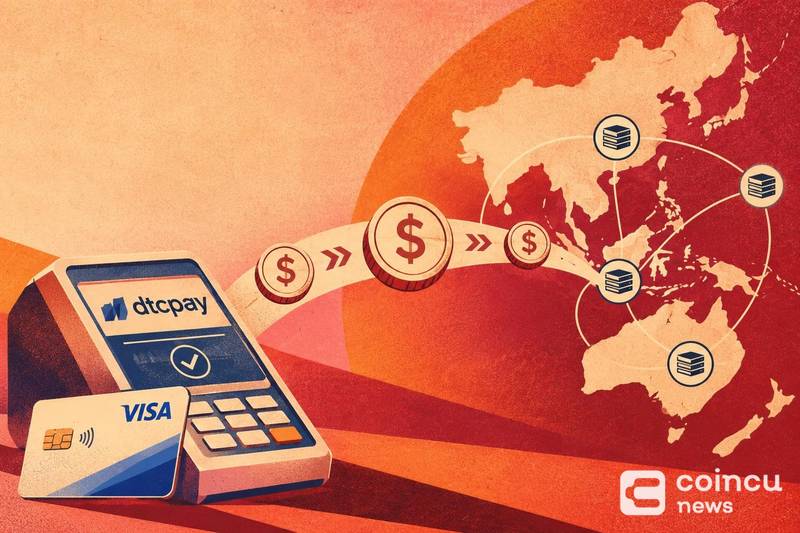
Singapore-based dtcpay has been named the Asia-Pacific pilot partner for Visa's stablecoin prefunding capability via Visa Direct, according to an official Visa announcement published November 18, 2026, marking the first time Visa has extended its stablecoin-powered cross-border payout infrastructure into the Asia-Pacific region and placing dtcpay at the center of the expansion.
dtcpay designated as Visa's first Asia-Pacific stablecoin partner
The Visa press release confirms that dtcpay, founded in 2019 and headquartered in Singapore, will use USDC to prefund cross-border fiat payouts routed through Visa Direct, the payment network's real-time push-payment rail. Recipients on the receiving end of those transfers do not receive stablecoins; they receive local fiat currency, with the digital asset conversion handled upstream by infrastructure provider Triple-A before the funds reach the Visa Direct network. For related coverage, see Algorand (ALGO) Session Overview: What Binance Data Shows.
PANews reported that dtcpay has Visa principal member status, describing dtcpay as "first to support Visa's stablecoin money movement program in Asia Pacific." In this arrangement, Triple-A handles digital-asset conversion before funds reach the Visa Direct network. Context on this theme: Onchain FX Demand: US Session Roundup, Nov. 22, 2026.
What the pilot-partner designation means in practice
Under the arrangement, dtcpay uses USDC holdings to prefund a Visa Direct account, which then disburses fiat currency to recipients across Visa's global reach. According to Visa, Visa Direct connects to more than 18 billion endpoints across more than 200 countries and territories, meaning the stablecoin prefunding mechanism gains immediate access to one of the world's largest push-payment distribution networks. The arrangement is a pilot, not a confirmed market-wide commercial rollout, and the specific corridors, transaction volume limits, and eligible use cases have not been publicly disclosed by either party. More on this in Report Summary: Unverified Claims Allege Fusionist Bridge Exploit; ACE Mint Figure Disputed.
Triple-A, the Singapore-based digital asset infrastructure firm serving as the technical layer for the expansion, handles stablecoin conversion, compliance screening, and settlement, according to The Block. That operational model means Triple-A can settle transactions outside traditional banking hours, an operational advantage in a region spanning time zones from Tokyo to Sydney, where multi-currency settlement windows frequently fail to overlap.
The stablecoin prefunding model and its structural significance
The core mechanic of the pilot separates it from conventional stablecoin payment projects: stablecoins serve as the liquidity instrument for the sender, not the currency received by the beneficiary. A business using dtcpay deploys USDC to fund its outbound payment obligations; Visa Direct then completes the last mile in fiat. The model eliminates the need for the sender to hold local currency reserves in each destination market while keeping the recipient's experience identical to a standard bank transfer.
Vira Platonova, Global Head of Visa Direct, stated: "Stablecoins are becoming an increasingly important part of the infrastructure supporting global money movement." Rhidoi Krishnakumar, Head of Visa Direct for Asia Pacific, noted that "businesses need more flexible ways to move money while keeping the experience simple for the people they serve," according to the official Visa announcement.
"Asia Pacific already accounts for nearly a third of global cross-border payment flows, and that share is expected to grow." Eric Barbier, CEO, Triple-A — via The Block
That figure, attributed to Triple-A CEO Eric Barbier via secondary reporting by The Block, is cited by Barbier rather than independently verified in the primary Visa announcement, and should be treated as a claimed context rather than an audited statistic.
Asia-Pacific pilot follows U.S. commercial production milestone
The Asia-Pacific dtcpay pilot is the second milestone in Visa's stablecoin prefunding rollout. The first, a U.S. commercial production deployment with Inyo Global, went live in October 2026, according to The Block. The Asia-Pacific designation therefore represents geographic expansion of a model that Visa has already validated at a production level domestically, reducing the execution uncertainty that typically accompanies a pure greenfield pilot.
The sequencing, U.S. commercial launch followed by Asia-Pacific pilot designation within roughly six weeks, suggests Visa is moving the stablecoin prefunding capability through its partner network at a pace faster than typical payment infrastructure rollouts. Whether that timeline accelerates further depends on regulatory approvals in individual Asia-Pacific markets and dtcpay's operational readiness across its licensed jurisdictions, neither of which has been disclosed publicly.
Stablecoin payment infrastructure news like this Visa-dtcpay designation is drawing positive institutional attention even as the broader crypto market registers a Fear and Greed score of 11, deep in Extreme Fear territory as of late November 2026. Institutional adoption of stablecoins for settlement infrastructure tends to be evaluated on its own merits, decoupled from speculative market sentiment, as the underlying use case, predictable dollar-pegged liquidity for cross-border disbursement, does not depend on token price appreciation. The broader macro environment for digital asset-based payment flows has shown persistent institutional interest even during risk-off periods.
What has not been disclosed
Several material details of the dtcpay-Visa pilot remain undisclosed as of the November 18 announcement. Visa and dtcpay have not publicly specified the payment corridors covered by the pilot, the minimum or maximum transaction sizes, the full list of destination markets where fiat disbursement will be available, the fee structure applied to dtcpay's USDC prefunding, or the contractual duration of the pilot phase. The timeline for a potential full commercial launch and the conditions under which the pilot would be expanded to additional Asia-Pacific partners have also not been stated.
These undisclosed points are not unusual for a pilot-stage announcement, but they limit the ability to assess the commercial scale of the arrangement at this stage. Confirmation of corridor coverage and go-live dates would require direct disclosure from Visa or dtcpay.
FAQ: dtcpay and Visa's stablecoin funds-transfer pilot
What is dtcpay's role in the project?
dtcpay serves as the Asia-Pacific pilot partner for Visa Direct's stablecoin prefunding capability. It holds USDC reserves and uses those to prefund cross-border fiat payouts routed through the Visa Direct network, acting as the digital asset entry point into Visa's global push-payment infrastructure.
Is the stablecoin transfer service live?
Visa designated dtcpay as pilot partner in the November 18, 2026 announcement. Whether the service is in active commercial operation or in a pre-production testing phase has not been specified in the available public disclosures from either party.
Which stablecoins and markets are included?
The confirmed stablecoin is USDC, per Visa's official announcement and confirmed by PANews reporting. The specific destination markets, payment corridors, and eligible sender geographies covered by the pilot have not been publicly disclosed. Recipients in all cases receive local fiat currency, not USDC or any other digital asset.
What is Triple-A's function in the arrangement?
Triple-A provides the digital asset infrastructure layer, covering stablecoin conversion, compliance screening, and settlement processing, according to The Block. Triple-A operates as the technical intermediary that converts USDC into fiat and routes the resulting settlement through Visa Direct.
What should institutional observers watch for next?
The concrete next triggers are corridor expansion announcements from Visa or dtcpay, any MAS or other regional regulatory guidance on stablecoin payment institution requirements that could affect the pilot's scope, and whether Visa adds additional Asia-Pacific pilot partners alongside dtcpay as the program matures beyond its current single-partner structure in the region.
Editorial credits
SP
Sophia Panel
Writer · Coincu
HN
Haruto Nakamura
Editor · Coincu
Monitors published articles around the clock and can correct or withdraw them.
Checked by Coincu QC Team before publishing on November 23, 2026 for headline accuracy, metadata, commercial disclosure and authorship claims: our AI review system checks every article before it goes live, and our editor monitors it after publication. Report an error.
Coincu uses AI for research, drafting and review. Our editorial team is responsible for every article and corrects or withdraws articles when needed. How we review.
Disclaimer: This article is for informational purposes only and does not constitute financial or investment advice. Cryptocurrency and digital asset markets carry significant risk. Always do your own research before making decisions.
The post dtcpay Joins Visa Asia-Pacific Stablecoin Transfer Pilot was initially published on Coincu.