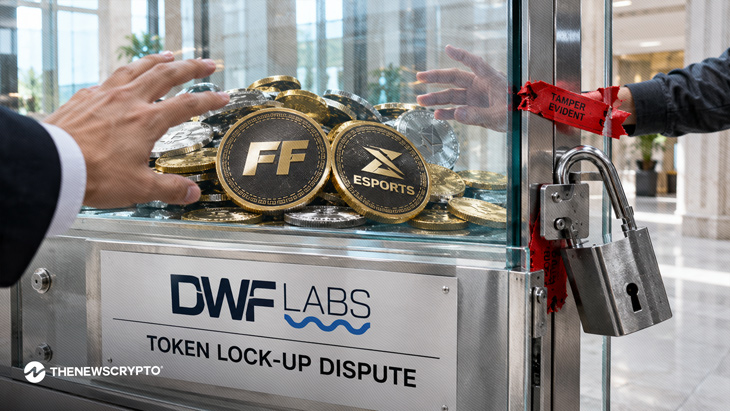
DWF Labs affiliates DWF Maas and Falcon Digital have filed a $141 million lawsuit against BitGo in London’s High Court. The firms allege BitGo transferred locked-up FF and ESPORTS tokens to e
- DWF Labs affiliates DWF Maas and Falcon Digital have filed a $141 million lawsuit against BitGo in London’s High Court.
- The firms allege BitGo transferred locked-up FF and ESPORTS tokens to exchanges about two months before their scheduled unlock.
Two firms affiliated with market maker DWF Labs, DWF Maas and Falcon Digital, have filed a $141 million lawsuit against crypto custodian BitGo in London’s High Court. The claim centres on a straightforward but serious allegation: BitGo sold tokens it was supposed to be holding under agreed lock-up restrictions, before those restrictions expired.
The agreements in question were OTC token deals covering Falcon Finance (FF) and ESPORTS tokens. Under the terms, BitGo received discounted pricing in exchange for accepting a three-month lock-up followed by staged vesting releases. The plaintiffs allege BitGo transferred the tokens to exchanges approximately two months before the first scheduled unlock, in direct breach of what was agreed.
The Falcon Finance sales, according to the claim, flooded a thin market with limited liquidity and concentrated holdings. The sudden increase in circulating supply dragged down the token’s price. Also, reduced the value of DWF’s remaining holdings, which is precisely what lock-up periods are designed to prevent.
DWF said in the claim there was no contractual excuse for the transfers or sales. Also, the lock-ups, the plaintiffs argue, were specifically intended to give DWF time to launch products and build liquidity during the restricted period. That window was cut short.
The Broader Context Around BitGo
This lawsuit does not arrive in isolation. BitGo is also entangled in a separate dispute with Galaxy Digital over a terminated $1.2 billion acquisition deal, as well as a federal securities class action filed in June 2026. The accumulation of legal pressure raises questions about the company’s compliance frameworks and its handling of institutional custody arrangements.
BitGo has declined to comment on the DWF lawsuit. Moreover, the allegations have not been determined by a court, and BitGo will have the opportunity to file a defence. No hearing date or case number was published in the material reviewed.
What This Case Signals for the Industry?
OTC token agreements operate differently from standard exchange transactions. They involve privately negotiated discounts, settlement arrangements, and contractual restrictions on resale. All are designed to manage the market impact of large institutional allocations, particularly in low-liquidity environments.
In addition, when those restrictions are allegedly ignored, the damage is not just financial; it undermines the trust that institutional participants rely on when entering private token deals.
The DWF vs BitGo case is a reminder that enforceable vesting schedules and transfer restrictions are not just legal formalities. Furthermore, in thin markets with concentrated holdings, they are the entire foundation of price stability during a token’s early distribution phase.
Crypto Market Highlights
Binance Drops Eight Services in Brazil as New Crypto Rules Take Effect in October