BitcoinWorld ECB President Lagarde Welcomes U.S.-Iran Deal, Emphasizes Importance for Strait of Hormuz Stability European Central Bank (ECB) President Christine Lagarde has publicly welcomed
BitcoinWorld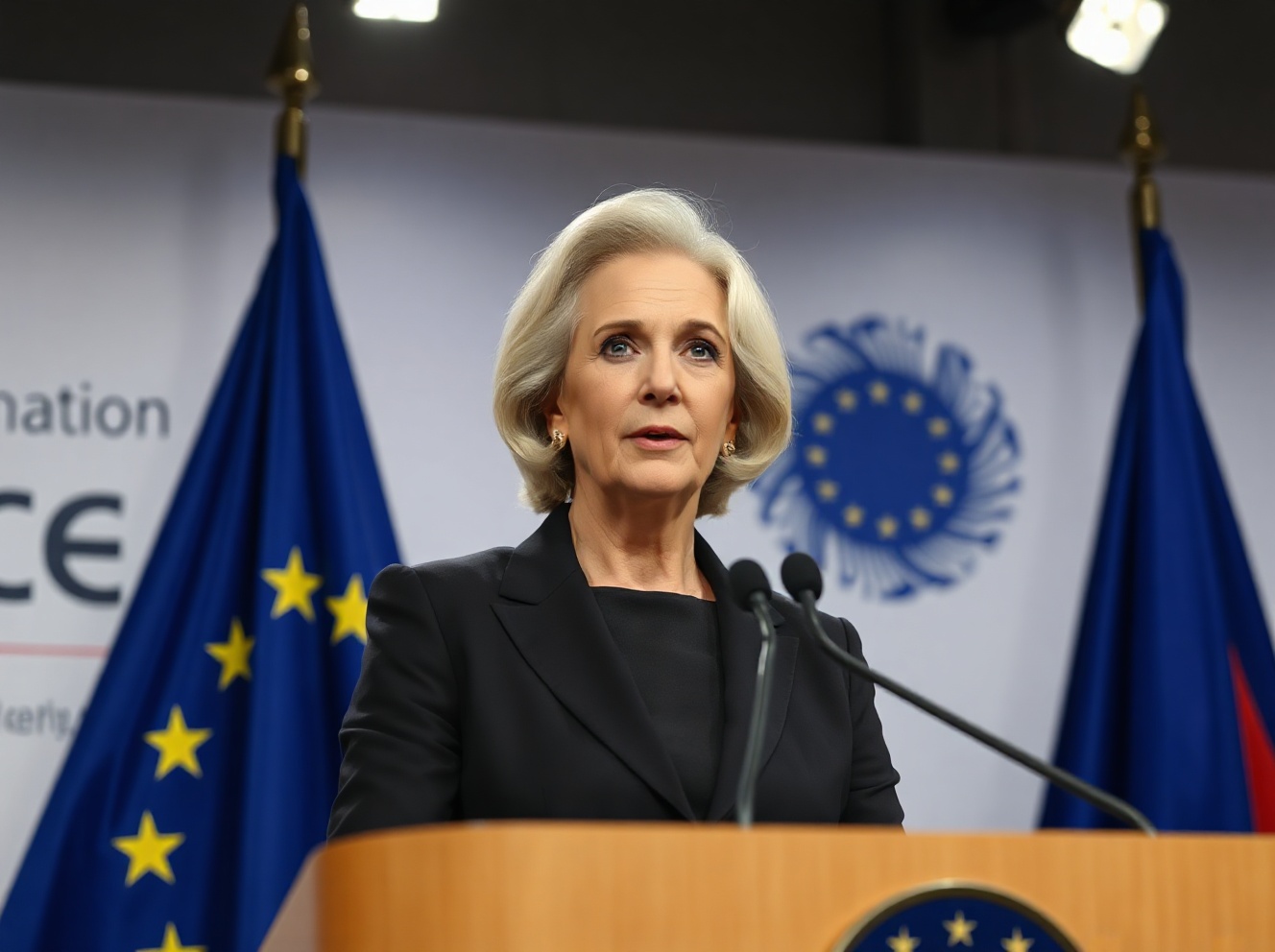 ECB President Lagarde Welcomes U.S.-Iran Deal, Emphasizes Importance for Strait of Hormuz Stability
European Central Bank (ECB) President Christine Lagarde has publicly welcomed the recent agreement between the United States and Iran, describing the deal as a significant step toward ensuring peace and stability in the strategically vital Strait of Hormuz. Her remarks, delivered during a press conference in Frankfurt, underscore the economic implications of geopolitical tensions in the region.
Geopolitical Context and Economic Significance
The Strait of Hormuz, a narrow waterway connecting the Persian Gulf to the Gulf of Oman, is a critical chokepoint for global oil shipments. Approximately 20% of the world’s petroleum passes through this strait, making its security a matter of global economic stability. Any disruption—whether from military conflict, political tensions, or piracy—can send shockwaves through energy markets, affecting fuel prices and inflation worldwide.
Lagarde’s statement comes amid a broader effort by international leaders to de-escalate tensions in the Middle East. The U.S.-Iran deal, while not fully detailed in public, is believed to involve mutual commitments to reduce hostilities and ensure the free passage of commercial vessels. For the ECB, which monitors inflation and economic growth across the eurozone, stability in the Hormuz region directly impacts energy costs and supply chains.
Market Reactions and Expert Analysis
Financial markets have reacted cautiously to the news, with oil prices showing modest declines in early trading as traders price in reduced geopolitical risk. Analysts at major investment banks have noted that while the agreement is a positive signal, its long-term effectiveness remains uncertain.
“Lagarde’s endorsement adds a layer of credibility to the diplomatic process,” said Dr. Elena Marchetti, a geopolitical risk analyst at the European Policy Centre. “The ECB’s focus on this issue highlights how interconnected energy security and monetary policy have become. A peaceful Hormuz means lower inflation risks for Europe.”
The deal also has implications for global shipping insurance rates and the cost of maritime security operations, both of which have risen sharply in recent years due to regional instability.
Implications for European Consumers and Businesses
For European consumers, the most immediate benefit of a stable Hormuz Strait is the potential for lower or more predictable fuel prices. This could help ease inflationary pressures that have strained household budgets across the eurozone. Businesses reliant on imported raw materials and energy-intensive production may also see reduced costs, improving their competitiveness.
However, experts caution that the agreement is just one piece of a larger puzzle. Other factors—including OPEC+ production decisions, global demand trends, and the transition to renewable energy—will continue to shape energy markets.
Conclusion
ECB President Christine Lagarde’s welcome of the U.S.-Iran deal signals a recognition that geopolitical stability is a prerequisite for economic stability. While the full details of the agreement remain under wraps, its potential to secure the Strait of Hormuz represents a meaningful development for global trade and energy markets. The coming weeks will reveal whether the deal translates into lasting peace and tangible economic benefits.
FAQs
Q1: Why is the Strait of Hormuz important to the global economy?The Strait of Hormuz is a narrow waterway through which about 20% of the world’s oil passes. Any disruption there can cause significant volatility in global oil prices and affect inflation worldwide.
Q2: How does the U.S.-Iran deal affect European consumers?A stable Hormuz Strait can lead to more predictable and potentially lower fuel prices, helping to ease inflationary pressures on European households and businesses.
Q3: What is the ECB’s role in geopolitical matters?The ECB monitors geopolitical developments because they affect inflation, economic growth, and financial stability in the eurozone. Stability in key regions like the Middle East directly impacts energy costs and supply chains.
This post ECB President Lagarde Welcomes U.S.-Iran Deal, Emphasizes Importance for Strait of Hormuz Stability first appeared on BitcoinWorld.