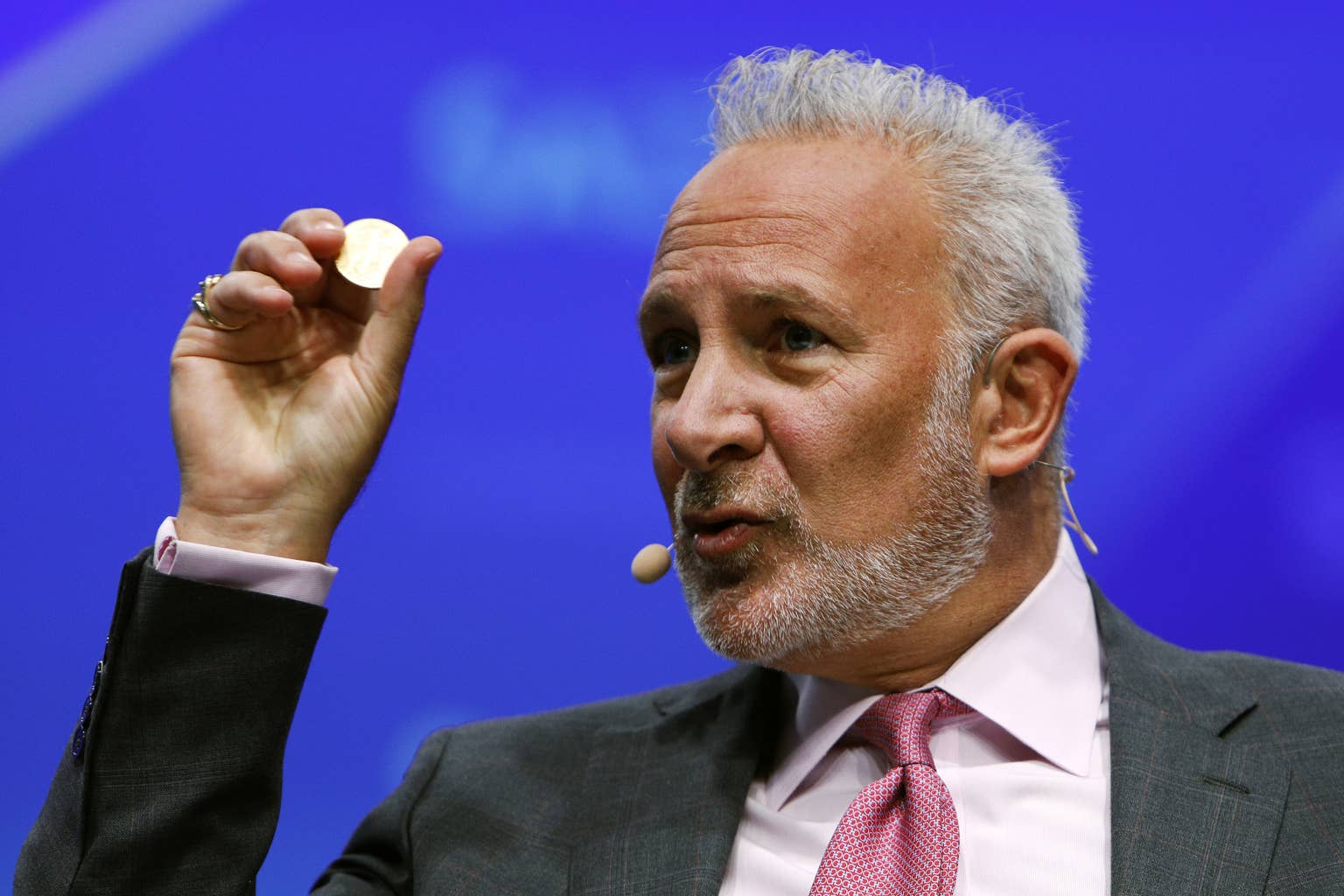
EuroPac.com Chief Economist and Global Strategist Peter Schiff made headlines twice in the same week. First by conceding during a nationally televised debate that Bitcoin is not going to zero
EuroPac.com Chief Economist and Global Strategist Peter Schiff made headlines twice in the same week. First by conceding during a nationally televised debate that Bitcoin is not going to zero, then by arguing that MicroStrategy's entire Bitcoin acquisition strategy is now mathematically broken.
Taken together, both developments paint an increasingly complicated picture of crypto's most reliable bear.
Schiff blinks on Bitcoin's survival
During a Fox Business debate with Anthony Pompliano, Schiff was pressed to make a bet on whether Bitcoin would still exist a decade from now. His answer stopped the crypto community cold.
"It's not going to go to zero. Maybe," Schiff said.
Related: Anthony Scaramucci unveils Bitcoin target for July
Pompliano moved quickly to claim the moment.
"I got Peter Schiff to admit Bitcoin is not going to zero on national television," he posted on X shortly after the debate. "Next, he will reveal he owns a bunch of Bitcoin too."
The admission, however reluctant, marks a notable shift in language from a critic who built much of his public profile on predicting the cryptocurrency's collapse.
Schiff argues Strategy's flywheel is broken
Separately, Schiff turned his attention to MicroStrategy, arguing that the company's once-celebrated Bitcoin acquisition model has become structurally unworkable.
The strategy relied on MicroStrategy stock trading at a significant premium to its Bitcoin Net Asset Value. Saylor would issue new shares or convertible debt at that inflated premium, use the proceeds to buy more Bitcoin, and each new share issued would increase the amount of Bitcoin held per share.
Trending on TheStreet Roundtable:
Schiff argues it has now stopped. When shares trade at a discount rather than a premium, issuing new stock to buy Bitcoin has the opposite effect, diluting existing shareholders rather than rewarding them.
“Almost all articles regarding criticism of MSTR selling stock to buy Bitcoin point to the fact that MSTR has always sold stock to buy Bitcoin. But that rationalization misses the point of the criticism,” he said in a post on X.
"Past sales were done at a premium. Current sales are done at a discount."
MicroStrategy's recent purchase of 1,550 BTC for $101 million, celebrated across the Bitcoin community, required issuing shares at a discounted price, meaning more shares were issued proportionally than Bitcoin acquired.
MicroStrategy was reportedly down over $6 million on that specific purchase almost immediately as markets pulled back.
Schiff remains deeply sceptical. He warned investors that holding MSTR is the worst way to be bullish on Bitcoin, and dismissed Bitcoin believers who still back Saylor.
Schiff turns fire on Saylor's retail product
Hours later, he turned his attention to Strategy's preferred stock, STRC. Schiff noted that STRC was already trading at 93.5, a 6.5% loss for investors who paid the $100 issue price.
Schiff also flagged that the current yield on STRC has climbed to 12.3%, above MicroStrategy's 11.5% yield threshold, meaning the company must now raise its own yield just to issue more shares.
In other words, the cost of Saylor's fundraising machine is going up at the same moment its premium is going down.
Related: Peter Schiff has blunt message for Saylor as Bitcoin crashes below $80K