Disclaimer: This article is a sponsored post provided by a third party. It is not part of editorial content and should not be considered financial advice. ARKBRIDGE Investment Specialist Edua
Disclaimer: This article is a sponsored post provided by a third party. It is not part of editorial content and should not be considered financial advice.
ARKBRIDGE Investment Specialist Eduard Morano explains why higher-value portfolios should be built around purpose, diversification, liquidity, disciplined allocation and continuous risk monitoring—not isolated trading ideas
London, January — After more than 15 years across trading and investing, Eduard Morano of ARKBRIDGE has developed a clear view of what separates a collection of trades from a well-constructed portfolio.
The difference, he believes, is structure.
Morano works with higher-tier and high-net-worth ARKBRIDGE clients, with a particular focus on market education, portfolio-analysis frameworks, capital allocation and the practical use of risk-management technology. His approach is built around a straightforward principle: every position should have a defined role, a measurable risk and a clear relationship to the rest of the portfolio.
For investors managing larger pools of capital, that distinction becomes increasingly important. More capital creates more opportunity, but it also increases the consequences of concentration, poor liquidity, excessive leverage and unnecessary trading costs.
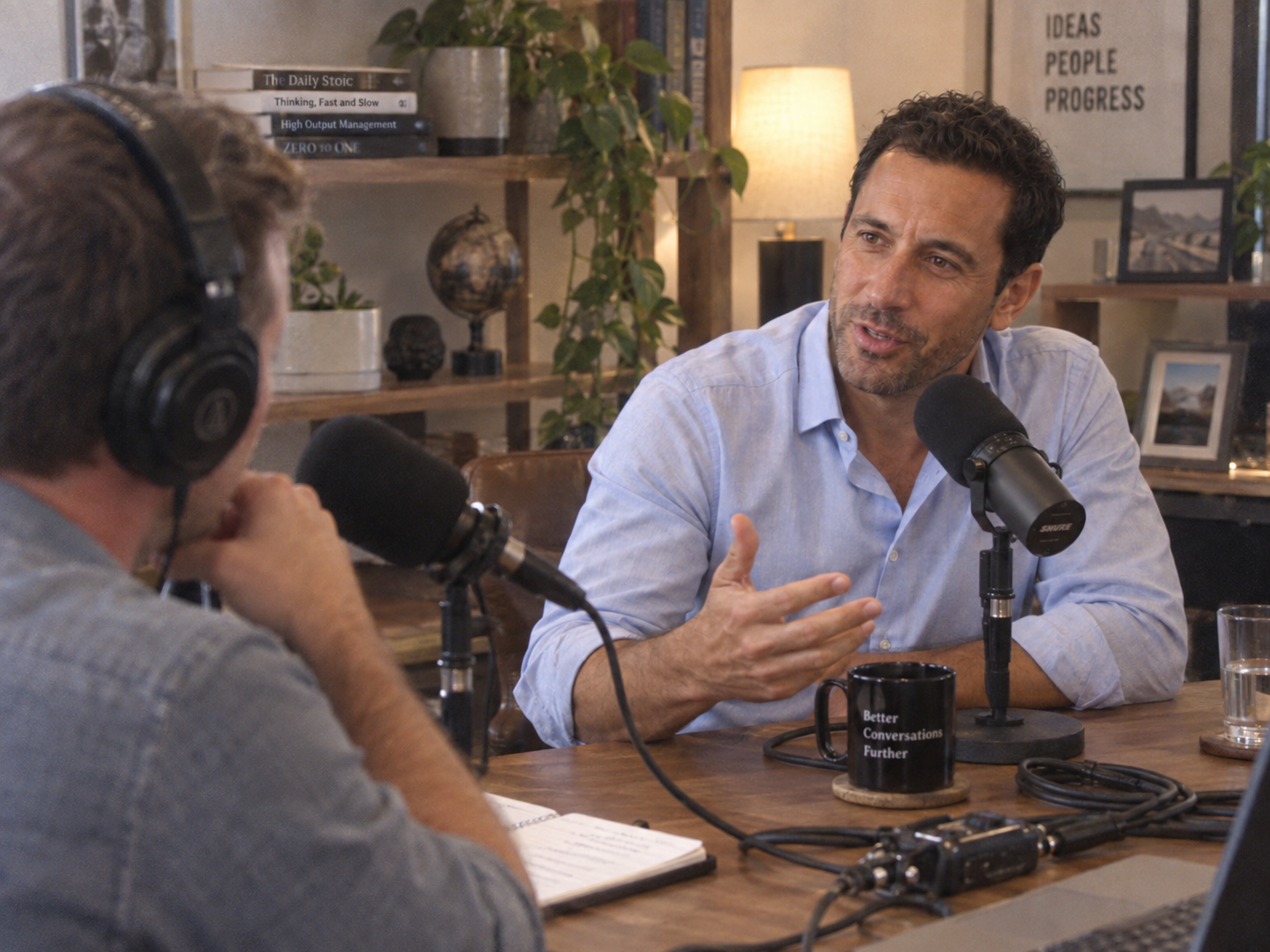
 Eduard Morano, Investment Specialist at ARKBRIDGE.
Eduard Morano’s Approach: Build the Portfolio Before Chasing the Trade
Morano’s process begins at portfolio level.
Rather than evaluating every opportunity in isolation, he first considers how new exposure changes the structure of the account as a whole.
This is an approach commonly seen in sophisticated portfolio management. Institutional trading systems, for example, may consider cash balance, correlation, sector exposure and other portfolio-level constraints when handling multiple positions together rather than treating every order as independent.
Morano applies the same underlying logic to portfolio analysis: a potentially attractive trade can still weaken a portfolio if it simply adds more exposure to a risk that is already heavily represented.
A portfolio may contain equities, indices, currencies, commodities and digital assets and still be concentrated around one economic outcome.
If several positions depend on lower interest rates, stronger economic growth or rising risk appetite, the instruments may look different while the underlying risk remains similar.
For Morano, this leads to one of the most important portfolio questions:
What is actually driving each position?
Diversification Should Reduce Dependency, Not Simply Increase Position Count
Morano considers genuine diversification to be one of the foundations of more resilient portfolio construction.
His emphasis is not on holding the largest possible number of instruments. It is on avoiding unnecessary dependence on a single sector, macroeconomic scenario, currency, liquidity condition or market theme.
This mirrors the way leading private-wealth practices describe portfolio construction: high-net-worth clients are often approached through asset allocation, risk analysis, concentrated-position management and long-term portfolio structure rather than through isolated product selection.
For Morano, diversification begins by understanding correlation.
Two positions do not need to look similar to react to the same market event.
That makes portfolio-level analysis especially important during periods of stress, when correlations that appeared low in normal conditions can rise quickly.
Capital Allocation: Not Every Opportunity Deserves the Same Weight
Once the portfolio structure is understood, Morano turns to capital allocation.
A common mistake is assigning similar amounts of capital to positions carrying very different levels of risk.
Morano instead looks at the interaction between volatility, liquidity, leverage, correlation, time horizon, downside exposure and trading cost.
A highly volatile instrument with limited liquidity may deserve substantially less capital than a deeper, more stable market even when the investor has similar conviction in both opportunities.
The objective is not to put maximum capital behind every strong idea.
It is to use capital efficiently while limiting the ability of one position—or one underlying market theme—to dominate the portfolio.
Draft quote for Eduard approval: “With larger accounts, the question changes. You stop asking how many opportunities you can find and start asking where each unit of capital is actually earning its place.”
Liquidity Matters More as Position Size Increases
Morano also places significant emphasis on liquidity and the behaviour of major market participants.
Large banks, asset managers, hedge funds and institutional desks can trade volumes capable of materially affecting liquidity and price behaviour. Understanding where institutional activity is concentrated can therefore provide useful context around execution and market structure.
For Morano, the point is not to copy institutional traders.
It is to understand whether the market is sufficiently liquid for the level of exposure being considered and whether entry and exit assumptions remain realistic as position size increases.
This matters particularly for higher-value accounts.
A strategy that works efficiently at one position size may behave differently when substantially more capital needs to enter or exit the same market.
 Eduard Morano discussing portfolio construction and capital efficiency, including the role of liquidity, diversification, trading costs and technology-supported risk monitoring for larger accounts.
Transparent Trading Costs Are Part of Portfolio Construction
Another important element of Morano’s approach is transparent total trading cost.
He treats spreads, overnight financing, currency conversion, leverage and holding period as portfolio variables rather than administrative details.
This matters because investment results are ultimately net of costs.
A position may be correct in direction and still represent poor use of capital if the cost of maintaining it materially reduces the expected reward.
For higher-value portfolios, small differences in cost can become meaningful when applied across larger positions or longer holding periods.
Morano therefore considers trading costs alongside risk, liquidity and potential return when evaluating how efficiently capital is being used.
This connects directly with one of ARKBRIDGE’s broader category priorities: providing clients with clearer information about the true total cost of trading, not simply headline spreads.
Technology Should Monitor the Portfolio After the Decision Is Made
Portfolio construction does not end when a position is opened. Markets evolve.
Volatility changes. Correlations change. Exposure drifts. A portfolio that originally appeared balanced can become concentrated without the investor intentionally adding a single new position.
This is where Morano sees particular value in modern portfolio technology and AI-supported monitoring.
Technology can continuously assess changes across multiple positions and surface shifts in exposure that would be difficult for one person to monitor manually at all times.
Morano’s role is not to treat technology as an automatic decision-maker. Instead, he focuses on helping clients understand how market information, portfolio analytics and available risk-management tools can be used to create a more disciplined trading process.
ARKBRIDGE operates on an execution-only basis. Individual investment and trading decisions remain with the client.
The Eduard Morano Portfolio Framework
Morano’s approach can ultimately be reduced to five connected principles.
- Purpose: Every position should have a clear reason for being in the portfolio.
- Diversification: Different instruments should introduce genuinely different sources of risk and opportunity.
- Allocation: Position size should reflect volatility, liquidity, correlation and potential downside.
- Efficiency: Leverage and total trading costs should be considered before capital is committed.
- Monitoring: Portfolio behaviour should be reviewed continuously as market conditions change.
The objective is not to remove risk—financial markets do not allow that.
The objective is to take intentional risk, understand where it comes from and avoid paying for risks that do not improve the portfolio.
Why This Matters for High-Net-Worth Clients
Large portfolios create different challenges from small trading accounts.
As capital grows, liquidity, concentration, financing costs and correlations become increasingly important. The value of a disciplined portfolio framework therefore extends beyond identifying the next attractive market opportunity.
It becomes a question of how the entire pool of capital is structured.
That philosophy is central to Eduard Morano’s work at ARKBRIDGE.
After 15 years in markets, his focus is not on maximizing the number of trades. It is on helping clients understand how different exposures interact and how technology, transparent trading costs and disciplined risk controls can support a more structured approach to global markets.
“A strong portfolio should make sense as a whole. You should understand why every position is there, what could hurt it, what it costs and how it behaves alongside everything else you own.”
About Eduard Morano
Eduard Morano is an Investment Specialist atARKBRIDGEwith more than 15 years of experience across trading and investing. His professional focus includes multi-asset portfolio construction, capital allocation, diversification, liquidity, risk analysis and technology-supported portfolio monitoring, particularly in the context of higher-tier and high-net-worth client accounts.
ARKBRIDGE specialists provide market education, platform support and information about available analytical and risk-management tools. ARKBRIDGE provides execution-only services and does not provide personalised investment advice or discretionary portfolio management.
About ARKBRIDGE
ARKBRIDGE is a multi-asset trading platform that has operated since 2020, initially serving a more limited client base before expanding broader access to traders and investors in 2026. The platform combines trading technology, AI-supported market tools, risk-management controls and human-led market education and platform support.
Risk Warning: CFDs are complex leveraged instruments and carry a substantial risk of loss. Portfolio diversification, analytical tools and risk-management controls cannot eliminate market risk or guarantee positive investment performance.
Disclaimer: The text above is an advertorial article that is not part of Coincu.com editorial content.
The post Eduard Morano of ARKBRIDGE: A 15-Year Perspective on Portfolio Construction, Capital Efficiency and Risk was initially published on Coincu.