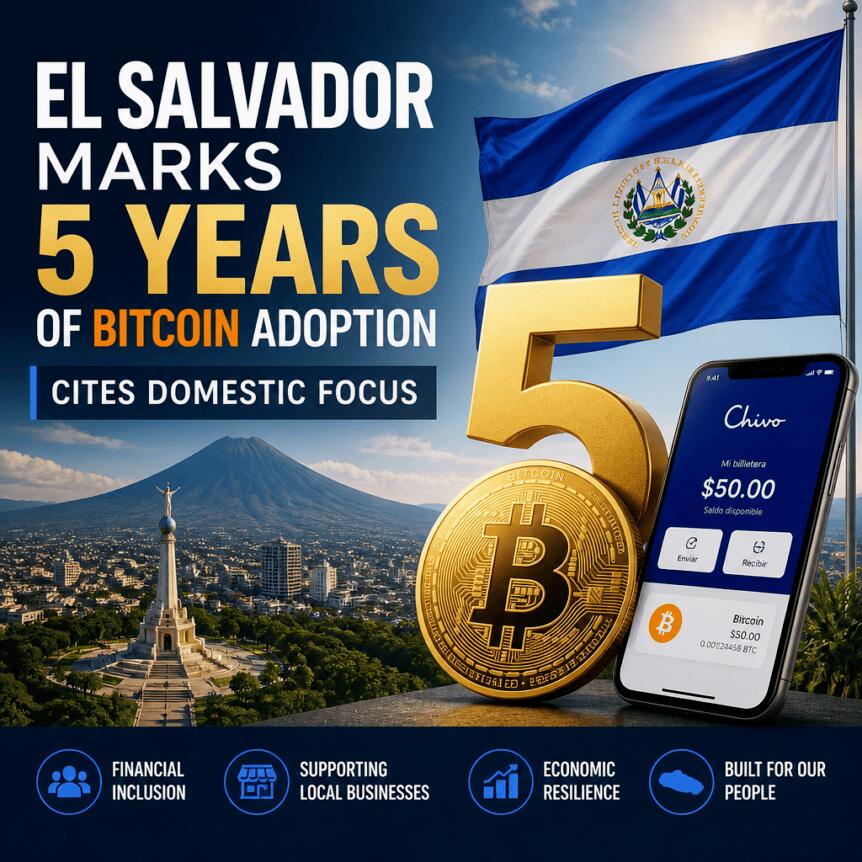
El Salvador marked five years since it made Bitcoin legal tender, but the legacy of the experiment is proving far more contested than the celebratory moment in 2021 suggested. President Nayib
El Salvador marked five years since it made Bitcoin legal tender, but the legacy of the experiment is proving far more contested than the celebratory moment in 2021 suggested. President Nayib Bukele pitched the move as a fast track to financial inclusion, cheaper remittances, and more investment—yet new research and later policy changes indicate that everyday adoption never materialized on the scale promised.
According to Dr. Tobias Boos, a senior scientist at the University of Vienna who leads research into Bitcoin’s political economy in El Salvador, the project fell short when measured against Bukele’s stated goals. “There is little doubt that the project was a failure if we take seriously the reasons Bukele gave for its adoption,” Boos said, pointing to limited progress on foreign direct investment, banking access, and remittance use.
Key takeaways
- Research led by Dr. Tobias Boos finds “mass adoption by citizens did not occur,” with adopters more likely to be young, male, urban, and already banked.
- Despite Chivo’s launch and remittance-focused hopes, crypto wallets handled only a small share of remittance flows by 2024.
- An IMF program culminating in 2025 approvals pushed El Salvador to reduce state involvement: acceptance became voluntary and public-sector use of Bitcoin was limited.
- The most durable impact may have been symbolic—making nation-state Bitcoin adoption a real-world precedent—rather than transforming payments or financial inclusion domestically.
Promises of financial inclusion vs. who actually adopted
When Bukele announced the plan at Bitcoin 2021 in Miami on June 5, 2021, he framed adoption as a way to create jobs and deliver financial inclusion to people outside the formal economy. But five years on, evidence described in the research Boos co-authored suggests the adoption pattern did not match the inclusion narrative.
In a 2025 study, Boos and colleagues (Grigera and Schmid) reported that Salvadorans who adopted Bitcoin were disproportionately young, male, urban, and more highly educated—and importantly, “already banked.” Boos’ interpretation is blunt: “Mass adoption by citizens did not occur.”
The mismatch matters because El Salvador’s starting point was weak banking access. World Bank data cited in the reporting shows that in 2021, only 35.9% of people aged 15 and over held a bank account—one of the lowest levels in the region. In other words, if Bitcoin were to serve as a substitute for missing banking infrastructure, it would need to bridge gaps for people without accounts.
Yet the government’s Chivo wallet, while capable of transferring funds to bank accounts, did not remove the structural barriers preventing many unbanked Salvadorans from accessing the financial system in the first place. Boos and his colleagues describe this as the same core problem reappearing across the adoption story: even with incentives, the missing link was broader financial accessibility rather than the availability of a wallet app.
Remittances: where the “cheaper transfers” thesis didn’t stick
Bukele also sold Bitcoin adoption as a way to improve remittance economics. El Salvador’s economy is tightly linked to money sent from abroad: in 2024, remittances were reported to account for around 24% of GDP, with the United States providing 98% of the total. But the reporting highlights a key constraint—El Salvador has used the U.S. dollar for more than two decades—meaning the most obvious potential cost-saving from Bitcoin (bypassing currency conversion) was already largely neutralized.
That context helps explain why, even with a wave of early promotional activity, crypto wallets remained marginal in remittance flows. The cited research indicates that crypto accounted for barely 1% of remittances by 2024, down from a peak of about 1.7% in 2020–21.
Incentives also did not translate into durable usage. Chivo offered users $30 worth of Bitcoin for signing up, but an analysis described in the article by the National Bureau of Economic Research found that more than 60% of early Chivo users did not make another transaction after spending their free BTC. The reported pattern points to a “try it for the reward” adoption model rather than sustained payment behavior.
On the ground, Bitcoin-focused journalist Joe Nakamoto reported a similar disconnect. In a recent visit, Nakamoto claimed he tested Bitcoin acceptance at 21 shops in a San Salvador mall and found that only four accepted it, and just one did so smoothly. His characterization in the reporting is that living on Bitcoin is “borderline impossible” except in narrow, workaround-driven areas.
The IMF pivot: from legal tender to voluntary use
While public debates about Bitcoin adoption continued, international pressure eventually forced a policy recalibration. In December 2024, El Salvador agreed to a $1.4 billion financing arrangement with the International Monetary Fund, under which it would scale back its involvement in Bitcoin. The agreement was later approved in February 2025, and in January the government amended its Bitcoin law.
The changes described in the reporting included making acceptance voluntary, requiring taxes to be paid in U.S. dollars, and limiting public sector involvement in Bitcoin-related activities—effectively dismantling the most far-reaching parts of Bukele’s original approach. Put simply, Bitcoin could still be used, but the state would no longer compel businesses to accept it or embed it into the public financial system.
Boos says the outcome aligned with the IMF’s assessment. He described the initiative as “soft adoption” that never led to mass payments usage, noting in the reporting that he is not aware of tax payments made using Bitcoin and that supporting infrastructure largely remained unused. Separately, the IMF later found “no evidence” of a beneficial use case for the unbanked and characterized Bitcoin’s impact on financial inclusion as minimal.
For investors and builders watching adoption narratives, this shift is instructive: it shows that legal frameworks and state incentives alone are insufficient if day-to-day demand, payment rails, and integration into mainstream economic behavior do not follow.
What El Salvador did achieve: a precedent, not a universal payments system
Even if Bitcoin did not become everyday money across El Salvador, the experiment still delivered something unprecedented: it moved nation-state Bitcoin adoption from a theoretical concept into a real, live case study. Samson Mow, chief executive of Bitcoin infrastructure firm JAN3, framed the change as a shift in how governments think—turning the question from “whether a sovereign could hold Bitcoin” to “why it hadn’t.”
El Salvador also drew sustained attention from prominent figures in the Bitcoin ecosystem, effectively placing the country at the center of the movement’s public narrative. The reporting notes that Stacy Herbert, who later became a director of El Salvador’s National Bitcoin Office, exemplifies how deeply some parts of the Bitcoin community became intertwined with government structures.
At the same time, the article draws a distinction between what Bitcoin achieved for El Salvador and what El Salvador achieved for Bitcoin. Boos argues the symbolic significance was largely “for” the international Bitcoin community rather than evidence of economic success for Salvadorans. Nakamoto goes further, describing the overall strategy as closer to branding aimed at outsiders than an internally effective economic plan—“beautiful branding” directed at those with capital and passports.
There are also examples of localized, working ecosystems. Bitcoin Beach in El Zonte is cited as an early grassroots initiative that predates the national experiment and reportedly continues functioning even after acceptance became voluntary. The reporting similarly references individual stories of Salvadorans using Bitcoin in daily life, portraying the persistence of micro-economies even as national-scale goals faded.
Beyond legal tender, the Bukele government also promoted projects such as Volcano Bonds and Bitcoin City. However, the article states that repeated delays undermined their progress, and the IMF arrangement “kneecapped” those efforts—though it acknowledges that symbolic impact may still matter to how the episode is remembered globally.
The harder question: Bitcoin strategy under emergency politics
The experiment’s global meaning cannot be separated from the governance environment that made it possible. During Bukele’s time in office, power has been concentrated, and the state of emergency introduced in March 2022 to combat gang violence remains in place years later.
Human Rights Watch, according to the reporting, says the government has continued to remove checks on executive authority. The article also states that local and international human rights organizations have documented mass arbitrary detention and due process violations under the state of emergency.
At the same time, the reporting emphasizes that judging Bukele only through this lens may miss why he remains popular at home. It cites a sharp fall in the official homicide rate—from 53.1 per 100,000 during the year he took office to 1.3 per 100,000 in 2025—framing the crackdown as a visible public security transformation for many Salvadorans.
That tension feeds into the uncomfortable question for Bitcoiners: what does it mean when a philosophy about individual freedom is advanced through a government imposing policy at scale? Mow acknowledges the potential of emergency powers in the hands of a leader who shows restraint, while warning about how quickly those same mechanisms can be repurposed if leadership changes.
Ultimately, the five-year assessment presented in the reporting is split. Bitcoin gave Bukele global attention, and Bukele gave Bitcoin something it had not previously secured at that level: a nation-state willing to place the asset at the center of its economic strategy—even if the implementation did not deliver the promised outcomes for payments, remittances, or mass financial inclusion.
Going forward, readers should watch how El Salvador’s voluntary policy framework evolves—particularly whether Bitcoin usage remains confined to niche communities like Bitcoin Beach or finds more mainstream payment integration—while also tracking the ongoing human rights and institutional implications of emergency governance that shaped the experiment.
This article was originally published as El Salvador Marks 5 Years of Bitcoin Adoption, Cites Domestic Focus on Crypto Breaking News – your trusted source for crypto news, Bitcoin news, and blockchain updates.