Senator Elizabeth Warren has drawn a sharp line in the debate over Elizabeth Warren crypto regulation, backing a federal framework to oversee digital assets while opposing the CLARITY Act, th
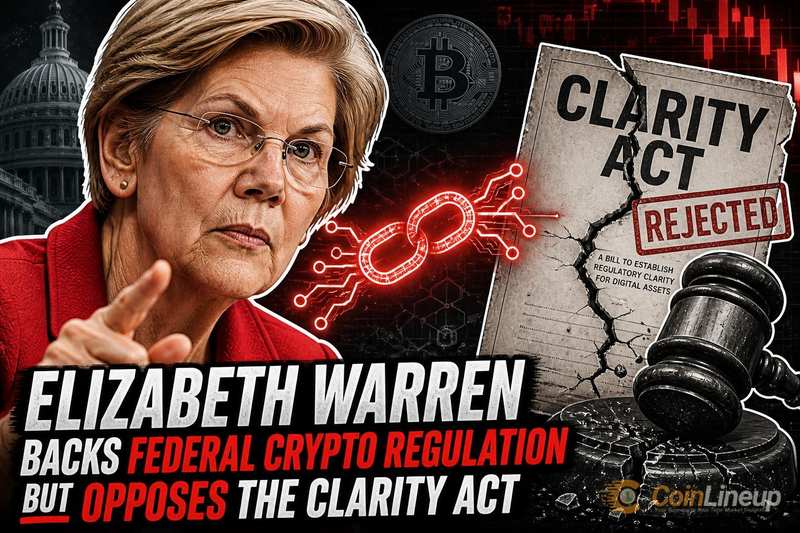
Senator Elizabeth Warren has drawn a sharp line in the debate over Elizabeth Warren crypto regulation, backing a federal framework to oversee digital assets while opposing the CLARITY Act, the market-structure bill moving through Congress.
Warren laid out her position in opening remarks at the Senate Banking Committee mark-up of the CLARITY Act. Her stance separates two questions that are often blurred: whether the U.S. should regulate crypto at the federal level, and whether the specific bill on the table is the right vehicle to do it. For related coverage, see US Regulators Ease Capital Requirements for Large Banks: What It Means for Crypto.
- Supports a federal regulatory framework for digital assets.
- Opposes the CLARITY Act as currently written.
- The split centers on legislative design, not on whether crypto should be regulated at all.
Warren's Case for Federal Oversight, Not Against Regulation
Warren is not opposing crypto regulation as a whole. Her objection is to a particular bill, not to the idea that Washington should set rules for digital assets. For related coverage, see Billion-Dollar Crypto Company Shuts Down, Kills Token Launch Citing 'No Users'.
"Federal crypto regulation" in this context means a unified national framework, setting which agencies oversee tokens and what protections apply to investors, rather than the current patchwork of enforcement actions and state-level rules. Warren's position is that such oversight should be stricter, not lighter.
Why the CLARITY Act Is the Flashpoint
The CLARITY Act, tracked in the House as H.R. 3633, is a market-structure bill that assigns jurisdiction over digital assets between regulators. Supporting federal regulation and supporting this particular bill are, for Warren, two different things.
Warren's opposition runs alongside separate ethics concerns she has raised. According to reporting from CoinDesk, the CLARITY Act has stalled amid questions over President Trump's crypto ties, with Warren asking the SEC to investigate him. That thread is covered in more detail in our report on how Warren called for a Trump crypto probe ahead of the CLARITY Act push.
The disagreement is legislative, not a blanket rejection of crypto lawmaking. The White House has pushed back on the Democratic ethics arguments, a dynamic detailed in our coverage of how the White House disputed the CLARITY Act ethics concerns.
What It Means for the U.S. Crypto Policy Debate
A split between backing oversight and rejecting a named bill signals a deeper fight over regulatory design. The question is not whether to regulate, but how strict the rules should be and which agency holds authority.
That divide pits advocates of tougher oversight and investor protection against industry-backed approaches that favor clearer, lighter-touch market-structure rules. A revised version of the bill has already circulated, with Senator Cynthia Lummis releasing updated CLARITY Act text.
Warren's position keeps the CLARITY Act contentious because it denies supporters the framing that opponents simply reject regulation. Her broader friction with the administration, including claims that Trump is blocking Federal Reserve rate cuts, underscores that the crypto fight is one front in a wider policy conflict. How Congress reconciles that gap will shape the next digital-asset bills.
Disclaimer: This article is for informational purposes only and does not constitute financial or investment advice. Cryptocurrency and digital asset markets carry significant risk. Always do your own research before making decisions.
Read original article on coinlineup.com