BitcoinWorld Etched hits $5B valuation with $1B in AI chip orders, challenging Nvidia’s grip on inference AI chip startup Etched has emerged from stealth with a valuation of $5 billion and a
BitcoinWorld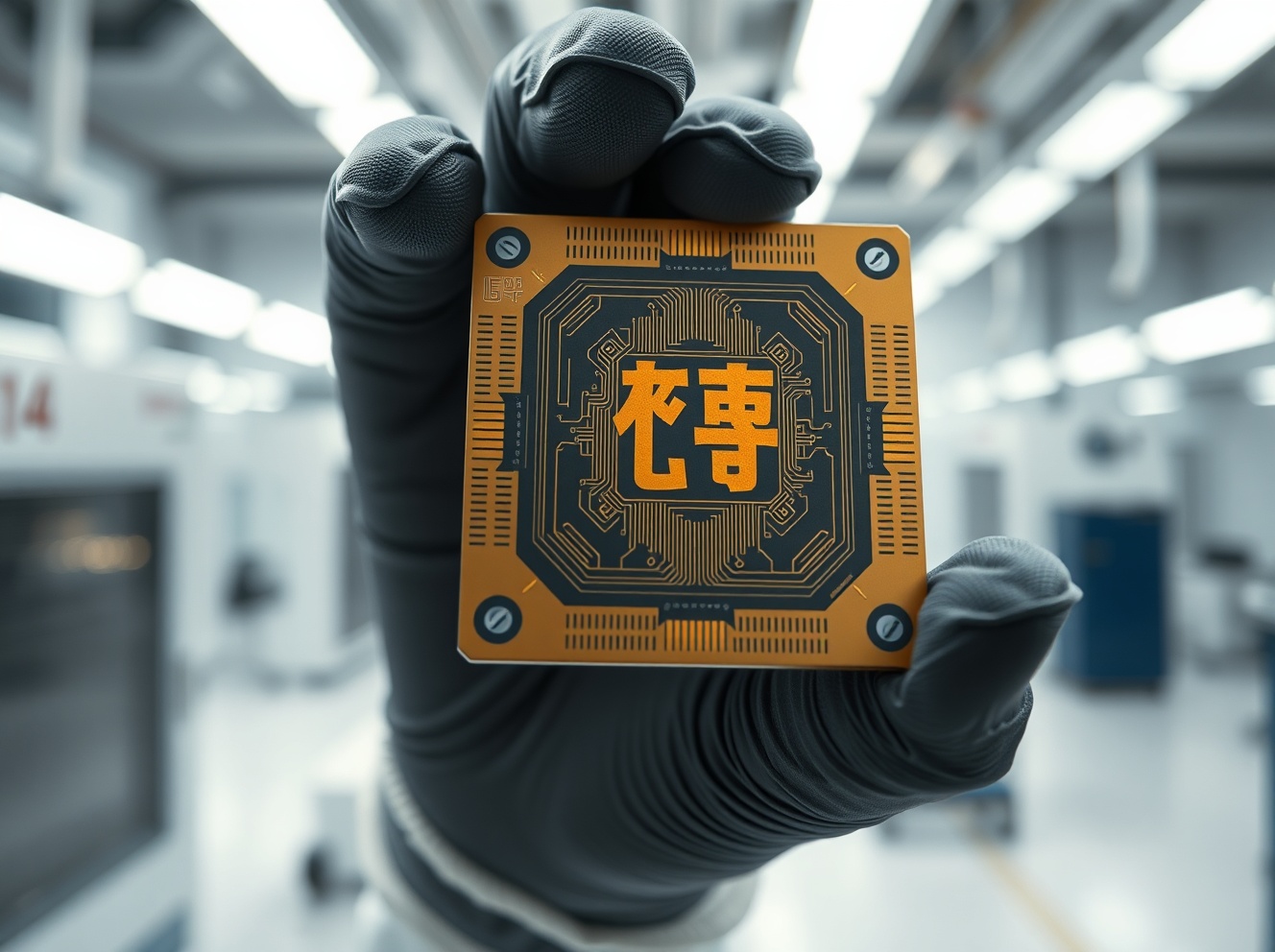 Etched hits $5B valuation with $1B in AI chip orders, challenging Nvidia’s grip on inference
AI chip startup Etched has emerged from stealth with a valuation of $5 billion and a claim that it has already booked $1 billion in contract orders for its specialized inference chips — a direct challenge to Nvidia’s dominance in the AI hardware market. The company, founded in 2022 by two Harvard dropouts turned Thiel fellows, revealed Tuesday that Taiwan Semiconductor Manufacturing Company (TSMC) successfully manufactured its first chip earlier this year, and that it is now testing full systems with customers.
What Etched is building and why it matters
Etched’s product is not just a chip. The startup sells what it calls “frontier inference clusters” — complete systems that include custom-designed racks and software, all optimized to run AI inference faster, cheaper, and with better power efficiency than general-purpose GPUs. Inference, the process that happens after a user submits a prompt to an AI model, is currently the biggest bottleneck and cost center for AI companies trying to serve customers at scale. That is precisely why investors are paying close attention to any company promising to solve it.
The company says its chip is purpose-built for transformer-based models, the architecture behind most modern large language models including GPT-4, Claude, and Gemini. By designing a chip that does one thing well, Etched argues it can outperform Nvidia’s more flexible but less specialized GPUs on inference workloads.
From near-collapse to a $5B valuation
Etched’s journey has been anything but smooth. Co-founders Gavin Uberti (CEO) and Robert Wachen (president) told Bitcoin World in 2024 that they struggled to raise money in 2023, despite circulating a 30-page memo arguing that AI would eventually need specialized chips. Every major investor they pitched passed, and the company was operating month-to-month, close to running out of cash.
Today, the funding environment looks radically different. Etched has raised a total of $800 million to date, including an unannounced $500 million round closed in December at a $5 billion post-money valuation. The investor list reads like a who’s who of finance and AI: VentureTech Alliance, Jane Street, Hudson River Trading, Two Sigma, Ribbit Capital, and angel investments from AI heavyweights including Andrej Karpathy, Geoffrey Hinton, Fei-Fei Li, Arthur Mensch, and Scott Wu. The cap table also includes billionaires Stanley Druckenmiller and Peter Thiel.
Why the market is suddenly hungry for inference chips
Etched is entering a market that has become intensely competitive. Cerebras had the first breakout AI chip IPO of the year. Groq raised $650 million. Amazon, Google, and Microsoft all build their own in-house AI chips. Even OpenAI just announced its first custom chip, built by Broadcom. The common thread is inference: as AI models grow larger and deployment scales up, the cost of running inference is becoming a critical economic challenge for the entire industry. Specialized chips that can slash those costs are suddenly in high demand.
Conclusion
Etched’s $5 billion valuation and $1 billion in orders signal that the market is betting heavily on specialized inference hardware as the next battleground in AI. The company still faces the challenge of proving its chips work at scale in real-world deployments, but its investor backing and early customer traction suggest that the thesis of moving beyond general-purpose GPUs is gaining serious momentum. For AI companies struggling with inference costs, Etched may represent a promising alternative — if it can deliver on its promises.
FAQs
Q1: What makes Etched’s chip different from Nvidia’s GPUs?Etched’s chip is purpose-built for transformer-based AI models, meaning it is designed to do one type of computation very efficiently. Nvidia’s GPUs are general-purpose and can handle a wide range of tasks, but they are less power-efficient and slower for specialized inference workloads. Etched claims its chip offers significantly better performance, cost, and energy efficiency for inference.
Q2: Who are Etched’s main competitors?Etched competes with Nvidia (the dominant player), as well as Cerebras, Groq, Amazon (Trainium and Inferentia chips), Google (TPUs), Microsoft (Maia chips), and OpenAI (its new custom chip built by Broadcom). All are racing to build faster and cheaper inference hardware.
Q3: Why is inference such a big deal for AI companies?Inference is the process of running a trained AI model to generate responses to user queries. As AI products scale to millions of users, inference costs can exceed training costs. Faster and cheaper inference directly improves profit margins and allows companies to offer lower prices or more powerful models to customers.
This post Etched hits $5B valuation with $1B in AI chip orders, challenging Nvidia’s grip on inference first appeared on BitcoinWorld.