AllUnity already issues regulated euro, Swiss-franc and Swedish-krona stablecoins. On September 30, it added the currency that dominates global trade and crypto liquidity. USDAU is a U.S.-dol
AllUnity already issues regulated euro, Swiss-franc and Swedish-krona stablecoins. On September 30, it added the currency that dominates global trade and crypto liquidity.
USDAU is a U.S.-dollar e-money token issued by AllUnity, a licensed European e-money institution. The company says each token is backed one-for-one by segregated dollar reserves and is available initially across Ethereum, Solana, Base, Tempo, Arc and Polygon.
The obvious story is another dollar stablecoin.
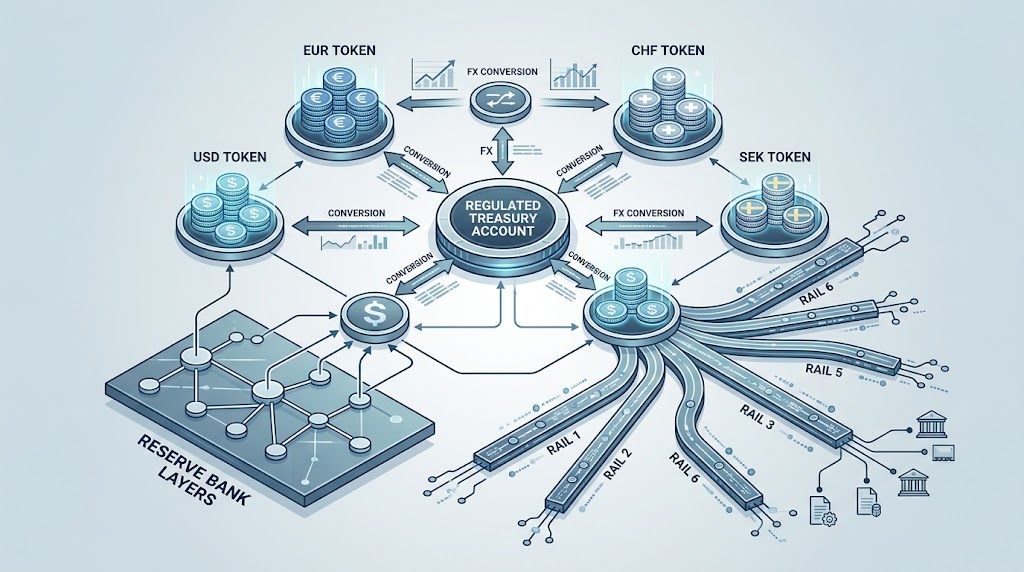
The more interesting story is that AllUnity is building a multicurrency mint-and-FX system around the tokens, so a business can move between bank money and several regulated stablecoin currencies inside one institutional account.
USDAU is structured as an e-money token under the European Union's Markets in Crypto-Assets regime. The denomination is U.S. dollars, but the issuer and legal framework are European.
That matters because many users mentally divide the market into U.S. stablecoins and European euro stablecoins. Regulation follows the issuer and product structure, not simply the symbol printed after the token balance.
AllUnity says fully onboarded institutional clients can mint and redeem USDAU at par through its Business Mint Account. Banking Circle provides reserve and transaction banking behind the dollar reserves, while firms including BitGo, Galaxy, Bitcoin Suisse and RULEMATCH are listed among launch ecosystem partners.
USDAU launches natively on six networks rather than beginning on one chain and relying on wrapped representations elsewhere.
That can reduce bridge dependence, but it creates another operational challenge: the issuer has to keep redemption, supply accounting, compliance controls and liquidity coherent across several ledgers at once.
The stablecoin market is increasingly becoming an orchestration problem rather than an issuance problem. Optimisus documented that shift when PYUSDx crossed $100 million by turning PayPal's stablecoin into infrastructure for other stablecoin products.
USDAU approaches the same idea from the issuer side: one regulated institution, several currencies, several chains and one business account designed to move between them.
A company does not experience money as a list of isolated stablecoins. It experiences receivables, payroll, supplier payments, treasury balances and FX exposure.
AllUnity is adding instant-FX functionality to its Business Mint Account so clients can mint in supported currencies and move between them within the same platform. Hercle is serving as an off-ramp and FX partner for USDAU.
That is more useful than simply having a digital dollar if the business operates in Europe. A treasury team might receive dollars, settle a euro invoice, keep Swiss-franc working capital and move value onto a tokenized-asset venue without waiting for correspondent-bank cutoffs.
Optimisus has argued that stablecoins are increasingly becoming banking infrastructure rather than exchange plumbing. A regulated multicurrency mint account is a fairly literal version of that transition.
Launching across more networks does not make a stablecoin safer. The fundamental promise is still redemption at one dollar.
That depends on reserve segregation, the banking relationships holding those reserves, operational continuity and the legal claim token holders have against the issuer.
Banking Circle says it provides the reserve and transaction-banking services behind USDAU. AllUnity says reserves are segregated from operating funds. Those are the facts users should care about before comparing transaction speed across chains.
Crypto has repeatedly learned that a fast token with weak redemption is not cash. The stablecoin's most important technology remains the balance sheet behind it.
AllUnity's existing portfolio includes EURAU, CHFAU and SEKAU. Adding USDAU makes the platform look less like a single stablecoin issuer and more like a digital foreign-exchange network built on regulated e-money tokens.
If that model works, the competitive unit in stablecoins may shift again. Issuers will not only compete on circulation, yield or exchange support. They will compete on how many currencies, banks, chains and treasury workflows they can connect without making the corporate user manage each relationship separately.
USDAU is another dollar token in a market full of them. The surrounding multicurrency infrastructure is what makes it worth watching.
This is not financial advice.