Key Takeaways Natural gas markets in Europe maintained positions close to three-week lows following Iran’s indication of a potential Strait of Hormuz reopening timeline. The Dutch TTF benchma
Key Takeaways
- Natural gas markets in Europe maintained positions close to three-week lows following Iran’s indication of a potential Strait of Hormuz reopening timeline.
- The Dutch TTF benchmark hovered around €72.90 per MWh, with UK NBP gas also staying near recent lows.
- Iran’s proposed reopening hinges on the United States reducing military presence and ending the Iranian port blockade.
- Gas inventories across Europe stand at approximately 70% capacity, creating vulnerability as winter approaches.
- Declining energy costs offer relief from inflation pressures, though supply uncertainty persists.
European gas prices maintained positions near their lowest levels in three weeks on Wednesday as market participants evaluated Iran’s potential reopening of the Strait of Hormuz alongside concerning winter storage deficits.
The Dutch TTF benchmark for front-month delivery declined approximately 0.6% to €72.90 per megawatt-hour, hovering near its weakest point since early September. UK wholesale gas prices saw modest gains but continued trading near their recent floor levels.
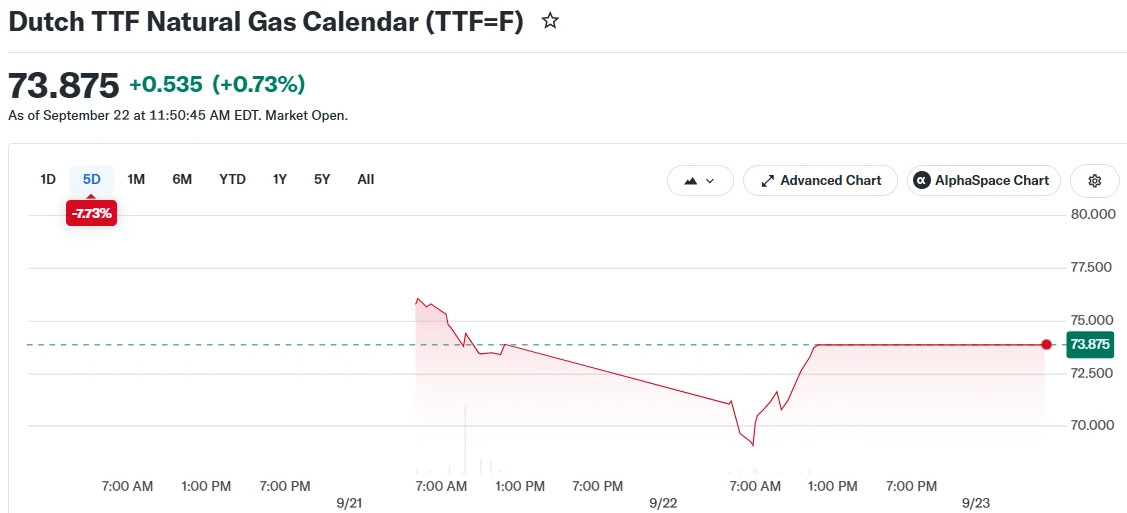 Dutch TTF Natural Gas Calendar (TTF=F)
Potential Hormuz Resolution Dampens Energy Risk Premium
Tehran has communicated to Reuters that it could facilitate the reopening of the Strait of Hormuz within a week, provided Washington reduces its military footprint and eliminates the blockade affecting Iranian ports. Iranian representatives at the United Nations General Assembly have been authorized to engage in renewed diplomatic discussions with American officials.
These developments have prompted market participants to scale back the geopolitical risk premium embedded in European natural gas valuations and international crude oil benchmarks. Brent crude has also dropped beneath the $100 threshold as markets respond to improved prospects for energy shipments from the Middle East region.
Saudi Arabia has additionally resumed operations along its East-West petroleum pipeline following an earlier suspension. This corridor enables crude transport to the Red Sea while circumventing the Strait of Hormuz, providing an additional avenue for supply security.
Nonetheless, any reopening of the critical waterway remains subject to conditions. Tehran has emphasized that Washington must implement tangible measures to decrease military pressure, while historical diplomatic initiatives have experienced repeated interruptions and restarts.
Winter Storage Deficit Poses Ongoing Threat to Europe
While reduced prices have alleviated some immediate market tension, Europe continues to face exposure as the winter heating period approaches.
Current European gas storage facilities are operating at roughly 70% capacity, significantly beneath typical seasonal benchmarks. Reuters has highlighted that inventory levels are historically inadequate while European dependence on liquefied natural gas imports has intensified.
This situation creates price vulnerability should temperatures plummet sharply or Middle Eastern supply interruptions resurface. Constrained flows through the Strait of Hormuz have already impacted certain LNG shipments, notably from Qatar, which ranks among the globe’s premier suppliers.
Norwegian infrastructure maintenance has further limited European pipeline availability in recent periods, amplifying the significance of LNG accessibility and adequate storage reserves.
Energy Price Decline May Alleviate Inflationary Pressures
A persistent decrease in natural gas and petroleum prices would benefit Europe’s inflation trajectory. Energy expenses ripple through household utility bills, industrial production costs, and broader consumer pricing.
This development could also shape expectations regarding European monetary policy if diminished energy costs reduce inflationary momentum. Alternatively, another surge in gas valuations might reinforce arguments for central banks to maintain restrictive policies for an extended duration.
Currently, market participants appear to be factoring in improved probabilities for enhanced Middle Eastern energy distribution. European gas continues trading close to three-week minimums, but depleted storage inventories ensure the market remains acutely responsive to winter weather patterns and geopolitical shifts.
The post European Natural Gas Prices Stay Low Amid Iran’s Hormuz Strait Reopening Signals appeared first on Blockonomi.