An invitation meant to celebrate African leadership has instead become a small but pointed marker of how badly Nigeria-South Africa relations have frayed in 2026. The Stakeholders in Blockcha
An invitation meant to celebrate African leadership has instead become a small but pointed marker of how badly Nigeria-South Africa relations have frayed in 2026. The Stakeholders in Blockchain Technology Association of Nigeria (SiBAN) has formally declined to participate in the Global Impact Leaders Summit & Awards 2026, Africa, a Cape Town event organised by CIO Look, a business magazine and media platform under Ciolook Media. In a statement signed by SiBAN president Barr. Mela Claude Ake and shared with Technext, the association made clear this was a decision rooted in the safety of Nigerians living in South Africa.
“This decision is informed by ongoing concerns regarding the treatment of Nigerians in South Africa and reflects our commitment to the welfare and dignity of Nigerians at home and abroad,” the statement reads, adding that SiBAN would not attend “whether in person or virtually”.

SiBAN’s statement, boycotting Cape Town Summit
CIO Look’s letter, dated 26 June and signed by director and CEO Manish Bansal, invited the association to the event, themed “Leadership Beyond Borders: Shaping Africa’s Global Future”, which was set to run on 9 August at the DoubleTree by Hilton in Cape Town, gathering entrepreneurs, investors, policymakers and business leaders from more than 20 countries. SiBAN was invited to nominate members for recognition, with the usual trimmings: red-carpet photography, an on-stage award and trophy, a leadership video interview, and a complimentary three-page feature in an upcoming CIO Look edition titled “Africa’s Most Influential Personalities to Watch in 2026”.
President Mela Claude Ake explains SIBAN’s position on South Africa
In a statement sent exclusively to Technext, Ake went further than the official letter, laying out the reasoning in personal and unambiguous terms.
“As president of SIBAN, it’s expected that our focus is on conversations on tech and allied matters,” he said. “However, at the fundamental level, tech, industry and business are about human lives, human beings. These things we pursue, the products and technologies we innovate with, are about enriching and enabling the human experience.”
He confirmed the sequence of events: the original invite required physical presence in Cape Town, and SiBAN declined; the organisers offered a virtual option instead, and SiBAN declined that too. “We felt that honouring this invite at this time would be most inappropriate considering the news of the mistreatment of Nigerians in South Africa,” he said.
“We believe that while partnering with businesses in South Africa has undeniable benefits, we cannot build business bridges at the cost of our dignity and humanity,” he explained. “We hope that these issues are resolved quickly and decisively. We also hope those affected find justice,” the president concludes.
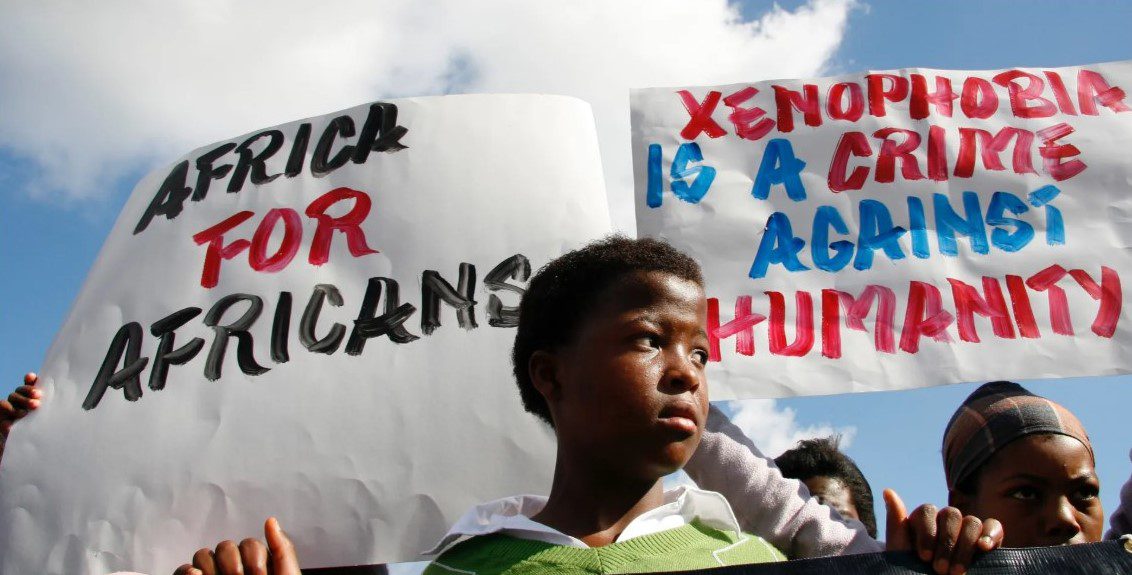
Protest against xenophobia
This comes after a brutal few months for Nigerians in South Africa. Since April, waves of anti-immigrant protests led by groups like March and March have swept through Johannesburg, Pretoria and Durban, with Human Rights Watch documenting violent attacks on foreign nationals with little apparent police response. At least two Nigerian men died in the unrest in April, and Nigeria’s government has since repatriated hundreds of its citizens amid the alleged xenophobic violence. By June, the crisis had widened well beyond Nigerians, with thousands of Malawians and other African nationals also fleeing to a makeshift camp in Durban after similar threats.
Nigeria’s Foreign Minister Bianca Odumegwu-Ojukwu accused Pretoria of failing to forcefully condemn the violence, arguing it had damaged a bond forged during Nigeria’s support for South Africa’s anti-apartheid struggle. This isn’t a one-off flashpoint either. South Africa has seen recurring waves of xenophobic violence dating back to 2015 and 2019, both of which disproportionately targeted Nigerian nationals, and vigilante movements like Operation Dudula have kept the pattern alive for years.
SiBAN’s stand has raised an uncomfortable question for pan-African business and media platforms hosting events in South Africa right now: how many other invitations are quietly being declined for the same reason, without a statement attached at all?