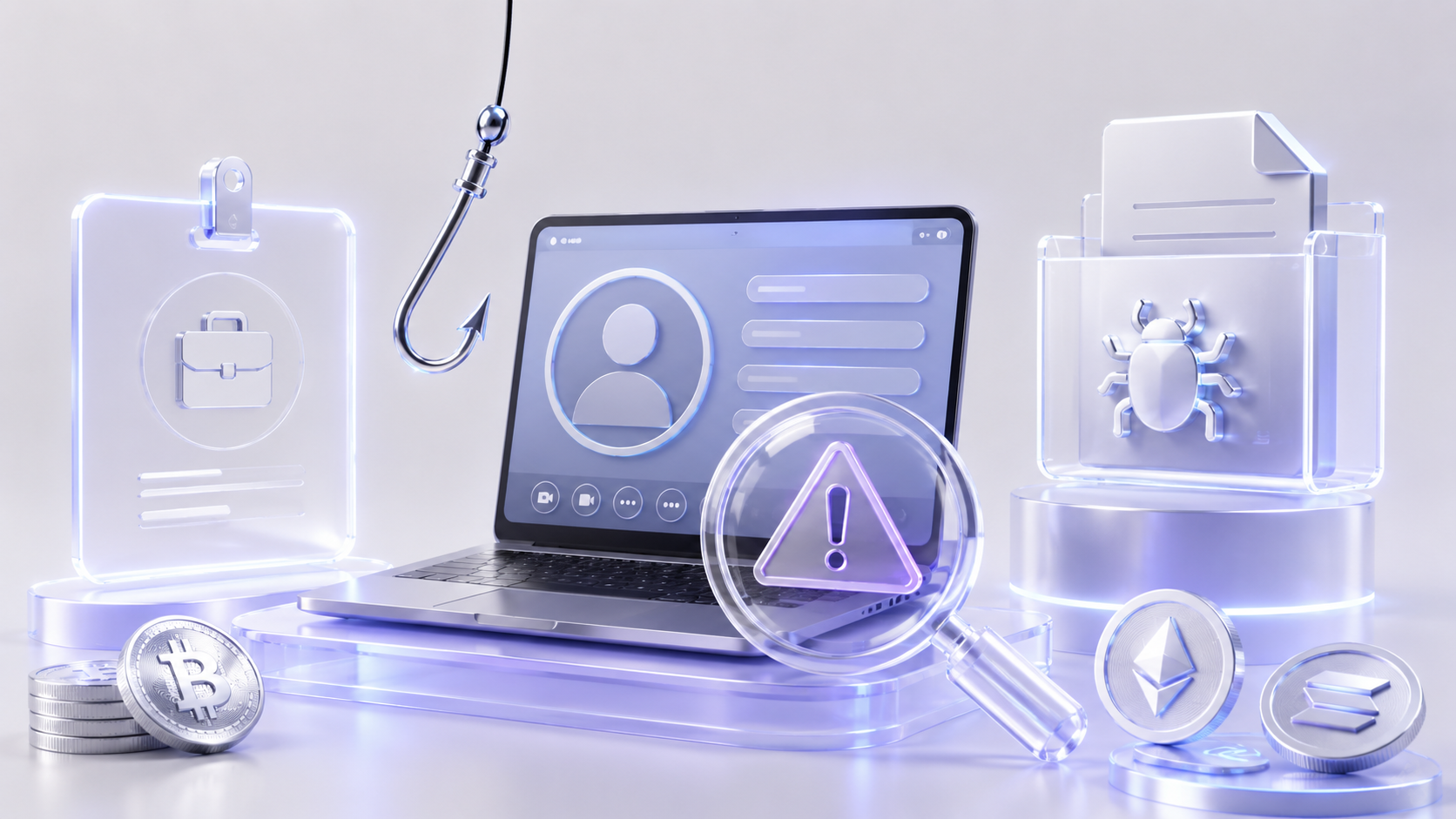
Fake crypto job interviews are being used to install malware on candidates’ devices, turning normal hiring steps into wallet-theft and credential-theft attacks. The latest wave includes malic
Fake crypto job interviews are being used to install malware on candidates’ devices, turning normal hiring steps into wallet-theft and credential-theft attacks.
The latest wave includes malicious interview platforms, fake meeting tools, recruiter messages, coding tasks and technical “fixes” that push victims to download files or run commands before an interview can continue. Once installed, the malware searches for crypto wallets, browser passwords, cookies, Telegram sessions, password-manager data and sensitive developer credentials.
The JobStealer campaign has been disguised as online interview software for Windows and macOS users. Victims are lured to fake interview websites and asked to download what appears to be a video-conferencing app. The file is instead a trojan designed to collect confidential data, with crypto wallets as a primary target.
The attack works because the request arrives inside a familiar process. A job candidate expects to join a call, open a test project, install a meeting tool or troubleshoot an audio issue. Scammers use that moment of pressure to move the victim from conversation into execution.
Crypto Developers Face A Deeper Supply-Chain Risk
The threat is not limited to retail wallet users. Crypto developers and employees are now high-value targets because one compromised laptop can expose wallets, GitHub tokens, cloud credentials, internal repositories and CI/CD systems.
Microsoft has tracked a long-running Contagious Interview campaign in which attackers pose as recruiters from crypto trading firms or AI companies, then push victims to clone and run malicious code packages. The malware has targeted API tokens, signing keys, cryptocurrency wallets and password-manager artifacts.
Wiz has also detailed JINX-0164, a financially motivated threat actor targeting crypto organizations through LinkedIn-style recruiter lures, fake meeting links and custom macOS malware. In one investigated case, the attackers moved from a compromised employee laptop into code-distribution systems, with the apparent goal of reaching more endpoints and stealing crypto wallet credentials.
That makes fake recruitment a company-wide security threat, not just a personal scam. A malicious interview file can become the first step toward wallet theft, source-code compromise or a supply-chain attack.
Hiring Channels Are Becoming Attack Surfaces
Crypto firms have already been dealing with deeper hiring risk from suspected insider-access attempts, fake developer profiles and DPRK-linked cyber campaigns. Ripple’s recent move to share DPRK threat data with Crypto ISAC showed how recruitment channels have become part of the industry’s threat perimeter.
The pattern also overlaps with broader social engineering in crypto, where attackers do not need to break the blockchain if they can convince a user to install malware, reveal credentials, sign a transaction or open a hostile file.
The risk is especially high for candidates who use the same device for interviews, wallets, exchanges, Telegram, Discord, password managers and work repositories. One fake interview download can hand attackers the full map: wallet extensions, saved browser sessions, authentication tokens, private work channels and cloud access.
The cleanest defense is separation. Job interviews and coding tests should run in a clean virtual machine or spare device with no wallets, no saved passwords, no exchange sessions and no access to production code. Candidates should not paste terminal commands from recruiters, install unknown meeting apps, trust newly created domains or bypass operating-system warnings to “fix” an interview call.
For crypto companies, recruiter lures now belong inside security training, hiring checks and incident-response planning. A fake interview is no longer only a scam against job seekers. It is a malware delivery route into the people and machines that control wallets, repositories and production systems.
The post Fake Crypto Job Interviews Turn Into Malware Traps For Wallet Holders appeared first on Crypto Adventure.