When an American farmer has to secure an agricultural loan, they go to commercial banks, lenders, credit unions, and the federally chartered Farm Credit System. If they cannot qualify through
When an American farmer has to secure an agricultural loan, they go to commercial banks, lenders, credit unions, and the federally chartered Farm Credit System.
If they cannot qualify through commercial credit, they may also borrow from the Farm Service Agency, which offers direct and guaranteed farm loans.
Related: Most crypto holders want a loan against their Bitcoin and never take one
It’s a long and complicated process in which a lender typically evaluates the purpose of the loan (land purchase, equipment, livestock, etc.), cash flow, ability to repay, credit history, existing debt, and collateral.
Depending on the loan, almost any valuable farm asset can serve as collateral, such as farmland, equipment, crops, livestock, etc. If the borrower defaults, the lender may seize and sell the collateral like farmland or livestock to recover the loan balance.
A financially strong farmer with excellent credit may receive interest rates near the lower end of these ranges, while newer or higher-risk borrowers generally pay more.
In practice, agricultural lenders in the United States usually rely on multiple forms of collateral, especially for larger loans.
Trending on TheStreet Roundtable:
Brazil uses tokenized cows for loan management
The Brazilian market has come up with a new model for farm loans in which tokenization plays a key part.
The country's financial market has carried out its first formal credit operation using tokenized dairy cows as collateral in a transaction registered with the Brazilian stock exchange (B3), CNN Brasil reported on July 21.
Tokenization is the process of converting real-world assets (RWAs)—like real estate, stocks, or government bonds—into digital tokens on a blockchain.
Each such token represents full or fractional ownership of the underlying asset, offering exposure to a popular asset with the efficiency of digital assets.
Related: What is tokenization? Explained
The initiative in Brazil, structured by Target FIDC, involved R$ 100,000 and leveraged data collected by the agricultural technology company Cowmed to turn animals into digital assets that can be accepted as collateral to secure loans.
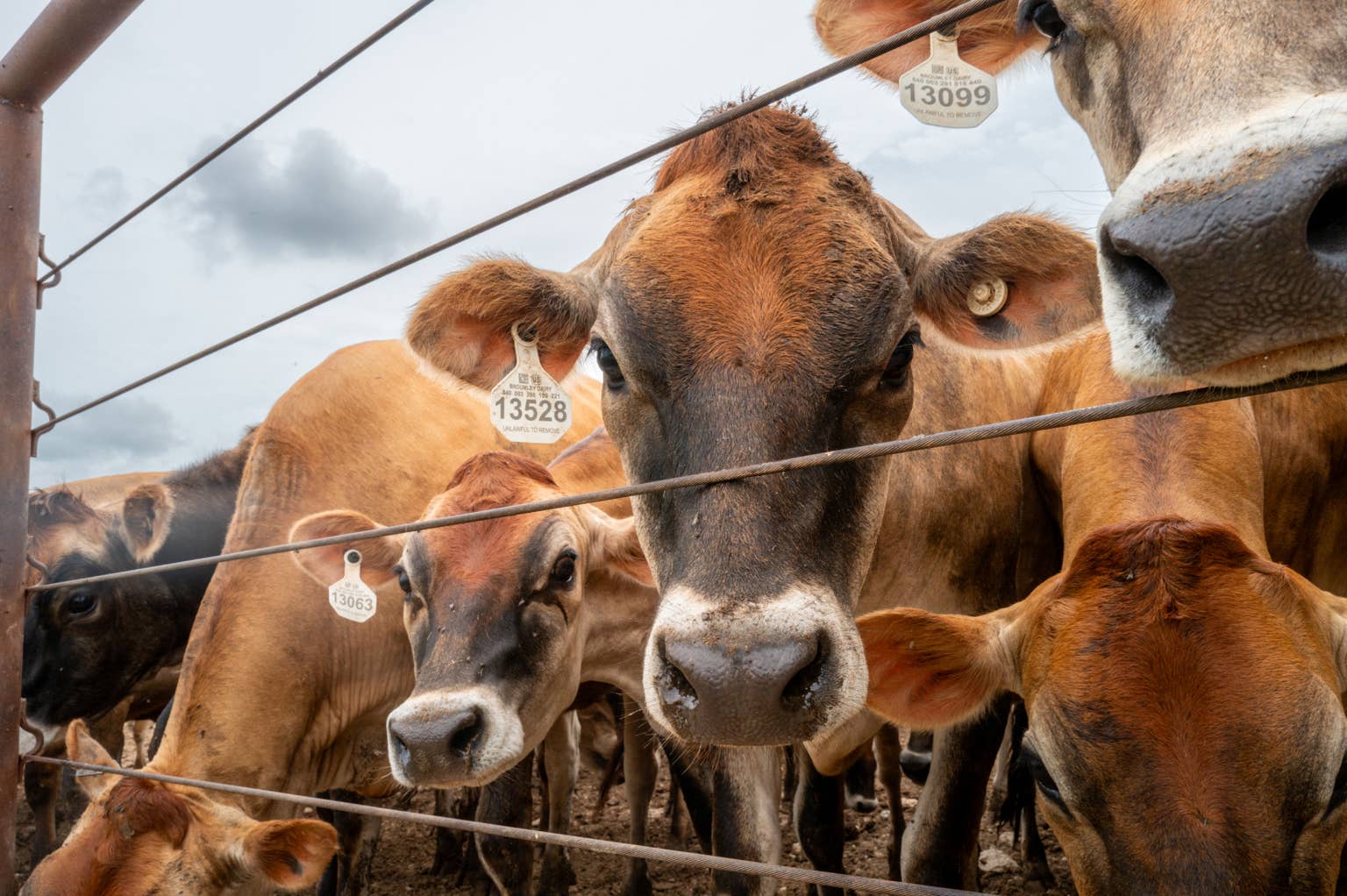
Each cow has a smart device attached to it which monitors details such as its health, behavior, and location. The accompanying data gets turned into an encrypted code, which acts as a unique digital identity for each cow.
Loan inspectors don't need to make a physical visit to examine cows because they can analyze data on an online platform.
"We take the cow, which is a real and tangible asset, and transform it into a digital asset backed by a unique code monitored in real time. This digitization allows for formal registration with B3 as a movable asset," Cowmed CEO Thiago Martins said. "The process is simple and gives the producer an advantageous opportunity to finance themselves, opening a new alternative for collateral at a time of strong credit restrictions in agribusiness."
As each cow has a unique code, it cannot be offered simultaneously as collateral in different credit operations.
Target FIDC director Humberto Brenner told CNN Brasil that the market applies large discounts to the value of the livestock due to uncertainties. A cow valued at R$ 20,000 could be considered as a guarantee of only R$ 8,000. But its valuation begins to reflect an animal's market value with continuous monitoring, he added.
As of now, Cowmed monitors around 100,000 dairy cows worth more than R$ 2 billion on over 1,000 farms in Brazil and other countries in the Americas.
It is expected that 20% of the producers will adopt the new financing modality, representing approximately R$ 400 million in credit operations backed by tokenized herds.
Related: What are tokenized stocks? Explained